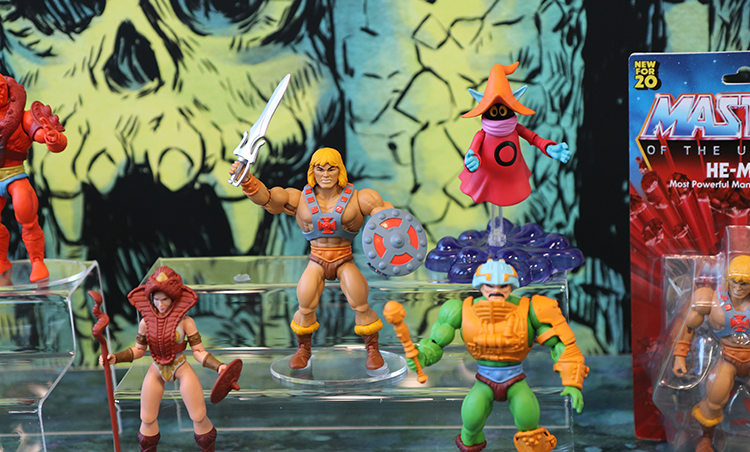
What Mattel’s Content Teaches Us About Reusing Digital Assets
The blog delves into the power of content reuse, referring to Mattel’s recent strategy of revitalizing their old toy lines from over four decades ago. The article highlights Mattel’s clever use of existing content and tapping into the power of nostalgia to resonate with diverse audience segments. It showcases the broader concept of content reuse, where stored digital assets become a strategic resource for building brand engagement with established and new consumers.

Creative asset distribution at scale for Peanuts
Safe storage of creative IP within the Sify DAM, connected to a rights management platform to enable creative asset distribution to licensees
Credits: Original content published by our strategic partner Tenovos
Project Objective
Smart licensing has kept Peanuts top of mind for consumers around the world, but the scale of its licensing program was becoming challenging to manage. Folder-based navigation and content organization made it hard for licensees searching for the perfect character pose for their products to find what they needed. Ultimately, this lack of discoverability led the team to search for a new, modern digital asset management technology.
Project Model
Sify Digital Asset Management Solution
Sify’s Uniqueness
Leverage AI/ML to create an intuitive, consumer-centric user experience that delivers a 360° view of content. Simplify asset lifecycle management across content creation, ensure faster approvals on proofing and rights management, and disseminate content across channels seamlessly.
Value for the client
Today, the Peanuts creative IP is safely stored within the DAM, which is connected to a rights management platform to enable the distribution of creative assets to licensees around the world.


Marketing Operations & Creative Workflow Automation for Saks
Centralized asset management enabling enhanced content discoverability and increased content reuse
Credits: Original content published by our strategic partner Tenovos
Project Objective
The goal of the DAM was to centralize assets across the organization and automate critical aspects of Saks’ creative process. Their creative teams navigated challenges like rogue asset storage, fragmented and timely review processes, and lack of clarity surrounding asset permissions. These challenges curtailed the creative team’s productivity and made content reuse next to impossible.
Project Model
Sify Digital Asset Management Solution
Sify’s Uniqueness
Leverage AI/ML to create an intuitive, consumer-centric user experience that delivers a 360° view of content. Simplify asset lifecycle management across content creation, ensure faster approvals on proofing and rights management, and disseminate content across channels seamlessly.
Value for the client
Today with DAM, Saks has achieved centralized asset management, enabling enhanced content discoverability and increased content reuse. Leveraging workflow automation and integrations within the DAM, Saks streamlined their creative processes and instilled robust governance. These capabilities translated into seamless version control, simplified internal and external collaborations, and secure content sharing.

Kriti Arora (Max Life) speaks about positive impact of content on business with Sify DAM platform
In an exclusive closed door Sify DAM Roundtable Kriti Arora shares how she measures the business impact of the content she publishes.

Sify Tenovos DAM webinar | Part 1/2
Is your content telling a powerful story? A modern AI/ML DAM platform makes all the difference
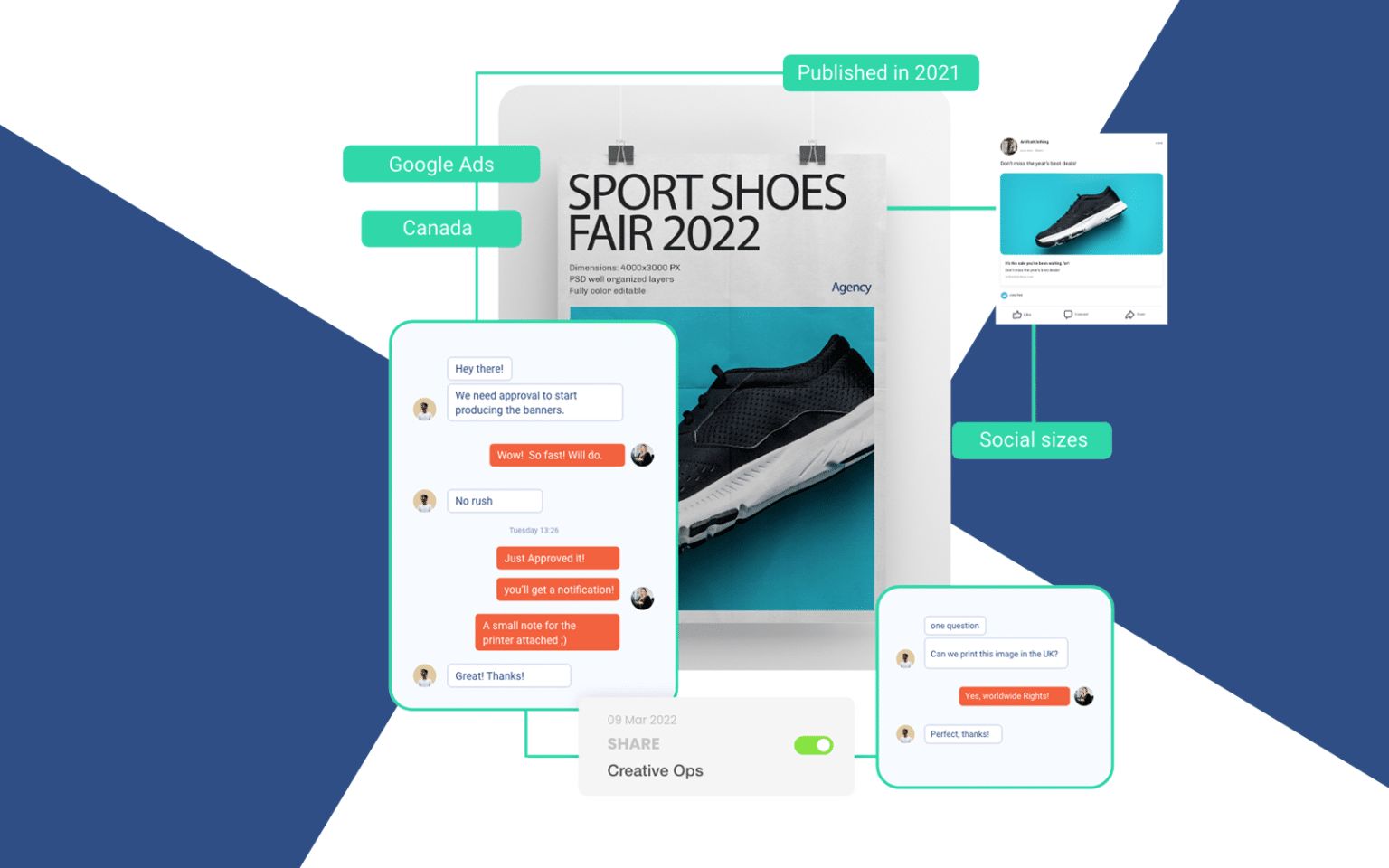
DAM Insights Your Entire Organization Will Actually Use
Your DAM can feel like an overwhelming tool to report on. Everyone wants something different from it. Learn more.

Transform your DAM from an archive into a publishing powerhouse
Let’s face it—traditional DAM software isn’t built with the needs of today’s modern marketing teams in mind.

Reimagine your digital transformation with infusion of automation across multi-cloud and hybrid IT
The IT landscape is accelerating at an unprecedented rate powered by AI and cloud infrastructure. Businesses across industries are exploring the potential of hybrid IT in their digital transformation journey. Today, agility, resiliency and security are of paramount importance to businesses, as they continuously focus on innovation, scalability, operational efficiency, and growth.
By leveraging automation through AI/ML across hybrid cloud solutions, business leaders unlock a range of benefits, including embracing an automated agile, scalable, and secure platform while maintaining a cost-competitive edge amidst the changing market dynamics. Ultimately, all of this enables businesses to maximize the value of their investments, drive sustainable growth, faster go-to-market and shorter time to adapt.
However, before enterprises set out to build the right hybrid cloud ecosystem, business leaders need to address some critical key points following below:
- App stratification to adopt multi-cloud and hybrid IT
- Building the right architecture to adopt multi cloud and enabling hybrid IT
- Seamless migration milestone mapping to meet business objectives
- Visibility for right planning and productivity
- Unified platform driving cost savings, operational efficiency, and cloud governance
Understanding these key factors has a profound impact on maximizing the benefits that hybrid IT offers. Now, let’s look at the fundamentals of hybrid IT, its challenges, and how AI/ML helps in mitigating these challenges.
What constitutes Hybrid IT and makes it advantageous?
Hybrid IT refers to an IT infrastructure environment that combines elements of traditional on-premises or in-house data centers with cloud-based solutions. Hybrid cloud combines both public clouds as well as managed private clouds. It brings together the best of both worlds, allowing organizations to leverage the scalability and cost-efficiency of the public cloud for their elastic workloads and managed private cloud for fixed and regulated workloads.
Challenges while adopting multi-cloud and hybrid IT
While it has a lot to offer, hybrid IT infrastructure comes with its own set of challenges. Security & data protection, regulatory compliance, cloud sprawl, performance management, vendor lock-in, network complexity, and cost management are among the few challenges enterprises faces while adopting multi-cloud and enabling hybrid It. Let’s look at the two major challenges-
- Data Governance: As organizations navigate the complexities of managing data across both public and private cloud environments, ensuring data security and compliance becomes both difficult and paramount.
- Integration and Management: The technical challenges of integrating and managing diverse cloud platforms and technologies can be daunting. Ensuring seamless workload allocation, optimizing resource usage, and overcoming challenges in managing and analyzing large data sets for business intelligence is essential.
Mitigation plan for the challenges above
Analyzing your existing cloud infrastructure to transform it into a future-ready state that aligns with your organization’s strategic business objectives is the first step in your cloud journey. It will help you identify and address the real-time challenges while adopting multi/hybrid cloud. These challenges can be mitigated with the help of emerging technologies like Artificial Intelligence and Machine learning.
The infusion of AI and machine learning technologies takes hybrid cloud management to the next level. By creating a multiplier effect, the combination accelerates transformation with result-driven capabilities, such as intelligent automation, predictive and proactive analytics, and enhanced data processing. It enables enterprises to extract valuable insights from massive amounts of data and empower them to make data-driven decisions.
AI/ML can also optimize the management and utilization of hybrid cloud resources by dynamically allocating workloads, optimizing resource allocation, and ensuring efficient performance across environments, including predicting and automating recovery from failures. It also enables advanced security and compliance to identify and mitigate potential threats in real-time, detect anomalies and patterns, and proactively address security risks.
Enterprises can leverage AI/ML to make real-time decisions while running modern applications and derive insights across velocity of omnichannel data. An AI/ML enabled centrally managed platform on the cloud and edge locations can seamlessly sync data pipelines with multiple connectors from applications, APIs, and databases to data warehouses/lakes and back. This enables intelligent decision making with AI predictions from operations data at the edge. Also, it empowers customers with necessary architectural guidance and design.
Impact of AI/ML on FinOps
AI/ML-enriched hybrid cloud environments have a significant impact on FinOps by increasing overall productivity with substantial cost savings. AI/ML algorithms can be utilized to effectively manage and orchestrate several instances, virtual machines (VMs), containers, and legacy infrastructure components. Furthermore, natural language processing (NLP) and generative AI can be leveraged for hybrid cloud transformation, code debugging, and user experience (UX) improvement.
For instance, enterprises can identify customer segmentation by blending ML and existing techniques to deepen product expertise and marketing effectiveness. This directly drives down acquisition costs and increases retention rates.
It is important for enterprises to focus on resiliency and building security solutions
around data in rest and transit, while architecting the low-level design.
The resulting automation and decisive business intelligence helps to optimize resource allocation and cost management in the backend while enabling businesses to proactively address potential issues. AI/ML in hybrid cloud environments also influences customer focused business operations by unlocking enhanced customer experiences, improving response times, and driving higher customer satisfaction (CSAT) scores. By performing sentiment analysis, businesses can spot and prevent issues with the product experiences. This, in turn, positively impacts key performance indicators, turns reviews into actionable insights, and contributes to the organization’s success.
Sify’s Cloud Anywhere: Enhancing operational efficiency
With the changing business needs and market dynamics, enterprises must start investing in the right tools, technology, and partner that can assist them with change management, cost & risk management, and eliminating other challenges. Sify empowers organizations to navigate the complexities of multi cloud and hybrid IT environments with confidence. Our AI/ML-enabled hybrid cloud solutions provide a reliable foundation for successful digital transformation initiatives.
Sify’s Cloud Infinit is a next generation enterprise grade cloud infrastructure and managed services offering with highly available architecture and automation-led intelligent operations, empowers enterprises with business resiliency on a larger scale and minimum investment.
Here are a few strengths of Sify Cloud Anywhere:
- Unified dashboards
- Unified monitoring
- Multi-skilled support
- Integrated delivery framework
- Cloud connect with low latency
- Expertise in DC, Network, and Managed services
- Services for infrastructure assessment and consultation
Sify FinOps to fulfil cloud promise
Through its comprehensive FinOps capabilities, Sify offers industry-leading AI/ML-driven cloud management platforms and solutions that give organizations unified visibility into their cloud infrastructure. With Sify’s expertise and AI/ML-driven solutions, organizations can confidently navigate their cloud transformation, optimize costs, and streamline their operations for maximum effectiveness and success. Here’s how Sify AI/ML enabled cloud platform delivers-
- Cost Governance:
- Rightsizing of cloud resources by simplifying analytics on overall utilization, trending, and resource & capacity planning
- Enables multi-cloud coverage for enhanced cost optimization
- Financial domains for project management, budget control and chargeback enablement
- Real-time ML based observability:
- Real-time cloud waste analysis, smart startup & shutdown scheduler recommendations
- Anomaly detection to identify problems now than later
- Real-time observability of cost and performance metrics
Conclusion : Changing the game with AI/ML infused hybrid clouds
Automation holds significant potential at every stage of an organization’s cloud journey. Whether they are taking the first step towards cloud adoption, seeking to reduce bill shocks and manage multiple cloud ecosystems efficiently, or aiming to modernize legacy applications, AI/ML has a lot to offer. Reimaging your digital transformation with automation across multi cloud and hybrid IT requires a holistic approach. It involves tech adoption, process reengineering, and a cultural shift with the organization. By embracing automation, enterprises can unlock new levels of efficiency, scalability, and innovation while mitigating risks associated with modern IT landscape.
Sify provides a range of customizable solutions to cater to businesses of all sizes, whether they are embarking on comprehensive IT transformation initiatives, focused application migrations, infrastructure modernization projects, or adopting the lifts-and-shifts land-and-expand approach. With its diverse portfolio, Sify ensures that organizations can find tailored solutions that align with their specific needs and objectives, regardless of their scale or scope of transformation.
To learn more about Sify Hybrid and Multi- Cloud Services, visit here!


DAM Features for Effective Video Asset Management
Credits: Published by our strategic partner Tenovos.
Searching for the right digital asset management system (DAM) for video can feel like stumbling around in the dark. The time spent gathering requirements, researching applications, and reaching out to platforms can leave you more confused than before you began.
What should you actually be looking for in a DAM for video? Is a DAM even the right tool for managing your media? How can you ensure your video assets are stored and managed in a way that will optimize their usability across multiple channels and partners?
We’ll be the first to admit, there is no DAM that’s going to replace your media asset management (MAM) system for video production (though when it comes to the final asset, we’ve got you covered). But if you’re looking for instant video playback, automated metadata, and shareable portals and collections for your external partners, you’re in the right place.
In this article, we’ll set expectations for what features you should be looking for in a DAM for video assets. Make note of which features touch on your organization’s needs—it should become increasingly clear whether a DAM is right for you. Once we cover the basics, we’ll highlight why there’s so much opportunity in the future of DAM video functionality.
DAMs are made to manage your pre-distribution video assets
DAMs are ideal for managing completed video assets. The sweet spot for uploading videos to DAMs is after post-production and before marketing distribution. In this space, DAMs are essential for tracking asset usage, adding helpful metadata, and sharing assets across global teams. The best DAMs offer a suite of features that support the video’s lifecycle after publishing. But overall, you should expect most of the same functionality in DAMs for video as managing print or web assets.
Six DAM for video features you need
There is an overwhelming number of options for DAMs, each offering its own suite of features. But what do you actually need to ensure you’re getting the best DAM for video? Below is a list of the essential features every DAM should have if you’re managing video assets.
- Interoperability with existing video software
Since one platform can’t solve all your video needs, you should be looking for a DAM that seamlessly connects to your current video production or management software. Creating video is notoriously complex, but managing video in DAM shouldn’t be.Look for a DAM that integrates your existing applications and repositories to maintain the integrity of content and data when transferring video between systems. Just because assets move, doesn’t mean you should experience any data loss or lack of transparency. Good DAMs for video will connect using updated APIs with creative suites, product information management systems (PIMs), content delivery networks (CDNs), and content management systems (CMSs). - Instant global video management
World-class enterprise DAMs have no excuse for slow video playback speeds or a lack of video thumbnails. Many DAM platforms have implemented built-in CDNs to ensure you can play, share, download, and publish videos with little lag.Your DAM should be built on cloud-based architecture that allows for uninterrupted global access to the platform for all users. This ensures your DAM is regularly updated with new video functionality without impacting your workflows or security. - Review and workflow management
The best DAMs for video should be able to streamline the creative review and proofing process. Look for a DAM that can ingest your video assets and pull them into automated review workflows.Using your DAM for reviews, annotations, and approvals will enhance productivity and keep your projects on track. This saves you time and money on third-party software and endless email threads. Internal and external teams get real-time visibility and notifications, ensuring everyone is in sync and aware as your video assets are approved. - AI or automated tagging and metadata creation
AI and machine learning are phenomenally helpful when it comes to managing video assets. DAMs using AI offer features like auto-tagging and automatic speech-to-text transcripts in multiple languages. Instead of searching for a specific video in endless folders, it only takes a few clicks to discover and share subtitled videos.In fact, machine learning can automatically scan video assets and assign tags related to the products, people, and objects within your videos. Supplement that metadata by integrating your product information management (PIM) system to improve insights and discovery. All this data makes searching and managing video assets a breeze. - Role-based interfaces, collections, and portals
When choosing a DAM for video assets, personalizing each user’s experience—whether through role-based interfaces, branded portals, or sharable collections—helps you access and share your videos without interruption. Ensure any DAM you choose allows you to create secure, branded portals without worrying about size limits or other technical restrictions.Similarly, many DAMs have ‘collections’ or role-based features which ensure only the right teams, partners, and agencies view and edit certain content. With a combination of role-based dashboards, portals, and collections, you can ensure all rights management and intellectual property rules are dynamically adhered to and everyone has the videos they need. - Customizable and scalable rights and security
Last but certainly not least, your videos need to be secure and easily shareable with those who need them. As opposed to MAMs, which may only host up to 20 users, DAMs can host thousands of users signing in from anywhere in the world. If you’re looking for a DAM with scalable features, prioritize platforms with clear and customizable controls—you should be able to edit rights and access based on campaigns, teams, brands, geographies, and more. It’s also wise to explore if your DAM can automate security and rights notifications, so you can get alerted if licenses are about to expire or need renewal.Additionally, check if your DAM tracks how your content is being shared and by who. Good DAMs will have alert features that trigger users to when there are spikes in usage or unusual behavior.
What is the future of DAM for video assets?
In the future, DAM features will evolve to do even more. We’re already seeing features like AI-assisted subtitles and dynamic resizing for social channels. More innovators in the DAM space are tracking video watch data in DAM—feeding that data back into the asset lifecycle to create a closed loop of continual content improvement.
In the end, if these six features address your organization’s needs, a DAM might be right for you. Features like interoperability, workflow management, rights management, and instant global playback will set you up for DAM for video success. Don’t forget to add them to your wishlist!
After all, a journey of a thousand miles begins with a single step. Your adventure awaits.
Want to know what types of data your DAM should be providing? Reach us at marketing@sifycorp.com
Written by Michael Waldron, CMO, Tenovos

The Definitive Guide to DAM Adoption
Credits: Published by our strategic partner Tenovos.
If you’re launching a digital asset management system (DAM), you know that technology isn’t your only challenge—sometimes people are. You can have the best DAM in the industry and processes to match, but if your users don’t adhere to naming conventions or don’t categorize assets correctly, the project can devolve into a DAM quagmire. So, how do you get all the users of your DAM—from designers and partners to agencies and entire teams—to come along on your DAM adventure from the start? Your journey will involve mapping out your terrain, building your guild of allies, consulting your DAM wizards, and choosing the path to your DAM legacy.
This article will be your definitive guide to DAM adoption from the beginning. We’ll explain the process of getting users involved in selecting and rolling out your DAM, as well as the strategies you can use to ensure widespread adoption and ongoing equilibrium.
If you already have a DAM, the steps below are perfect for rethinking your adoption strategy. It’s easy for users to fall off the adoption wagon, so your strategies should be evolving to keep up. You’ll determine where to improve your engagement with your users, strengthen your desired norms, and encourage better user behaviors. From mapping out your DAM journey to setting yourself up for a legacy of success—let’s talk about how to achieve optimal DAM adoption.
1. Map out the terrain—user influence and resistance
The (not so secret) secret to DAM adoption is identifying and engaging your stakeholders early in the process. For those without a DAM (or replacing your existing DAM), it means prioritizing the needs of those who will use the DAM inside and outside your organization.
Start with a stakeholder mapping exercise—sit down and brainstorm everyone who will be using your DAM or involved in the success of implementing it. Write each name on a sticky note—from the illustrators uploading new assets, to the IT manager who will deal with support tickets. Then sort those stakeholders into quadrants:
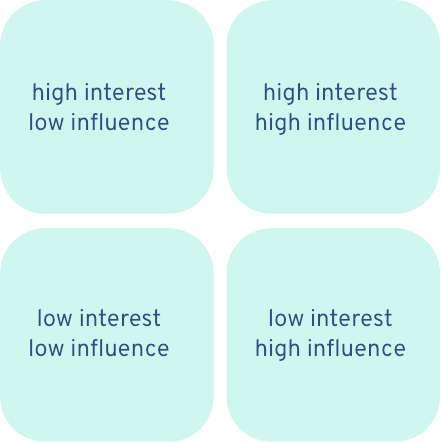
This exercise will help you determine which stakeholders should focus your energy and support on throughout the DAM adoption process.
It’s also important to conduct resistance planning. To manage resistance, you should brainstorm all the potential reasons your stakeholders might resist your new DAM—make a thoughtful, comprehensive list. Executives may lack awareness of why a change is needed. Creative teams may fear the unknown that comes along with this change. IT may resist because they anticipate a lack of support once the DAM is implemented. In this stage, you should consider your users’ concerns carefully, making note of potential blockages will help you gather their feedback and develop a communications plan that effectively addresses their concerns.
For organizations that have already implemented their DAM, it’s never too late to map your stakeholders and consider their needs. Resistance can happen at any point in the journey. Investigate how your DAM is performing with a survey, DAM usage data, or user interviews at regular intervals. You may not be able to implement a new system, but it’s never too late to revisit your users’ needs and consider why they may be resisting your processes.
2. Build your guild—recruit your DAMbassadors
After you’ve determined which users have the most influence and interest in your DAM, you should identify who among them could be your allies. Who is likely to adopt new norms quickly? Who can assist you and offer insight into team morale? Who is most invested in the DAM planning process and its success?
Determine who among your internal (and even external partners) would be willing to offer ongoing feedback and engage with the DAM process. These are your DAMbassadors and they will help you disseminate information, encourage excitement in your engagement campaigns, and uphold the norms and processes you’ll put in place.
Recruiting them could be as easy as taking the ‘high interest/high influence’ users from your stakeholder mapping and asking if they’d be interested in taking on an advisory role. It could be for a limited time as the DAM is selected and implemented, or if your DAM is already in place, you could ask them to give feedback on an ad hoc basis. Consider incentivizing this role—people are more likely to feel appreciated if they gain something from their insights. Bonus points if some of your champions are executive-level leaders—their buy-in will be important to secure budget and support across the organization.
Learn pro-tips on Maximizing your Content Value
3. Consult your wizards—plan your processes and collect feedback
It’s never too early to start thinking about governance, or how your DAM will be managed. As a part of governance, you must define processes related to users, assets, metadata, and uploads.
You will need to answer questions like:
- Will assets be uploaded manually through the DAM, via an integration, or both?
- Are you managing web assets? Video assets? Something else? How does that change your DAM needs?
- What are your file naming conventions? And where are these documented, and how are they communicated and enforced?
- Which users/groups will be permitted to edit metadata?
- Who will be responsible for archiving and expiring files?
- Who will provide DAM access to external users? Who will be responsible for training them?
- What are the different levels of access/permissions for different users and groups? How will access change if the users are external agencies, vendors, or retail partners?
Building and documenting these norms early on allows you to run them by your DAMbassadors and important stakeholders to ensure you’re considering complex user or asset challenges that may come up when choosing, implementing, or managing your DAM.
And remember that feedback shouldn’t stop at the planning stage or after you’ve implemented your DAM—continue seeking ongoing feedback from your internal stakeholders and external DAM users. Nothing halts adoption more than users feeling like their feedback and suggestions don’t matter. Consider how you can collect feedback throughout the DAM process and follow up if user feedback influenced a decision—this builds their trust.
4. Pick your path—select the best DAM for your needs
Once you’ve determined your DAMbassadors, your unique governance idiosyncrasies, and sought the feedback of your internal and external users, you’ll be ready to select your DAM.
Picking the right DAM can often feel endlessly complicated—the time spent gathering requirements, researching applications, and reaching out to platforms can leave you feeling exhausted by the options. Narrow your focus on the top features that your organization cannot function without—based on your stakeholder feedback, of course. If you’ve done Steps 1-3 thoroughly, your organization’s ideal DAM should check off all your most important boxes.
If you’ve made your case to your executive-level leadership, done your research, and considered user feedback, your choice of DAM should set you up for the ideal user adoption scenario.
5. The rallying cry—develop and execute a communications plan
Communication plans can make or break DAM implementation. A clear comms plan will ensure everyone knows how the DAM will help them achieve their goals (i.e. what they can expect from the DAM) and how they’re involved in the implementation and management of the DAM (i.e. what’s expected of users). Use face-to-face meetings, town halls, forums, and Q&A sessions to communicate with stakeholders.
The key message is simple: If the DAM works as intended and users adopt it as directed, everyone’s lives become easier. This plan defines the philosophy of the DAM, how it will be used, and how success will be measured for all users. It should include a timeline for implementation and onboarding and where users can go for ongoing DAM best practices, support, and training. You may choose to include how your organization plans to work with the DAM vendor and how the transition from the current asset system to the DAM will take place. The more clear and thoughtful your comms plan is, the more likely you’ll be to reduce friction post-launch and improve adoption.
6. Create a legacy—make onboarding and ongoing training impossible to ignore
Your DAM adventure has begun. It’s filled to the brim with users accessing your DAM for many reasons—approval workflows, sharing assets, archiving past campaigns. How do you manage to keep all those users following your carefully curated governance rules and norms? You create onboarding and training tools that are tailored-made to teach. Here are 3 DAM onboarding and training ideas to keep your journey of asset management smooth:
- Launch a frequently asked questions (FAQ) video series in your DAM
Take a page out of Webflow University’s book and make a library of quick videos to onboard users, answer common questions, and reiterate helpful governance norms. Host your FAQ library in your DAM and link its location to the dashboard of every user. Each video can be casual and even funny—the point is to make learning and relearning DAM conventions accessible and impossible to ignore. - Create a DAM help desk
Sometimes users don’t know where to get their questions answered. Creating a DAM help desk, either in person or virtually, gives them a predetermined window to come to you with questions and feedback on the DAM. Have your DAM managers, IT staff, or DAMbassadors cycle through ‘office hours’—they can be on standby until a user reaches out with a question. This also works great asynchronously as a Slack or Teams channel. - Build a governance document
Remember the governance planning you did in Step 3? Consider creating a governance resource that users can refer back to. Create an artfully designed landing page—an internal search engine that points people to common solutions to their problems. Give clear guidance on how to use common metadata terms, manage metadata, and upload assets. Include anything else that users may forget or make mistakes from time to time.
You may notice that this resource and your video FAQ library will have some overlap—it’s important to have resources available in multiple formats and places. The more accessible, interesting, and valuable this information is, the more likely your users are to adopt it.
Your DAM adoption journey begins with a single step
User adoption is the single defining characteristic of a successful DAM implementation. Are your users accessing the DAM as intended? Is it working for them as intended? In your DAM adventure, user adoption is an ongoing process—a never-ending story. But, if you can map out your desired digital asset system, bring along the right users to see it through, plan and communicate your processes, and keep people engaged—widespread adoption is possible.
For organizations with entrenched DAMs (and tired DAM managers), it’s never too late to address user adoption. There’s always the opportunity to seek feedback on how to improve your DAM processes, make training easier to access, or develop a comms plan that revitalizes users’ desire to make the DAM better.
After all, a journey of a thousand miles begins with a single step. Your adventure awaits.
Want to know what types of data your DAM should be providing? Reach us at marketing@sifycorp.com
Written by Michael Waldron, CMO, Tenovos