India’s First Commercial Data Center completes 21 years in Operation
Sify’s facility at Vashi was the first of the 10 Company-owned Data Centers
Chennai, Sep 20, 2021— Sify Technologies Limited (NASDAQ: SIFY), India’s most comprehensive ICT solutions provider today announced that its Data Center at Vashi, the first commercial Data Center in India, completed 21 years of uninterrupted operations.
Sify Technologies expanded into the Data Center business in the year 2000. Sify has built and today operates 10 carrier-neutral Data Centers, currently offering more than 70 MW IT Power. Following the facility at Vashi, Sify followed up with larger capacities in Bangalore, Chennai, Airoli, Noida, Rabale, Hyderabad and Kolkata and aims to add 200 MW in the next 4 years. Through CloudCover, Sify also services a network of 49 Data Centers across India.
Delighted at this milestone achievement, Mr. Raju Vegesna, Chairman, Sify Technologies, said “Sify has pioneered and set high standards in the Data Centre space in India ever since the launch of country’s first concurrently-maintainable data center at the Infotech Park in Vashi, Mumbai in September 2000. Sify was the first to foresee the scope for Data Center as a business vertical in India and hence aggressively invested in the key markets. Today, the combined strength of our Data Centers and Network connectivity puts us in an unbeatable position to drive digital transformation across the nation.”
Mr. Kamal Nath, CEO, Sify Technologies, said “This 21st anniversary of our Vashi Data Center is testimony to Sify’s legacy in the Data Center business in India. Our data center footprint across the country powers our cloud@core philosophy and drives the Integrated Data Center solutions that we offer to our clients to help them meet their digital transformation goals.”
Key advantages/ features of Sify Data Centers
- Strong connectivity with cloud cover and cost saving with cross connects
- Leading industry SLAs supporting colocation agreements
- Carrier neutral services
- Earthquake resistant structure
- Proven capability to meet 99.982% uptime
- Connectivity from major telecom carriers
- On demand cloud and Managed hosting services
About Sify Technologies
A Fortune India 500 company, Sify Technologies is India’s most comprehensive ICT service & solution provider. With Cloud at the core of our solutions portfolio, Sify is focused on the changing ICT requirements of the emerging Digital economy and the resultant demands from large, mid and small-sized businesses.
Sify’s infrastructure comprising state-of-the-art Data Centers, the largest MPLS network, partnership with global technology majors and deep expertise in business transformation solutions modelled on the cloud, make it the first choice of start-ups, SMEs and even large Enterprises on the verge of a revamp.
More than 10000 businesses across multiple verticals have taken advantage of our unassailable trinity of Data Centers, Networks and Security services and conduct their business seamlessly from more than 1600 cities in India. Internationally, Sify has presence across North America, the United Kingdom and Singapore.
Sify, www.sify.com, Sify Technologies and www.sifytechnologies.com are registered trademarks of Sify Technologies Limited.
Forward Looking Statements
This press release contains forward-looking statements within the meaning of Section 27A of the Securities Act of 1933, as amended, and Section 21E of the Securities Exchange Act of 1934, as amended. The forward-looking statements contained herein are subject to risks and uncertainties that could cause actual results to differ materially from those reflected in the forward-looking statements. Sify undertakes no duty to update any forward-looking statements.
For a discussion of the risks associated with Sify’s business, please see the discussion under the caption “Risk Factors” in the company’s Annual Report on Form 20-F for the year ended March 31, 2021, which has been filed with the United States Securities and Exchange Commission and is available by accessing the database maintained by the SEC at www.sec.gov, and Sify’s other reports filed with the SEC.
For information, please contact:
Sify Technologies Limited
Mr. Praveen Krishna
Investor Relations & Public Relations
+91 44 22540777 (ext.2055)

Future of Data Center: Architectural Advances
Data is growing at an exponential rate in the modern borderless world. Over 2.5 Quintilian bytes of data is generated every day across the globe. India alone is set to produce 2.3 million petabytes of digital data by the year 2020, and it is growing at a rate that’s much faster than the world average. Many enterprises are also exploring online data backup in the cloud further fueling this data explosion.
This data explosion increases the demand for storage capacities that are served by Data Centers. In just two decades, Data Centers have scaled up from the size of a room to the size of a commercial tower giving way to accommodate this increased storage need. Besides storage, modern Data Centers are also sprucing up to handle more services. They are more connected than ever and can meet the needs of the contemporary business world. New solutions have emerged around Data Center architecture that can bring competitive advantages to users through more optimized performance. Data Centers have now become critical components of a modern IT infrastructure.
In India, we see emerging businesses growing at a fast pace, with cloud computing technologies and cloud warehouses taking the lead to store enormous amounts of digital data. At the beginning of the 21st century, most organizations in India had captive Data Centers that were self-managed. With advances introduced in cloud technologies and specialized players adding more capabilities, the self-managed option was replaced by the outsourcing model. Increase in the users, economic growth of the country, and cost advantages of cloud-based Data Centers are some of the trends driving adoption of a cloud-based architecture. Captive Data Centers are expensive to accommodate and challenging to scale. However, cloud-based Data Center architectures are more flexible.
Many new technologies, services, and facilities that were premium and rare earlier are now part of standard offerings in modern Data Centers. These services are reshaping the way businesses operate today.
Another trend to note is the emergence of Modular 4th generation Data Centers. These Data Centers comprise modular units that help in quickly scaling up the infrastructure. In addition to the components in the racks being modular, the building itself could be modular. For instance, some Data Centers are built in shipping containers. Scaling up means adding more shipping containers with Data Center units.
Resolving the Challenges
Many challenges of the past have now been resolved with architectural advances in the Data Center space. For instance, Pod architecture for SaaS assigns a set of machines to a specific job or customer for all of its required tasks. To create redundancies for power and cooling in a Data Center, a lot of assembling needs to be done which can incur a cost. You may also need to construct additional racks. However, POD comes with frames that are free standing and compatible with most equipment so it can be used for all needs including power, cooling, and cabling. So, your need for construction within the Data Center facility is minimized. It can simplify infrastructure scaling to support your digital growth. It is a standardized deployment that can automate user provisions. It allows you to use shared storage, firewall, and load balancing while customizing individual PODs as per your business needs. When scaling up users, you would not need to perk up your whole infrastructure but only add or remove specific resources user-by-user, which can help reduce overheads.
While Data Centers serve as an ideal place to use your critical applications, operating them has been a big challenge in the past. A Data Center is affected by many environmental factors that add inevitable complexities. A Data Center operator needs to take care of the cooling needs of Data Centers as well as maintain correct levels of air and humidity in the storage spaces. These challenges make it worthwhile for companies to try cloud-based shared storage space managed by third-party experts who could be better equipped to counter these problems. In modern warehouses, Computer Room Air Conditioning (CRAC) device is used instead of traditional air conditioning, which can monitor as well as maintain humidity, air flow, and temperature in a Data Center.
The future is smart!
The future of the Data Center is smart: modern Data Centers are now offering converged infrastructure, and the trend is further moving towards hyper-convergence. This has brought many advantages for Data Center operations and has also solved problems that paralyzed companies earlier. The risk of hardware failure, for instance, plagues companies with the risk of losing data and they struggle to rebuild their infrastructure. Siloed approaches to managing servers was another challenge that made Data Center operations expensive and complicated. With converged infrastructures, the process of managing a Data Center gets organized; with a single interface used for infrastructure management, your company turns more proactive in streamlining your operational processes and in keeping your data on the cloud safe.
While consolidation of operations through convergence makes management easier, most servers are still siloed, and that is where hyper-convergence plays its magic. Hyper-converged Data Centers are software-defined Data Centers that are also called smart Data Centers. They use virtualization and converge all operational layers including computing, networking, and storage into a single box. With hyper-convergence, everything is now on the same server which brings improved efficiencies, reduced costs, and increased control over Data Center components.
Colocation: A trend to watch
Rethink IT, replace captive servers with cloud services. You would now need much less space for storing the same amount of data than you needed in a captive Data Center. Welcome to the concept of managed colocation!
Colocation services (or Colo) are delivered by Data Center solution providers to enhance user experience. A hybrid cloud drives them and provides specialized services for their users. A collocation is a place where customers have better control over their private infrastructure, and with increased proximity to the public cloud, they can also be closer to their customers.
A colocation service relies on the principles of abstraction, software-based provisioning, automation, unified management, and microservices. Colo facilities are highly flexible as it can reap the advantages of both private and public cloud with a hybrid infrastructure. While private cloud gives enhanced security and control, the public cloud makes it easy to transport data over encrypted connections and gives you additional storage space.
Modern colocation services are now shifting to Data Center-as-a-Service (DCaaS) which is a much more flexible deployment than Software as a Service, Platform as a Service, and Infrastructure as a Service models. A hybrid DCaaS colocation architecture has a public IaaS platform, on hosted or on-premise private cloud and a Wide Area Network (WAN) to connect the two. A major advantage of DCaaS is the change in the cost equation. DCaaS providers have high economies of scale that allow them to offer you volume-based discounts taking your costs down. The DCaaS hybrid cloud architecture not only provides hybrid storage flexibility and cost advantage but also other benefits like increased redundancies, improved agility, and maximum security.
A hybrid cloud combines the resources available to you on the private cloud and the public cloud and gives you the flexibility to seamlessly move your data between them. With changes in your cost structures and business needs, you can flip your resources between the two clouds anytime. If you’ve reached the designed capacity of your current private cloud, you can always switch to a Public cloud for further expansion. For instance, Cloud bursting can give you on-demand storage over the public cloud so that you can shift the increased burden on your private cloud to the public in peak business seasons.
Data Center technologies are still emerging, and new architectures like hybrid cloud and hyper-convergence are taking shape. In the future, more companies would realize the benefits of these architectural modifications and will be able to enjoy far higher capacities and advanced Data Center management capabilities.
Sify offers state of the art Data Centers to ensure the highest levels of availability, security, and connectivity for your IT infra. Our Data Centers are strategically located in different seismic zones across India, with highly redundant power and cooling systems that meet and even exceed the industry’s highest standards.
How to leverage hyperscale Data Centers for scalability
Modern Data Centers are synonymous with massive high-speed computational capabilities, data storage at scale, automation, virtualization, high-end security, and cloud computing capacities. They hold massive amounts of data and provide sophisticated computing capacities. Earlier, a simple network of racks with storage units and a set of management tools to individually manage them were enough. The architecture was simple to understand, and only local resources were consumed in its operation.
However, as organizations became increasingly internet dependent, the volumes of the data exploded with more of it added by the social media and the sensing devices that grew manifold. Remote access to this data through the Web emerged as the trend. The local tools that were used earlier in traditional Data Center were fragmented and were inefficient to handle not just the volumes but also complexities that in effect needed a large infrastructure. There were challenges of scaling up when companies expanded, and performance dipped when peak loads were required to be handled. This led to the evolution of hyperscaling as a solution.
Hyperscale is based on the concept of distributed systems and on-demand provisions of the IT resources. Unlike the traditional Data Center, a hyperscale Data Center calls in a large number of servers working together at high speeds. This ability gives the Data Center a capacity to scale both horizontally and vertically. Horizontal scaling involves on-demand provisioning of more machines from the network when scaling is required. Vertical scaling is about adding power to existing machines to increase their computing capacities. Typically hyperscale Data Centers have lower load times and higher uptimes, even in the demanding situations like the need for high-volume data processing.
Today, there are more than 400 hyperscale Data Centers operating in the world, with the United States alone having 44% of the global Data Center sites. By 2020, the hyperscaled Data Center count is expected to reach 500 as predicted by Synergy Research Group. Other leading countries with hyperscaled Data Center footprints are Australia, Brazil, Canada, Germany, India and Singapore.
Hyperscale Data Center Can Do More at Less Time and Lower Cost
A traditional Data Center typically has a SAN (Storage Area Network) provided mostly by a single vendor. The machines within the Data Center would be running on Windows or Linux, and multiple servers would be connected through commodity switches. Each server in the network would have its local management software installed in it and each equipment connected to them would have its own switch to activate the connection. In short, each component in a traditional Data Center would work in isolation.
In contrast, a hyperscale Data Center employs a clustered structure with multiple nodes housed in a single rack space. Hyperscaling uses storage capacities within the servers by creating a shared pool of resources, which eliminates the need for installation of a SAN. The hyperconvergence also makes it easier to upgrade the systems and provide support through a single vendor solution for the whole infrastructure. Instead of having to manage individual arrays and management interfaces, hyperscaling means integration of all capacities, such as storage, management, networks and data, which are managed from a single interface.
Installing, managing and maintaining a large infrastructure consisting of huge Data Centers would have been impossible for emerging companies or startups that have limited capital and other resources. However, with hyperconvergence, even microenterprises and SMEs, as well as early stage startups can now enjoy access to a large pool of resources that are cost-effective and provide high scalability in addition to flexibility. With hyperconvergence, these companies can use Data Center services in at a much lesser cost with the additional benefit of scalability on demand.
A hyperscale Data Center would typically have more than 5000 servers that are linked through a high-speed fiber optics network. A company can start small with only a few servers configured for use and then, later at any point of time, automatically provision additional storage from any of the servers in the network as their business scales up. An estimate of the demand for additional infrastructure is made based on how the workloads are increasing, and a proactive step can be taken to scale up capacities to meet the increasing need for resources. Unlike traditional Data Centers that work in isolation, hyperscaled infrastructures depend on the idea of making all servers work in tandem, creating a unified system of storage and computing.
When implementing a hyperscale infrastructure, the supplier could play a significant role through the delivery of next-gen technologies that need high R&D investments. According to a McKinsey report, the top five companies using hyperconverged infrastructure have over $50 billion of capital invested in 2017 and these investments are growing at the rate of 20% annually.
Leveraging hyperscaled Data Centers, businesses can achieve superior performance and deliver more at a lower cost and a fraction of time than before. This provides businesses with the flexibility of scaling up on demand and an opportunity to continue operations without any interruptions.
Sify offers state of the art Data Centers to ensure the highest levels of availability, security, and connectivity for your IT infra. Our Data Centers are strategically located in different seismic zones across India, with highly redundant power and cooling systems that meet and even exceed the industry’s highest standards.
From Legacy to the Modern-day Data Center Cooling Systems
Modern-day Data Centers provide massive computational capabilities while having a smaller footprint. This poses a significant challenge for keeping the Data Center cool, since more transistors in computer chips, means more heat dissipation, which requires greater cooling. Thereby, it has come to a point where traditional cooling systems are no longer adequate for modern Data Center cooling.
Legacy Cooling: Most Data Centers still use legacy cooling systems. They use raised floors to deliver cold air to Data Center servers, and this comes from Computer Room Air Conditioner (CRAC) units. These Data Centers use perforated tiles to allow cold air to leave from the plenum to enter the main area near the servers. Once this air passes through the server units, heated air is then returned to the CRAC unit for cooling. CRAC units have humidifiers to produce steam for running fans for cooling. Hence, they also ensure the required humidity conditions.
However, as room dimensions increased in modern Data Centers, legacy cooling systems become inadequate. These Data Centers need additional cooling systems besides the CRAC unit. Here is a list of techniques and methods used for modern Data Center cooling.
Server Cooling: Heat generated by the servers are absorbed and drawn away using a combination of fans, heat sinks, pipes within ITE (Information Technology Equipment) units.1 Sometimes, a server immersion cooling system may also be used for enhanced heat transfer.
Space Cooling: The overall heat generated within a Data Center is also transferred to air and then into a liquid form using the CRAC unit.
Heat Rejection: Heat rejection is an integral part of the overall cooling process. The heat taken from the server is displaced using CRAC units, CRAH (Computer Room Air Handler) units, split systems, airside economization, direct evaporative cooling and indirect evaporative cooling systems. An economizing cooling system turns off the refrigerant cycle drawing air from outside into the Data Center so that the inside air can get mixed with the outside air to create a balance. Evaporated water is used by these systems to supplement this process by absorbing energy into chilled water and then lowering the bulb temperature to match the temperature of the air.
Containments: Hot and cold aisle containment use air handlers to contain cool or hot air and let the remaining air out. A hot containment would contain hot exhaust air and let cooler air out while cold containment would do vice versa.3 Many new Data Centers use hot aisle containment which is considered as a more flexible cooling solution as it can meet the demands of increased density of systems.
Closed-Couple cooling: Closed-Couple Cooling or CCC includes above-rack, in-rack or rear-door heat exchanger systems. It involves bringing the cooling system closer to the server racks itself for enhanced heat-exchange.2 This technology is very effective as well as flexible with long-term provisions but requires significant investments.
Conclusion
Companies can choose a cooling system based on the cooling needs, infrastructure density, uptime needs, space factors, and cost factors. The choice of the right cooling system becomes critical when the Data Center needs to have high uptime and avoid any downtime due to energy issues.
Sify offers state of the art Data Centers to ensure the highest levels of availability, security, and connectivity for your IT infra. Our Data Centers are strategically located in different seismic zones across India, with highly redundant power and cooling systems that meet and even exceed the industry’s highest standards.
Five major challenges during Data Center migration
Data Center migration is essential for companies looking to meet the growing demands of the IT/data services. However essential, this process comes with its own set of challenges. Thus, it would be wise to tread carefully and assess both the core necessities and challenges that usually accompany Data Center migration.
Data Center migration involves moving a part or the entire IT operation of a company from the existing Data Center to another, either physically or virtually (shared Data Centers via the cloud). Here are the five basic challenges, or rather considerations to make for a successful Data Center migration:
1. Service Provider Credentials
Before rushing into a collaboration with a Data Center migration provider, it is important to assess the service providers business; what is their track record of providing Data Center services as well as maintaining colocation Data Centers; do they operate by purchasing the Data Center services from multiple providers; what are the terms and conditions. Usually, if a provider leases services instead of having their own facilities, it can be safely said that it will not offer stability or efficiency in delivering the pivotal IT needs for a digital enterprise.
Hence, doing a little research ahead of the Data Center migration about the provider helps assess the quality of services of the provider.
2. Customer Service
An excellent customer service is demanded of any service, and Data Center migration is no exception. Providers that have created a good track record of their services in the market have done so by not only delivering seamless and actionable IT/data solutions but also by catering to the minor troubles and issues faced by their customers. The services of good providers are accompanied by on-demand expert assistance with less wait time. Also, one has to consider whether or not a prospective provider can meet all the expectations and business demands as and when necessary. Thus, companies should always try to dig a little deeper to gain knowledge about the customer service of a provider before choosing one for Data Center migration.
3. Data Center Location
The location of a service provider’s Data Center is a major factor for the future operations of a company. It may be so that a provider promises to deliver all the core needs of a company today, but in the future, they may falter from that promise. For instance, if a provider takes over another Data Center provider’s location, there are chances that the Data Center facilities may fall within close proximity of each other. As a result, the service provider may feel it’s unnecessary to have multiple Data Centers situated closely and may shut down some chosen locations. This can become a huge inconvenience if a company’s location is in the phase out location. Thus, to avoid such unsavory situations, it’s best to choose a provider with their own facilities located strategically.
4. Service Bundling
Customers can hugely benefit from Data Center providers that provide access to facility resources and network connectivity to the users. However, not all providers are able to deliver this. Providers that do not own their own facilities, locations, and operations, often collaborate with third-party providers or platforms, which may cease to exist in the future. And when that happens, it is sure to affect a company’s operations. And it might end up in a situation where the customers will have to make adjustments with two separate providers that may no longer be able to offer seamless and efficient services.
5. Reliability
Finally, one of the most important factors to consider for Data Center migration is the reliability of the service provider. To determine this, one has to analyze the security systems, HVAC features, OPEX, availability and uptime, and other such measures. It would be wise to choose a provider with a history of minimal number of service outages, since a service outage can cost you dearly. Also, while choosing a provider, one should check if it is a certified Data Center that offers stable, cost-efficient, and state-of-the-art services.
These are the five core areas where companies can face numerous challenges while opting for a Data Center migration. However, they can be easily overcome if addressed with a little caution and risk-assessment approach.
Outsource complex and time-consuming Data Center migration to Sify.
To learn more about SIFY DATA CENTER MIGRATION SERVICES and how we can be your best choice to carefully plan and perfectly execute your Data Center migration project.
Keys to Successful Data Center Operations
For one reason or another, every business requires a Data Center at some point. There is an ever-increasing demand for data everywhere, and as a result of this, companies require more and more processing power and storage space.
There isn’t a specific kind of company that will require a Data Center, but some are more likely to require it than others. For instance, any kind of business which uses, processes, or stores a lot of data will definitely require a Data Center. These businesses can be educational institutions – like schools or colleges, telecom companies, or even social networking services. Without constant access to data, these companies can fall short on providing essential services. This can lead to loss of customer satisfaction as well as revenue.
Earlier, businesses only had the option of going for a physical Data Center, where data would be stored across several devices in a single facility. At such a time, to ensure smooth operations of the Data Center, it was enough simply to have an efficient cooling strategy in which power was judiciously used.
With the rise in technology, however, cloud servers are now available on which data can be stored remotely. As a result of this, the future of Data Centers is one in which all devices are connected across several different networks. This requires more Data Center elements than existed previously. Moreover, the metrics on which the efficiency of a Data Center is judged have also evolved.
There are now 4 factors according to which the success of a Data Center can be determined. They are:
- Infrastructure
- Optimization
- Sizing
- Sustainability
Infrastructure
A lot of businesses forget the fact that infrastructure can directly impact the performance of a network. Maximizing network performance can be achieved by paying attention to three parts of the complete infrastructure – the first being structured cabling, the second being racks and cabinets, and the third being cable management.
To take just one example, scalable as well as feasible rack and cabinet solutions are an effective way of realizing this. Not only can they accommodate greater weight thresholds, but they also have movable rails and broader vertical managers. This provides options for increased cable support, airflow, and protection.
Optimization
The faster a Data Centers expands, the quicker it grows in terms of size and complexity. This requires significantly quick deployment time. A Data Center needs to be updated regularly to support the growing needs of a business. Purchasing infrastructure solutions which can optimize time will be a wise decision in this regard – it will help in manifold ways by making it easier to move infrastructure, or to make additions or subtractions to an already existing setup.
A modular solution can become the foundation for scalable building infrastructure and save time as well! Modular racks and cabinets can be put together quickly, and also have adjustable rails and greater weight thresholds. Thus, they can accommodate new equipment very easily. Such a modular solution can support future changes in the network as well, without increasing the scope of disruption.
Sizing
Earlier, the one key factor in assessing the efficiency of a Data Center in terms of size was to see how fast it would grow. Accordingly, the infrastructure supporting it would also grow. While sounding simple in theory, such a principled decision – that expansion will happen without any forethought – is detrimental both in terms of capital as well as energy.
The truth is that space is a premium everywhere – so why shouldn’t this be the case while considering a Data Center? An infrastructure system should always be built for optimization, so that the process of scaling is straightforward and not beset by liabilities of any kind. One simple way to achieve this is to adopt the rack as the basic building block for a Data Center.
Sustainability
Sustainability is not a singular concept. While it is often associated with not destroying natural resources, it can also be tailored to achieve the opposite effect – to conserve them. A myth is often propagated regarding natural resources – that it is more expensive to streamline processes to be sustainable. The truth is that it costs the same and, moreover, it has a lot of benefits as well.
When sustainable manufacturers design solutions which lower the overall impact your Data Center will have on the environment, it translates into more flexibility in terms of design, shorter installation times, as well as reduction in material waste on site – and much, much more. The key factor is energy efficiency, and therefore all other processes are streamlined to fit this metric.
It is no longer enough simply to consider effective cooling and energy solutions as the be-all and end-all of Data Center operations. Data Centers play a crucial role in terms of a business’ overall success, and trying simply to maximize efficiency within a Data Center is a short-sighted target. Other forms of efficiency can equip the Data Center to be changed later at reduced costs, thus making it more capital-effective.
Ultimately, the goal should be to make the Data Center have efficient infrastructure and optimized modular solutions. In addition, it should be scalable in terms of size, without incurring liabilities, and should also be sustainable, as it will help with all of the above.
Focus on your core business and outsource the complexities of Data Center operations to Sify
To know more about Sify’s Colocation Managed Services that will leave your core IT team free to concentrate on more strategic initiatives that are mission-critical to your business…
How Data Center works (and how they’re changing)
A Data Center is usually a physical location in which enterprises store their data as well as other applications crucial to the functioning of their organization. Most often these Data Centers store a majority of the IT equipment – this includes routers, servers, networking switches, storage subsystems, firewalls, and any extraneous equipment which is employed. A Data Center typically also includes appropriate infrastructure which facilitates storage of this order; this often includes electrical switching, backup generators, ventilation and other cooling systems, uninterruptible power supplies, and more. This obviously translates into a physical space in which these provisions can be stored and which is also sufficiently secure.
But while Data Centers are often thought of as occupying only one physical location, in reality they can also be dispersed over several physical locations or be based on a cloud hosting service, in which case their physical location becomes all but negligible. Data Centers too, much like any technology, are going through constant innovation and development. As a result of this, there is no one rigid definition of what a Data Center is, no all-encompassing way to imagine what they are in theory and what they should look like on the ground.
A lot of businesses these days operate from multiple locations at the same time or have remote operations set up. To meet the needs of these businesses, their Data Centers will have to grow and learn with them – the reliance is not so much on physical locations anymore as it is on remotely accessible servers and cloud-based networks. Because the businesses themselves are distributed and ever-changing, the need of the hour is for Data Centers to be the same: scalable as well as open to movement.
And so, new key technologies are being developed to make sure that Data Centers can cater to the requirements of a digital enterprise. These technologies include –
- Public Clouds
- Hyper converged infrastructure
- GPU Computing
- Micro segmentation
- Non-volatile memory express
Public Clouds
Businesses have always had the option of building a Data Center of their own, to do which they could either use a managed service partner or a hosting vendor. While this shifted the ownership as well as the economic burden of running a Data Center entirely, it couldn’t have as much of a drastic effect to due to the time it took to manage these processes. With the rise of cloud-based Data Centers, businesses now have the option of having a virtual Data Center in the cloud without the waiting time or the inconvenience of having to physically reach a location.
Hyper converged infrastructure
What hyper converged infrastructure (HCI) does is simple: it takes out the effort involved in deploying appliances. Impressively, it does so without disrupting the already ongoing processes, beginning from the level of the servers, all the way to IT operations. This appliance provided by HCI is easy to deploy and is based on commodity hardware which can scale simply by adding more nodes. While early uses that HCI found revolved around desktop virtualization, recently it has grown to being helpful in other business applications involving databases as well as unified communications.
GPU Computing
While most computing has so far been done using Central Processing Units (CPUs), the expansive fields of machine learning and IoT have placed a new responsibility on Graphics Processing Units (GPUs). GPUs were originally used only to play graphics-intensive games, but are now being used for other purposes as well. They operate fundamentally differently from CPUs as they can process several different threads in tandem, and this makes them ideal for a new generation of Data Centers.
Micro segmentation
Micro segmentation is a method through which secure zones are created in a Data Center, curtailing any problems which may arise through any intrusive traffic which bypasses firewalls or. It is done primarily through and in software, so it doesn’t take long to implement. This happens because all the resources in one place can be isolated from each other in such a way that if a breach does happen, the damage is immediately mitigated. Micro segmentation is typically done in software, making it very agile.
Non-volatile memory express
The breakneck speed at which everything is getting digitized these days is a definitive indication that data needs to move faster as well! While older storage protocols like Advanced Technology Attachment (ATA) and the small computer system interface (SCSI) have been been impacting technology since time immemorial, a new technology called Non-volatile memory express (NVMe) is threatening their presence. As a storage protocol, NVMe can accelerate the rate at which information is transferred between solid state drives and any corresponding systems. In doing so, they greatly improve data transfer rates.
The future is here!
It is no secret that Data Centers are an essential part of the success of all businesses, regardless of their size or their industry. And this is only going to play a more and more important factor as time progresses. A radical technological shift is currently underway: it is bound to change the way a Data Center is conceptualized as well as actualized. What remains to be seen is which of these technologies will take center stage in the years to come.
Reliable and affordable connectivity to leverage your Data Center and Cloud investments
To know more about Sify’s Hyper Cloud Connected Data Centers – a Cloud Cover connects 45 Data Centers, 6 belonging to Sify and 39 other Data Centers, on a high-speed network…
Here’s why your enterprise should have a disaster recovery system
Disaster can strike anytime. Whether they are natural or inflicted by man, disasters have small chances of being predicted accurately. Whatever be the case, enduring and recovering from these disasters can be a pretty rough job for your enterprise.
Disasters can potentially wipe out the entire company, with the enterprise’s data, employees, and infrastructure all at risk. From small equipment failure to cyber-attacks, recovery from disasters depends upon the nature of the events themselves. Disaster recovery is an area of security management and planning that aims to protect the company’s assets from the aftermath of negative events. While it is incredibly tough to completely recover from disasters within a short span of time, it is certainly advisable to have disaster recovery systems in place. In the time of need, these DR plans can present an effective, if not quick, method of recovery from negative events.
The importance of a Disaster Recovery System
Prevention is better than cure, but sometimes, we must make do with the latter. We cannot prevent every attack that can potentially cripple our enterprise, but we must make sure that we have the resources to recover. The need for disaster recovery systems can arise from various situations, some being discussed below.
- The unpredictability of nature
It is estimated that about 4 out of every 5 companies, which experience interruptions in operations of 5 days or more, go out of business. The wrath of Mother Nature is certainly a contributing factor to this statistic. One can seldom predict when Mother Nature is about to strike. Earthquakes, tsunamis, tornadoes and hurricanes can cause irreparable damage to enterprises and businesses. Stopping these disasters is impossible; however, not having a disaster recovery plan in place is inexcusable. We cannot predict how much damage nature can cause to our company; hence, it is of prime importance that a disaster recovery system be in place to prevent your enterprise from falling prey to the aforementioned statistic.
- Technology failures can occur anytime
These days, customers want access to data and services every second of the day, every day of the year. Due to the immense pressure on your enterprise systems, it is possible that they may crumble. Machine and hardware failure can seldom be predicted, but it is certainly possible to resume normal work with minimum disruption and slowdown. The only way to do this is either by eliminating single failure points from your network, which can be extremely expensive, or by having suitable recovery systems in place. Having recovery plans, in hindsight, are perhaps the best bet for you to keep your enterprise going at full speed.
- Human error
“Perfection is not attainable, but if we chase perfection we can catch excellence.”
Humans aren’t perfect, and are bound to make mistakes. The nature of these mistakes cannot be predicted. In order to survive all these unpredictable phases, you need to have an effective disaster recovery plan in place.
Enough about the reasons behind backup plans.
Let’s look at what a good disaster recovery system should include.
Your disaster recovery system must include…
Each and everything that could potentially save you from having to start up your enterprise from scratch. Methods to recover from every potential interruption, from technical to natural, should be there in your DRP. These include analyses of all threats, data backup facilities, employee and customer protection, among other essential things.
With each passing day, you must also consider any additions or updates to your DR systems. Technology is improving day by day, and it is possible that what you’re currently trying to achieve may be made easier and quicker by the use of newer tech. Also identifying what’s most important, and where to innovate, is a crucial aspect of DR planning.
In order to ensure that your DR system is running at full speed, your enterprise can hold mock disaster recovery drills. This will help identify weak points in the system, and make people accustomed to the processes involved. It will make reacting to the actual disaster much more efficient and quick.
DRaaS
Disaster Recovery as a service has made it easier for enterprises to have disaster recovery systems ready. Various providers have reduced the load on entrepreneurs when it comes to preparing for disasters, by offering them custom made effective disaster recovery systems. Perhaps the most important thing one should do now is not wait. If your enterprise has a disaster recovery system in place, thoroughly test it for bottlenecks, if it doesn’t, well, get one!
Ensure business continuity with Sify’s disaster recovery as a service.
To know more about GoInfinit Recover
– Sify’s disaster recovery solution with no change to your IT setup…
What to expect from the next generation of Data Center architecture
At this very moment, industry experts and visionaries are designing the future of IT services and systems. The vision outlines a fully enmeshed and embedded role for technology in our daily lives – from non-invasive micro tech providing real-time medical care and smart home technology to microcomputers -a web of smart and predictive devices that will connect all the different parts of our lives.
But to make this vision a reality, we need IT systems that provide a strong and flexible foundation to jump-start these innovations. We need Data Centers that facilitate rather than obstruct innovation, Data Centers that are proactive and are able to anticipate workloads and respond quickly.
As data explodes and newer technologies come into play, the next generation of DCs is likely to incorporate one or all of the following features to support future business needs.
Software defined Infrastructure
Simply put, in a software-defined Data Center (SDDC) all the components of the Data Center – compute, storage, security and networking are virtualized and delivered as a service. All the infrastructure functions and operations are completely automated by software and this allows SDDCs to provide a high degree of flexibility, efficiency, and reliability to the entire infrastructure.
Hyper converged Infrastructure
Hyper-converged DC combines and integrates all the DC services and infrastructure components such as compute, storage and network in one single box. Along with reduced complexity and costs, hyper-converged DCs provide enhanced operational performance and better disaster recovery and backup facilities.
Robotics and Automation in DCs
While robots will not replace humans in Data Centers anytime soon, there is a move towards using automation to take over repetitive and monotonous work, freeing up DC engineers to focus on more important issues. Companies have started experiments using robots to measure temperature and humidity in its Data Centers and several robotics manufacturers have already developed small robotic devices geared towards Data Center work.
Green Data Centers
Billions of devices are producing data every second, which ultimately ends up, stored in Data Centers across the globe. Increase in DC size and numbers will result in a corresponding rise in energy consumption. Future DC architecture will strive to be Green, with energy efficiency and conservation strategy at its core.
As with all IT changes and evolution, DC design and architecture will be a reflection of the needs and challenges faced by businesses. The next generation Data Center is not a fixed product yet; industry experts are in the process of defining its various components. It is still a concept and an evolving work in progress and the next 5 years will be crucial in shaping the new fundamentals of the next generation Data Center.
With over 13 years of operational and technical expertise (or 500+ man years of experience) serving over 300 customers spread across various industry verticals, viz., BFSI, Telecom, Pharma, Retail, Manufacturing, Media, etc., Sify has an impressive portfolio of over 2,00,000 sq. ft. of white space spread across 6 concurrently maintainable Data Centers, 15 Tier II Data Centers, 6 State Data Centers and several more for private clients, all built to exacting specifications and best-in-class global standards.
Ensure Lower Opex with Data Center Monitoring
Data Centers are the backbone of today’s IT world. Growing business, demand that the Data Centers operate at maximum efficiency. However, building Data Centers, maintaining and running them involves a lot of operational expenses for the company. It is important for companies to look for options that can help them lower Opex for their Data Centers. Proper capacity Planning, advanced monitoring techniques, and predictive analysis can help companies to achieve these goals and help improve business growth. Real-time monitoring helps Data Center operators to improve agility and efficiency of their Data Centers and achieve high performance at a lower cost.
Today’s digital world requires constant connectivity, which in turn requires all time availability. But there could be several things that could cause outages – like overloaded circuit chip, air conditioner unit malfunction, overheating of unmonitored servers, failure of UPS (uninterrupted power supply) and power surge. So how do we ensure availability? Implementing DCIM (Data Center Infrastructure Management) technologies can help you improve reliability. DCIM systems monitor power and environmental conditions within the Data Center. It helps in building and maintaining databases, facilitate capacity planning and assist with change management. Real-time monitoring helps improve availability and lower Opex.
Servers and electronic devices installed in Data Centers generate a lot of heat. Overheated devices are more likely to fail. Hence, Data Centers are usually kept at temperatures similar to refrigerators. Thus most of the power in a Data Center is consumed for cooling purpose. There are various techniques and technologies that Data Center operators can implement to save energy. Recent strategies like free cooling and chiller-free Data Centers, expand the allowable temperature and humidity ranges for Data Center device operations. Implementing these strategies help save energy costs. A telecommunication giant Century Link had an electricity bill of over $80 million in 2011 which made them think of a solution to lower this cost. CenturyLink implemented a monitoring program. With this monitoring program, their engineers were able to safely raise the supply air temperatures without compromising availability and with this solution CenturyLink was able to save $2.9 million annually.
As per ASHRAE (American Society of Heating, Refrigeration and Air Conditioning Engineers) new guidelines, the strategies like free cooling and chiller-free Data Centers can offer substantial savings and one might expect Data Center operators would make use of these seemingly straight forward adjustments. However, as per a survey, many Data Center operators are not yet following these techniques and average server supply air temperature for the Data Center is far cooler than ASHRAE recommendations.
Most of the Data Centers are provisioned for peak loads that may occur only a few times in a year. Server utilization in most of the Data Centers is only 12-18% or may peak at 20%. However, these servers are plugged in 24x7x365. In summary, though the servers are idle they are drawing the same amount of power that other operational servers are drawing. Power distribution and backup equipment implemented in Data Centers also cause substantial energy waste. Similar to cooling strategies, most of the owners employ alternate strategies to improve power efficiency. However, most of them are on the computer side. Increasing density of the IT load per rack, with the help of server consolidation and virtualization, can offer substantial savings, not only in equipment but also in electricity and space. This is an important consideration when a Data Center is located in constrained energy supply or electricity situation in the context of high real estate prices, as in most of the urban areas.
Increasing density leads to concentrated thermal output and needs modified power requirements. The effective way to maintain continuous availability in high-density deployments is real-time monitoring and granular control of the physical infrastructure. Power proportional computing or matching power supply to compute demand is the recent innovation that few of the operators are using to improve energy efficiency. Few operators use dynamic provisioning technologies or power capping features already installed on their servers. However, raising inlet air temperatures causes the risk of equipment failure. Without an in-depth understanding of the relationship between compute demand and power dynamics, implementing power capping increases the risk of the required processing capacity not being available when required. Without real-time monitoring and management, there is a high risk of equipment failure in a Data Center.
Real-time monitoring helps businesses get critical information to manage possible risks in the Data Center. Monitoring helps improve efficiency and decrease costs, enabling businesses to have availability and saving. They can lower Opex and still maintain high availability.
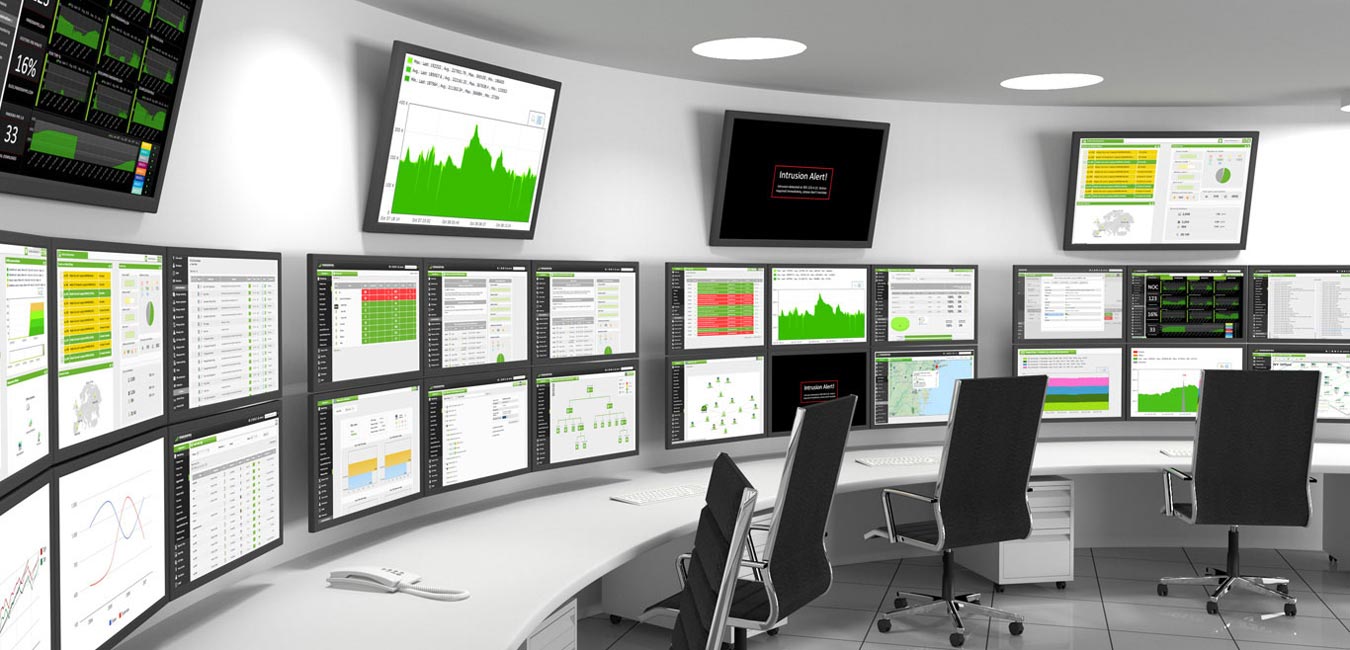
With the help of Real-time monitoring, a small issue can be spotted, before it becomes a large problem. In a smart Data Center, several thousands of sensors across the facility collect the information regarding air pressure, humidity, temperature, power usage, utilization, fan speed and much more – all in real time. All this information is then aggregated, normalized and reported in a specified format to operators. This allows operators to understand and adjust controls in response to the conditions – to avoid failures and maintain availability.
Monitoring has lot many benefits. Monitoring data can be used by cloud and hosting providers to document their compliance with the service level agreements. Monitoring data allows operators to automate and optimize control of physical infrastructure. Real-time monitoring gives visibility at a macro and micro level, for businesses to improve client confidence, increase Data Center availability, energy efficiency, productivity and at the same time reduce their operational expenditures by optimizing Data Centers with the help of monitoring data.