Hyperscale Data Centers: Bringing Agility and Scalability across Enterprises
Hyperscale data centers are equipped with advanced technologies like virtualization, AI/ML-driven automation, and cloud computing, providing scalable, agile, and cost-effective solutions. In India, leading hyperscale computing companies offer state-of-the-art data center solutions offering robust security, redundant power, smart cooling systems, energy-efficient designs, and extensive network connectivity with cloud adjacency capabilities that modern businesses crave to accelerate their digital transformation journey.

Data Center Automation – Exploring Opportunities and Addressing Challenges
In the grand tapestry of India’s digital journey, data center automation is a defining thread that weaves excellence, resilience, and growth into the very fabric of the nation’s IT landscape. The amalgamation of innovation and automation empowers data center companies to transform operations, elevate security, and unlock new levels of efficiency. As the scale and complexity of data management continue to escalate, the role of automation in data centers has emerged as a transformative force. From provisioning and configuration management to monitoring and security, automation is the catalyst behind operational efficiency, reduced human intervention, and remarkable precision.
Data center automation involves the use of advanced technologies like AI/ML and robust software to streamline & orchestrate various data center processes. This automation enables data centers to operate tasks that were previously time-consuming, error-prone, and labour-intensive. These tasks can now be automated, leading to optimized resource utilization and improved overall performance. With the right approach, data center automation can revolutionize the digital IT landscape, enabling businesses to stay agile, competitive, and future-ready.
India’s Data Center Landscape: A catalyst for Innovation
India is becoming the preferred data center destination for enterprises and hyperscalers. Currently, there are 138 operational data centers in India, utilizing 737 MW power. Over the next 3-4 years, an additional 50 data centers are expected to be established, resulting in a power demand of 1050 MW. Indian cities like Chennai, Hyderabad, Bengaluru, Mumbai, Pune, Noida, and Kolkata are emerging as data center hubs, hosting a myriad of providers catering to diverse industries. Several leading companies leverage automation techniques to deliver seamless and reliable solutions to their clients. The adoption of automation has enabled them to offer cost-effective services, rapid deployment, and robust security measures.
Important Role of Virtualization
Virtualization forms the crux of data center automation, particularly in cloud computing environments. By abstracting hardware resources and creating virtual machines (VMs), data center administrators can deploy and manage applications more efficiently. Virtualization allows for dynamic allocation of resources, on-demand scalability, and workload migration across servers. This flexibility streamlines automation processes and optimizes resource usage. It enables data centers to adapt and scale rapidly according to their requirements.
Benefits of Data Center Automation
Data center automation presents a world of opportunities for businesses in India and around the globe. The opportunities presented by automation are vast, ranging from operational efficiency to enhanced resource utilization. Data centers must automate to experience the following benefits:
- Enhanced Efficiency: Automation propels data centers into an era of unparalleled efficiency by eliminating manual intervention. Time-consuming routine tasks, once automated, can be executed with precision, freeing up skilled personnel to focus on strategic endeavours. By automating resource allocation and workload management, data centers can achieve optimal utilization of computing power, storage, network resources, and automate incident response. This efficiency translates into reduced downtime, optimized power consumption, better hardware utilization, improved operational efficiency, cost savings, better scalability, and a greener footprint.
- Faster Deployment & Flexibility: Automation expedites the deployment of applications and services in a data center. With automation’s ability to swiftly allocate resources on demand, data centers become more agile and responsive to changing workloads. This scalability ensures optimal performance, even during traffic spikes or resource-intensive tasks. Automated Data Centers embody flexibility by seamlessly adapting to evolving business needs. Through intelligent automation, these facilities can swiftly deploy new services or applications as demand fluctuates. This adaptability ensures that businesses can respond to changing market conditions and customer demands with agility, without the constraints of static infrastructure.
- Enhanced Security Posture: Automated security protocols keep a constant vigil on data center environments. Threat detection and accelerated incident response help prevent cyber threats and potential breaches. Automated security measures aid in responding promptly to security incidents. This proactive approach enhances data center security, protecting sensitive data and critical systems.
- Rich Data Insights and Analytics: Leveraging the power of automation and advanced monitoring systems, the data centers constantly collect more and more data on business performance, resource utilization and system health. The data analytics provides businesses with valuable insights into their IT infrastructure. This insight empowers organizations to make data-driven decisions, optimize resource allocation, predict maintenance needs, and improve overall efficiency.
- Cost Savings: Automation led data centers help save costs through energy efficiency, resource management, predictive analytics & maintenance, scalability, labor efficiency, error reduction, location optimization, integration, and compliance management These cost-saving benefits make automation a strong investment for businesses looking to optimize their IT systems.
Challenges in Data Center Automation
While the benefits of data center automation are compelling, embracing automation comes with its own set of challenges. Many data centers consist of heterogeneous systems and technologies, making it difficult to integrate new automation tools seamlessly. Here are a few challenges that data centers may face while embracing automation:
- Skills Gap: Introducing automation into existing data center infrastructures demands careful planning and integration. Besides, adopting automation requires skilled personnel who can manage and maintain the automated processes. Data center staff may need to upskill or reskill to effectively leverage these automation tools. They must evolve from playing traditional roles to becoming adept orchestrators of automated workflows and processes.
- Security Concerns: As automation reduces manual intervention, robust security measures become paramount. Safeguarding against unauthorized access and potential vulnerabilities is imperative. Data centers must keep an eye for unauthorized access to automation systems or potential misconfigurations, which could lead to severe data breaches and service disruptions..
- Large Initial Investment: The initial capital investment required to implement automation tools and technologies can be significantly high. Smaller data center companies in India may find it challenging to invest in these technologies, limiting their ability to compete effectively. While the long-term benefits are substantial, data center companies must carefully assess the need for capital investment against the potential gains they offer.
- Regulatory Non-compliance: Automation may raise concerns about non-compliance with industry standards and data protection regulations. Hence, data center companies must ensure their automated processes comply with the industry standards and regulations including Personal Data Protection Bill (PDPB), ISO 27001, Payment Card Industry Data Security Standard (PCI DSS), Telecom Regulatory Authority of India (TRAI), ISO 14001, and more.
Transforming Data Centers With Sify Technologies
Sify Technologies has been a pioneer in the India data center services market, serving enterprises for more than two decades. We have been delivering value to our customers by enabling them to achieve their digital transformation goals, powered by intelligent data center automation. Sify data centers provide automation benefits such as better visibility into the data center operations, while ensuring optimum utilization of resource capacity. Paving the way for innovation and growth, we are not only transforming data center operations but also contributing to building India’s tech landscape.
The integration of AI/ML-based predictions plays a crucial role in managing availability, performance, cost, and capacity. Currently, Sify data centers commits:
- 8-10% savings on PUE
- Improving equipment time by 20%
- Up to 300 person hour savings in a month
- 20% reduced MTBF, 10% improved MTTR, and 10% reduction in unplanned/possible downtime
- reduction in customer penalties by maintaining SLAs
- 10% reduction in operating cost
Conclusion
In conclusion, the field of data center automation offers countless opportunities for organizations to increase efficiency, scalability, and reliability in their business. Adoption of automation technology can enable routine tasks simplify, reduce human error, and free up IT staff for more strategic efforts. However, it is important to acknowledge and address challenges such as security concerns, skills gaps and the need for better planning and management. With a strategic thinking approach, organizations can unlock the full potential of data center automation, paving the way for faster and more agile digital processes in a data-driven world.
Accelerate your digital transformation journey with a digital-ready IT infrastructure powered by Sify. Learn more about how Sify can transform your organization by becoming your digital infrastructure partner.


Sustainable Green Data Centers: How to Build Green IT Infrastructures
The rapid growth of enterprise data centers in India has led to an increasing focus on the concept of green data centers. Many businesses are now opting for alternative energy solutions for their data centers, as they offer numerous benefits. One key advantage is energy savings, which leads to cost reductions for businesses. Green data centers also contribute to environmental sustainability by reducing carbon emissions and optimizing the use of natural resources.
Comparing India’s data statistics to global figures as of 2021, India represents 18% of the global population but has lower Internet penetration, e-commerce shopping, social media users, and mobile subscribers, all at 14%. However, India’s total mobile data traffic is significant at 113 EB, and total media traffic is 588 EB. Currently, there are 138 operational data centers in India, utilizing 737 MW power. Over the next 3-4 years, an additional 50 data centers are expected to be established, resulting in a power demand of 1050 MW. In the next 7 years, the data center consumption is projected to exceed 3000 MW of IT load demand.
This level of enormous upcoming “data center capacity” has resulted in a significant increase in the volume of energy consumption by data centers, which can have a lasting impact on the environment, and finally result in climate change.
To solve this issue, the concept of sustainable data centers has come out to reduce the environmental impact of data centers while still meeting the growing demand for digital services. As per the Green Data Center Global Market Report 2023, the global green data center market is expected to grow to $139.93 billion in 2027 at a CAGR of 19.6% for the forecasted period 2023-2027.
With this, let’s deep dive into understanding sustainable data centers, advantages of green data centers, and how to build sustainable data centers.
What Are Sustainable Data Centers?
Simply put, a sustainable data center or a green energy data center is designed and operated with a focus on environmental and social sustainability.
- Sustainability in data centers involves the implementation of a variety of practices, such as the use of renewable sources of energy like solar or wind power.
- Green data centers also help optimize energy use through efficient cooling and lighting systems, reducing water usage, and utilizing eco-friendly building materials and technologies. Green data centers also help in promoting responsible waste management practices.
Sustainable data centers strive to balance their operational needs with environmental responsibility, making significant efforts to reduce energy consumption, greenhouse gas emissions, and water usage while promoting the adoption of renewable energy sources.
Advantages of Green Data Centers
Eco-friendly data centers are crucial for reducing the environmental impact of the IT industry in India. Building sustainable data centers demonstrates a company’s commitment to sustainability and corporate social responsibility. Here are a few benefits of Green Data Centers:
- Energy Efficiency: Green data centers employ various technologies and practices to optimize energy usage. They use energy-efficient servers, cooling systems, and power distribution mechanisms, reducing overall electricity consumption and carbon emissions.
- Reduced Carbon Footprint: Green data centers emit fewer greenhouse gases compared to traditional data centers. By adopting sustainable practices, they help combat climate change and contribute to global efforts to reduce carbon emissions.
- Renewable Energy Integration: Many green data centers rely on renewable energy sources such as solar, wind, hydroelectric, or geothermal power. By harnessing clean energy, these centers decrease their reliance on fossil fuels and contribute to a lower carbon footprint.
- Compliance With Environmental Regulations: Green data center solutions help companies comply with stringent government regulations aimed at reducing carbon emissions and promoting sustainability.
- Cost Savings: Green energy data centers offer economic advantages by reducing energy costs and improving overall efficiency. Through energy efficiency and the use of renewable energy sources, green data centers can significantly lower operational costs. Over time, these savings can be substantial and may offset the initial investment in green technologies.
- Enhanced Corporate Social Responsibility (CSR): Companies that invest in green data centers demonstrate their commitment to sustainability and environmental responsibility. This can boost their reputation and appeal to environmentally conscious customers and partners.
- Longer Equipment Lifespan: Green data centers often prioritize the use of high-quality, energy-efficient hardware. This can lead to longer lifespans for servers and other equipment, reducing electronic waste and the need for frequent replacements.
- Resilience and Disaster Recovery: Most green data centers are built with redundancy and resilience in mind, reducing the risk of data loss during power outages or other emergencies. This ensures critical data remains accessible and secure.
- Leadership and Competitive Advantage: By adopting green practices, companies can position themselves as industry leaders in sustainability. This can lead to a competitive advantage as customers and investors increasingly prioritize environmentally responsible organizations.
How to Build Sustainable Data Centers?
To build sustainable data centers, companies must adopt a range of proven strategies and technologies that minimize their IT infrastructure’s environmental impact, maximize energy efficiency, and reduce carbon emissions.
- Upgrade to New Equipment: While regular maintenance and repairs can improve equipment functionality, over time, equipment becomes less reliable and more expensive to maintain. Hence, data center companies must invest in good-quality, cost-friendly data center equipment, procured from a reputed vendor. It is more advantageous in the long run to avoid the costly risk of data center downtime caused by aging and faulty equipment.
- Optimize Energy Efficiency: The first step in optimizing energy efficiency is to choose energy-efficient hardware. Proper hardware and software configuration, such as implementing power management features, is also essential for optimizing energy efficiency. Data centers must accurately measure the consumption of energy in real time and create timely alerts to keep a check on energy usage, in order to optimize energy efficiency. Identifying alternate sources of energy also helps in optimizing energy efficiency.
- Intelligent Power Management: Managing power prudently can help optimize power usage and increase energy efficiency. Through intelligent power management, predictive analytics, and efficient data center infrastructure management, a data center can maximize resource utilization, minimize energy waste, and enhance overall sustainability. Intelligent monitoring, control, and allocation of power resources within a data center infrastructure can help boost the recovery time of devices that are managed remotely.
- Virtualization: Virtualization allows multiple virtual servers to run on a single physical server in a data center, which helps to optimize energy efficiency and reduce the environmental impact of multiple physical data centers. This not only improves data center resiliency but also makes a data center more sustainable.
- Using Renewable Energy Sources: Another way to reduce carbon emissions and improve sustainability is incorporating renewable energy sources into data center operations. It can involve various mechanisms like installing solar panels, wind turbines, or hydroelectric generators. Data centers can also invest in off-site renewable energy projects, such as wind or solar farms, that can offset their energy consumption.
- Modern Cooling Systems: Several strategies to improve cooling efficiency include using free cooling systems that use outside air to cool a data center instead of traditional air conditioning. Another option is liquid cooling, which uses a liquid coolant to directly cool server components. Installing efficient airflow management mechanisms improves the effectiveness of cooling systems and reduce energy usage. Optimizing airflow is a great way to ensure sustainability and reduce operational costs in data centers.
- Implementing Automation: Automated power management tools can optimize system settings for maximum energy efficiency. Several practices, such as turning off unused devices or putting servers into low-power states during periods of low usage, can improve energy efficiency. Sustainable data centers use software-based smart design principles to optimize energy efficiency and reduce environmental impact.
- Conduct Regular Energy Audits: Regularly monitoring and assessing energy usage and carbon emissions is essential for identifying areas for improvement and ensuring data centers remain as energy efficient as possible. Conducting energy audits can provide deeper insights into energy usage patterns, identify areas for improvement, and help prioritize energy-saving initiatives.
Meeting Data Center Sustainability KPIs
Measuring and monitoring sustainability performance through Key Performance Indicators (KPIs) is essential for data centers to assess their environmental impact, measure progress, and undergo continuous improvement. Some of these KPIs include:
- Power Usage Effectiveness (PUE)
- Water Usage Effectiveness (WUE)
- Carbon Usage Effectiveness (CUE)
- Server Utilization
- Recycling and Waste Management
- Greenhouse Gas Emissions
- Compliance with Sustainability Standards
Going Green With Sify Data Centers
With over two decades of thought leadership in IT infrastructure, Sify has been delivering transformative business value to enterprises across the globe. Sify provides carbon-neutral and energy-efficient data centers by incorporating renewable energy sources, optimizing power utilization, offsetting carbon emissions, and automation through AI/ML. While ensuring sustainability, we offer high-efficiency equipment that complies with green practices like adhering to ASHRAE guidelines, implementing a carbon abatement policy, and ISO 14001 Environmental Certification.
In 2022, Sify Technologies made a commitment to renewable energy for its data center business in India. We have made power purchase agreements (PPAs) with Vibrant Energy Holdings, a majority-owned subsidiary of Blue Leaf Energy Asia Pte. Ltd. Having contracted over 230 MW of green power, Sify is successfully making progress in reducing its customers Power Usage Effectiveness (PUE) and Water Usage Effectiveness (WUE)
Wrapping up!
To build a zero-carbon data center, one must follow a holistic approach that considers the entire lifecycle of the data center, right from the design and construction to ongoing operations and maintenance. By implementing a range of strategies and technologies that optimize energy efficiency and reduce carbon emissions, data center operators can build green IT infrastructures that are environmentally friendly and economically sustainable.
Learn more about Sify green data centers now!
The Benefits of Colocation Data Center Management for Enterprises
Data centers have evolved into becoming a crucial component of the digital IT infrastructure of many global enterprises today. The demand for data center services in India is experiencing remarkable growth as enterprises aim to deliver superior customer experience, accelerate innovation, and become digitally enabled.
According to 6Wresearch, the data center market in India is expected to grow at a CAGR of 10.7% during 2021-2027. This growth can be attributed to key drivers such as the Indian government’s push towards digitalization, increasing Internet penetration, data sovereignty, accelerated cloud adoption, increasing usage of IoT, and the rollout of 5G. Similarly, according to GlobeNewswire, the value of the data center market in India is expected to rise to $10.09 billion by 2027 at a (CAGR) of 15.07% in the period of 2022 to 2027.
Managing a data center in India is getting more intricate by the day in today’s digital landscape. Enterprises find managing data centers to be complex and time-consuming. They need professional expertise, substantial budgets, and excellence in IT infrastructure execution to manage data centers. To meet the evolving digital demands and ensure business continuity, enterprises are now resorting to colocation, i.e. outsourcing of data center management to professional service providers. This delivers cost savings and a range of benefits, including access to subject matter experts, improved operational efficiency, agility, scalability, risk mitigation, enhanced security, and compliance with industry regulations.
To know more about Sify’s colocation data center services read here: Colocation data centre
Advantages of colocation of data center management
Here are a few advantages of colocation of data center management for enterprises:
- Cost Savings: Building and maintaining a data center requires significant capital investment and operational expenses. By leveraging the model of colocation of data center management, enterprises can transfer these costs to a service provider that has already invested in infrastructure, equipment, and personnel. This empowers enterprises to free up capital that can be redirected toward other strategic initiatives. Additionally, it can help businesses avoid losses incurred from downtime and data breaches in the long run. Moreover, colocation positively impacts Water Usage Effectiveness (WUE) and Power Usage Effectiveness (PUE) by promoting improved energy efficiency. Utilizing the capabilities of Artificial Intelligence and Machine Learning, data centers can experience savings of up to 8% to 10% on PUE. This not only contributes to environmental sustainability but also helps enterprises meet their energy efficiency goals, while maintaining optimal performance and increased savings.
- On-demand Scalability: When a business grows, its IT requirements change significantly and may require additional space, computing power, and capacity. Colocation enables enterprises to easily scale up or down as per requirement without incurring additional capital expenses or disrupting their business operations. Data Center service providers can quickly deploy new servers, storage, and network infrastructure or adjust existing configurations to meet changing business needs.
- Automation and AI/ML: Implementation of AI/ML requires careful consideration across multiple parameters. Providers of colocation data center management services can handle large volumes of data, integrate with existing solutions, and enable predictive maintenance, which ultimately helps enterprises gain deeper insights for faster decision-making, automating processes, and delivering increased efficiency & security.
- Access to Subject Matter Experts (SMEs): Colocation of data center management gives enterprises access to subject matter experts who possess specialized knowledge and experience in data center operations. They come with skills, guidance, solutions, and recommendations that can help enterprises optimize performance and minimize risks as well as free up internal resources for performing core business operations.
- Enhanced Data Security: Data security has always been a major priority for enterprises. With data dispersed across multiple touchpoints in a hybrid work model, enterprises need a multi-layer security framework. Service providers ensure comprehensive security measures across the physical security of a DC and the data hosted across on-premise, colocation, or edge to cloud. Specialized service providers come with the expertise and systems to meet industry regulations, protect sensitive data, and minimize compliance risks. Enterprises must make sure that service providers offer:
- A designated Security Operation Center (SOC) to ensure robust and resilient security
- Faster intrusion detection and prevention through multiple protocols
- Data backup and recovery in different seismic zones
- Compliance with the latest data privacy regulations and industry standards
- Adherence to Service-Level Agreements (SLAs): By adhering to the pre-defined SLAs, enterprises can enjoy benefits such as improving operational excellence, accountability, performance monitoring, risk mitigation, and cost optimization. SLAs also ensure service providers deliver the expected quality of service, provide regular reports and establish procedures for addressing issues and non-compliance penalties, which benefit enterprises.
- Improved Reliability and Business Continuity: Colocation enables enterprises to improve reliability and business continuity through specialized expertise, scalability, planning, and improved security measures. Enterprises can leverage the experience of service providers, scale resources efficiently, and solve issues proactively. This ensures there are no disruptions in business operations.
- Constant Technological Advancement: The colocation of data center management provides enterprises with constant technological advancement, including cloud on ramp capabilities. Service providers offer expertise in emerging technologies, regular infrastructure upgrades, access to cutting-edge technology, flexibility, and smooth integration through private direct connections to the cloud. It allows enterprises to be resilient and future-ready without compromising on technology and connecting their on-premises infrastructure to cloud computing systems.
Evaluate your data center needs to make the right choice
When an enterprise identifies a service provider for data center management services, it must evaluate its options based on its unique business objectives and digital priorities. Enterprises must go beyond the basic minimum criteria and focus on key differentiating factors. They must choose a service provider that focuses on:
- Cloud vision and strategy
- Hyperscale partnerships
- End-to-end managed services across multi/hybrid cloud environments
- Interconnect services to other sites and partner ecosystems
Colocation of data center management can be a valuable strategy for enterprises looking to maximize their IT resources and stay competitive in today’s rapidly-advancing digital landscape.
Sify Technologies has been providing reliable and robust data center services for the last 22 years, with a razor-sharp focus on innovation and new technologies. With the objective of delivering delightful experiences, enhanced efficiency, and desired outcomes to our customers, we have equipped all our data centers in India with automation through AI/ML capabilities. This has resulted in creating a sustainable ecosystem of connected data centers. We offer enterprises benefits such as zero downtime, reduced capital expenditure and operational expenditure, and around-the-clock support through our bankable digital data center infrastructure. Our efforts have delivered up to 20% improvement in the turnaround time to deliver critical projects.
What’s more! We also help enterprises realize up to 300 person-hour savings every month by automating customer billing. Our predictive approach to maintenance helps enterprises realize up to 20% reduction in MTBF, up to 10% improved MTTR, and up to 10% reduction in potential downtime. We comply with all the global standards and policies to prevent enterprises from penalties due to non-compliance.
Learn how our state-of-the-art data centers enable enterprises to achieve their desired business goals.

How to choose the right data center service provider for your needs
During the COVID-19 pandemic, it became increasingly difficult for organizations to manage their in-house data centers due to challenges with scalability, break/fix support, and operations and maintenance staffing requirements. As a result, many organizations moved their in-house data center to a colocation provider and some of their applications to public clouds.
Modern-day data center powerhouses provide not only the necessary infrastructure and state-of-the-art technology but also advanced data analytics and automation capabilities. They offer streamlined operations, business continuity, reduced Capex/Opex, flexible engagement models, superior end-customer experience, support for business expansion, and accelerated digital transformation, among other outcomes.
Selecting the right data center: Key factors in play
Data center service providers typically offer an extensive array of services to accommodate diverse customer requirements. These include on-premise solutions, colocation options, wholesale and retail offerings, hyperscale capabilities, as well as specialized offerings like built-to-suit (BTS) data centers, green data centers, and comprehensive managed services. Businesses can find tailored solutions that align with their specific needs and preferences. It is important to choose the right data center service provider that can provide such integrated services, based on your business objectives and digital priorities.
[Interested to know more about Sify’s world-class data center facilities? Learn more]
Here are some factors to consider when selecting a data center service provider:
- Scalability: Rack space is a critical and limited commodity for many service providers. Selecting world-class data center providers with the capacity to build campuses capable of accommodating 8,000+ racks and 50 MW IT capacity, for example, will enable businesses to plan their scale-up within their choice campus. They also stand to benefit from a robust support/service stack and comprehensive monitoring of the data center infrastructure.
- Security: Be sure to prioritize data centers with robust security systems. IT infrastructure protection, including data security through encryption, firewalls, intrusion detection, and prevention, needs to be implemented – at the very minimum. Your data center service provider should also have multilayer physical security from the perimeter wall up to the cage, including mantraps, turnstiles, and biometric access control, in addition to surveillance cameras and security personnel, to restrict unauthorized individuals from entering secure areas or accessing confidential information.
- Network connectivity: Choose a data center provider with excellent network connectivity, including multiple internet service providers (ISPs) offering IP transit nodes, high-speed connections, multi-cloud connectivity, data center interconnectivity, and connectivity to customer premises. Data centers should have at least 3-4 fiber entry paths to the building, ensuring seamless connectivity and resilience. Additionally, the presence of low-latency cloud on-ramp services, including cloud access nodes, facilitates fast and direct interconnection with public cloud applications. These aspects collectively contribute to creating a robust, efficient, high-performing, and well-connected data center environment.
- Certificates, SLAs, and compliance: When selecting a data center provider, the importance of having the necessary certificates and service level agreements (SLAs) cannot be overstated. Certifications from industry authorities are highly desirable as they validate the provider’s adherence to industry best practices, process reliability, and security standards. A tier-3 data center with ISO 27001, ISO 20000, PCI-DSS, SoC 1, SoC 2 and ISO 1400, and ISO 50000 certifications is ideal. With its robust compliance framework, 99.99% uptime, and clear SLAs outlining performance commitments, Sify’s data centers deliver the highest levels of security, operational excellence, and environmental responsibility to customers.
- Industry experience: Data centers that have subject matter experts across functions can prove instrumental in managing diverse workloads. Extensive cross-industry experience gives them the ability to address the unique requirements of various sectors, such as finance or healthcare. For example, as a leading data center service provider in India, Sify has extensive experience across diverse industry sectors. Sify’s digital data center infrastructure services offer real-time visibility, measurability, predictability, and service support specifically required by different industries to offer customers high availability and seamless experiences.
- Green power: Many organizations today have committed to ESG goals, such as carbon neutrality, waste reduction, and power conservation. In this context, it becomes important to choose a data center provider that is invested in renewable energy, achieved by signing Power Purchase Agreements (PPA). Solar and wind power are increasingly viable options for clean energy. By choosing a data center service provider that adopts sustainable measures including renewable power, energy-efficient equipment, and practices, your business can achieve environmental goals while benefiting from competitive energy costs.
Adherence to safety practices, rules, and regulations are also key EHS considerations. Leading green data center service providers, like Sify, invest in transparent, environmentally conscious, and ethical business practices, adhering 100% to local and global regulations, and outperforming the competition when it comes to sustainability, corporate social responsibility, and people practices.
[Going green? Know how Sify’s green data centers are pushing the envelope on sustainability. Learn more]
- Data center footprint: Data centers strategically located in multiple regions ensure low latency and high-speed network connections, enabling efficient data transmission and improved user experience. A widespread presence allows data centers to establish diverse network routes and redundancy, minimizing the risk of network failures or disruptions.
- Partnership with hyperscalers: Hyperscale partnerships enable data centers to offer seamless integration with leading cloud platforms, offering flexible hybrid cloud solutions and enhanced performance. Ensure you choose a service provider that banks on the power of partnerships and leverages the sharing of expertise and resources to stay at the forefront of technological advancements.
- Automation and innovation: AI/ML-driven automation is increasingly important in developing innovations that optimize operations, reduce costs, enhance performance, improve reliability and sustainability, and elevate service quality. Integration of AI/ML in vendor performance evaluation and SLA management, including metrics like MTTR and MTBF, further strengthens operations. For instance, Sify’s AI/ML capabilities have contributed to significant improvements of over 20% in project delivery turnaround time, showcasing the tangible benefits of data analytics in the data center domain.
- Backup and DR: It is essential to consider the risk of natural disasters such as earthquakes, floods, hurricanes, or wildfires. Select a location with minimal risk to ensure the safety and longevity of your IT infrastructure. It is also crucial to select a data center service provider with adequate backup and disaster recovery (DR) capabilities. This ensures that in the event of an unforeseen incident, the data center can quickly recover operations with little or no data loss.
Wrapping up!
While these parameters will provide you with a solid basis for comparison, allow yourself to make the final decision based on your business’s specific objectives. Remember, there’s no one-size-fits-all approach when it comes to choosing a data center service provider.
As India’s pioneering data center service provider for over 22 years, it has been Sify’s continuous endeavor to innovate, invest in, and integrate new-age technologies. Learn more about how our state-of-the-art data centers have been delivering transformative business value to enterprises across the globe.

Elite Teams recover Systems from Failures in No time (MTTR)
Credits: Published by our strategic partner Kaiburr
Effective Teams in a right environment under Transformative Leadership by and large achieves goals all the time, innovates consistently, resolves issues or fixes problems quickly.
DevOps is to primarily improve Software Engineering practices, Culture, Processes and build effective teams to better serve and delight the Users of IT systems. DevOps focuses on productivity by Continuous Integration and Continuous Deployment (CI-CD) to effectively deliver services with speed and improve Systems Reliability.
The productivity of a System is higher with high performance teams and slower with low performance teams. High performance teams are more agile and highly reliable. We can have better insights on Team performance by measuring Metrics.
DORA (DevOps research and assessment) with their research on several thousands of software professionals across wide geographic regions had come up with their findings that the Elite, High performance, medium and low performance can be differentiated by just the four metrics on Speed and Stability.
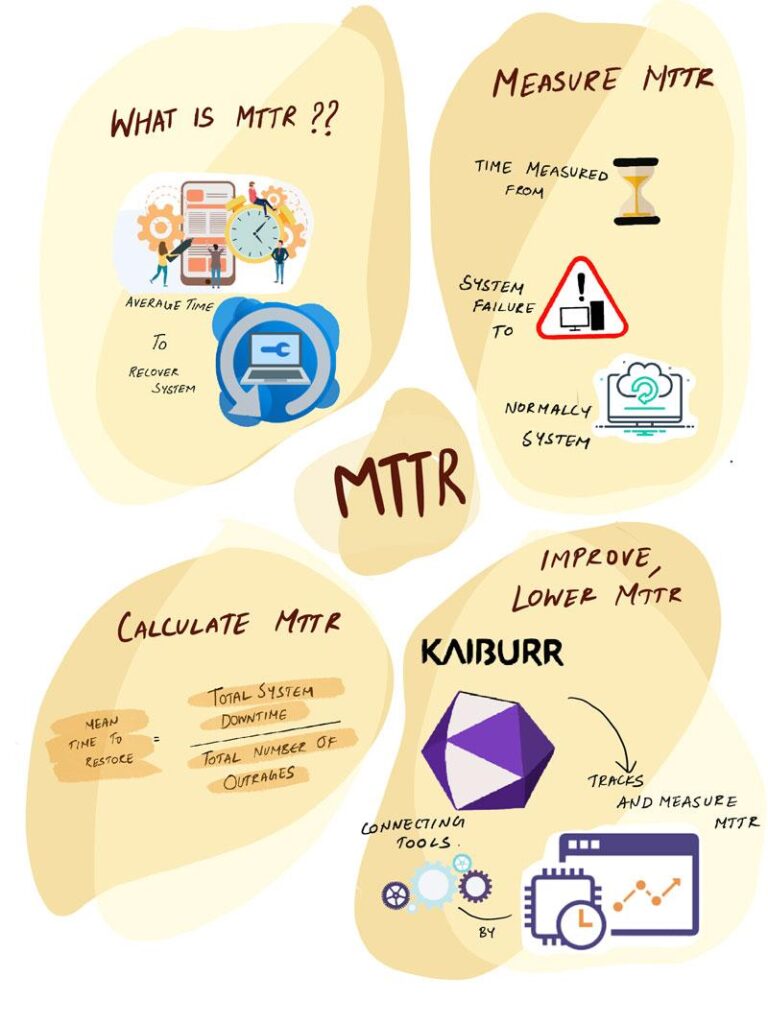
The metric ‘Mean time to restore(MTTR) ‘, is the average time to restore or recover the system to normalcy from any production failures. Improving on MTTR, Our teams become Elite and reduces the heavy cost of System downtime.
Measure MTTR
MTTR is the time measured from the moment the System fails to serve the Users or other Systems requests in the most expected way to the moment it is brought back to normalcy for the System’s intended response.
The failure of the System could be, because of semantic errors in the new features or new functions or Change requests deployed, memory or integration failures, malfunctioning of any physical components, network issues, External threats(hacks) or just the System Outage.
The failure of the running system against its intended purpose is always an unplanned incident and its restoration to normalcy in the least possible time depends on the team’s capability and its preparedness. Lower MTTR values are better and a higher MTTR value signifies an unstable system and also the team’s inability to diagnose the problem and provide a solution in less time.
MTTR doesn’t take into account the amount of time and resources the teams spend for their preparedness and the proactive measures but its lower value indirectly signifies teams strengths, efforts and Savings for the Organization. MTTR is a measure of team effectiveness.
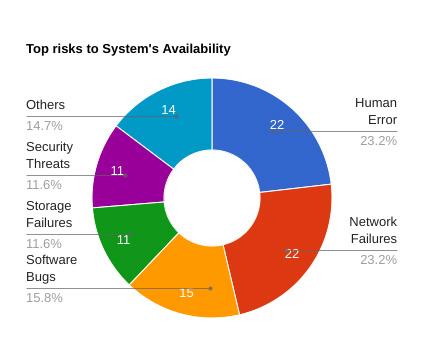
As per CIO insights, 73% say System downtimes cost their Organization more than $10000/day and the top risks to System availability are Human error, Network failures, Software Bugs, Storage failures and Security threats (hacks).
How to Calculate MTTR
We can use a simple formula to calculate MTTR.
MTTR, Mean time to restore = Total Systems downtime / total no. of Outages.
If the System is down for more time, MTTR is obviously high and it signifies the System might be newly deployed, complex, least understood or it is an unstable version. A system down for more time and more frequently causes Business disruptions and Users dissatisfaction. MTTR is affected by the team’s experience, skills and the tools they use. A highly experienced, right skilled team and the right tools they use helps in diagnosing the problem quickly and restoring it in less time. Low MTTR value signifies that the team is very effective in restoring the system quickly and that the team is highly motivated, collaborates well and is well led in a good cultured environment.
Well developed, elite teams are like the Ferrari F1 pit shop team, just in the blink of an eye with superb preparedness, great coordination and collaboration, they Change tyres, repairs the F1 Car and pushes it into the race. MTTR’s best analogy is the time measured from the moment the F1 Car comes into the pit shop till the moment it is released back onto the F1 track. All the productivity and Automation tools our DevOps teams use are like the tools the F1 pitstop team uses.

How to improve, lower MTTR
Going with the assumption that a System is stable and still the MTTR is considerably high then there is plenty of room for improvement. In the present times of AI, we have the right tools and DevOps practices to transform teams to high performance and Systems to lower MTTR. Reports of DORA says high performance teams are 96x faster with very low mean time to recover from downtime.
It seems they take very less time, just a few minutes to recover the System from failures than others who take several days. DevOps teams that had been using Automation tools had reduced their costs at least by 30% and lowered MTTR by 50%. The 2021 Devops report says 70% of IT organizations are stuck in the low to mid-level of DevOps evolution.
Kaiburr’s AllOps platform helps track and measure MTTR by connecting to tools like JIRA, ServiceNow, Azure Board, Rally. You can continuously improve your MTTR with near real time views like the following


You can also track and measure other KPIs, KRIs and metrics like Change Failure Rate, Lead Time for Changes, Deployment Frequency. Kaiburr helps software teams to measure themselves on 350+ KPIs and 600+ Best Practices so they can continuously improve every day.
Reach us at marketing@sifycorp.com to get started with metrics driven continuous improvement in your organization.
Credits: Published by our strategic partner Kaiburr
Visit DevSecOps – Sify Technologies to get valuable insights
How Hyperscale Data Centers are reshaping India’s IT
In today’s times, a common question arises while discussing technology: what is the difference between Data Centers and Hyperscale Data Centers?
The answer: Data Centers are like hotels – the spaces are shared with multiple guests, whereas, in the case of Hyperscale Data Centers, the entire building/campus are dedicated to a single customer.
Companies like Amazon, Google, Microsoft, Facebook, and OTTs, which have millions and millions of end-users, have infused their services into our day-to-day life to cater to our personal and professional needs. Data centers are the backbone of this digital world.
This is where Hyperscale Data Centers come into play and provide seamless experiences to such massive end-users.
The term Hyperscale means the ability of an infrastructure to scale up when the demand for the service increases. The infrastructure comprises of computers, storage, memory, networks etc. The maintenance of such infrastructure is not an easy task. Constant monitoring of the machines, the server hall temperature and humidity control check and other critical parameters are monitored 24×7 by the Building Management System (BMS).
Data Centers are important because everyone uses data. It is safe to say that perhaps everyone, from individual users like you and me to multinationals, used the services offered by data centers at some point in their lives. Whether you’re sending emails, shopping online, playing video games, or casually browsing social media, every byte of your online storage is stored in your data center. As remote work quickly becomes the new standard, the need for data centers is even greater. The cloud data center is rapidly becoming the preferred mode of data storage for medium and large enterprises. This is because it is much more secure than using traditional hardware devices to store information. Cloud data centers provide a high degree of security protection, such as firewalls and back-up components, in the event of a security breach. The COVID-19 pandemic paved the way for the work-from-home culture, and the global internet traffic increased by 40% in 2020
Also, the rise of new technologies like the Internet of Things (IoT), Artificial Intelligence (AI), Machine Learning (ML), 5G, Augmented Reality (AR), Virtual Reality (VR) and Blockchain caused an explosion of data generation and an increased demand for storage capacities.
Cloud infrastructure has helped businesses and governments with solutions to respond to the pandemic. To cater to such needs, the demand for cloud data center facilities has increased. A heavy infrastructure with a lot of power is needed to cater to such needs.
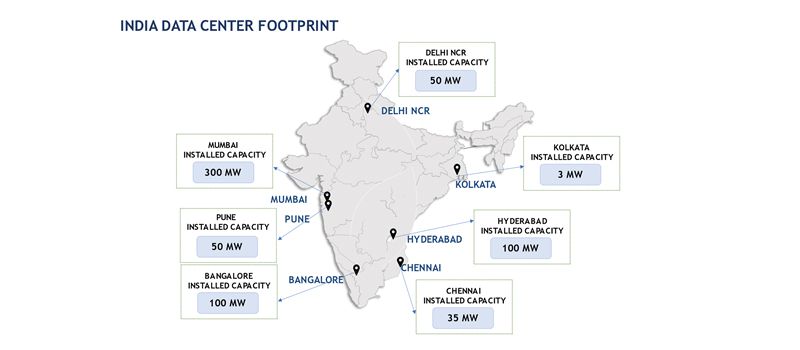
Data Centers have quite a negative impact on the environment, because of the large consumption of power sources and has 2% of the global contribution of greenhouse gas emissions. To reduce these carbon footprints and work towards a sustainable environment, many data center providers globally have started using power from renewable energy sources like solar and wind energy through Power Purchase Agreements (PPA). The Data Center power consumption can be lowered by regularly updating their systems with new technologies and regular maintenance of the existing infrastructure.
The Indian market will see multifold growth in the Data Center industry due to ease of doing business in the country and thanks to the attractive subsidiaries provided by the state governments, huge investments are committed in the next four years.
Interesting facts about Data Center:
- A large Data Center uses the electricity equivalent to a small Indian town.
- The largest data center in the world is of 10.7 million sq.ft. in China, approximately 1.5 times of the Pentagon building in USA.
- Data Centers will nearly consume 2% of the world’s electricity by 2030. Hence, the Green Data Center initiatives are taken up by various organizations.

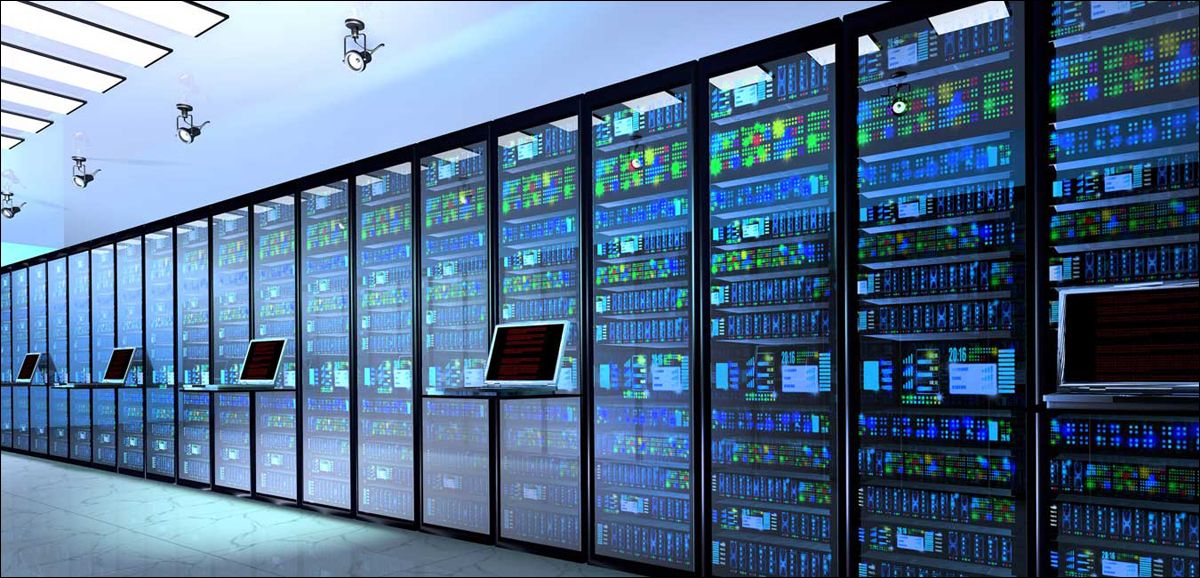
How OTT platforms provide seamless content – A Data Center Walkthrough
With the number of options and choices available, it almost seems like there’s no end to what you can and can’t watch on these platforms. It shouldn’t be difficult for a company like Netflix to store such a huge library of shows and movies at HD quality. But the question remains as to how they provide this content to so many people, at the same time, at such a large scale?
The India CTV Report 2021 says around 70% users in the country spend up to four hours watching OTT content. As India is fast gearing up to be one of the largest consumers of OTT content, players like Netflix, PrimeVideo, Zee5 et al are competing to provide relevant and user-centric content using Machine Learning algorithms to suggest what content you may like to watch.
With the number of options and choices available, it almost seems like there’s no end to what you can and can’t watch on these platforms. It shouldn’t be difficult for a company like Netflix to store such a huge library of shows and movies at HD quality. But the question remains as to how they provide this content to so many people, at the same time, at such a large scale?
Here, we attempt to provide an insight into the architecture that goes behind providing such a smooth experience of watching your favourite movie on your phone, tablet, laptop, etc.
Until not too long ago, buffering YouTube videos were a common household problem. Now, bingeing on Netflix shows has become a common household habit. With Data-heavy and media-rich content now being able to be streamed at fast speed speeds at high quality and around the world, forget about buffering, let alone downtime due to server crashes (Ask an IRCTC ticket booker). Let’s see how this has become possible:
Initially, to gain access to an online website, the data from the origin server (which may be in another country) needs to flow through the internet through an incredulously long path to reach your device interface where you can see the website and its content. Due to the extremely long distance and the origin server having to cater to several requests for its content, it would be near impossible to provide content streaming service for consumers around the world from a single server farm location. And server farms are not easy to maintain with the enormous power and cooling requirements for processing and storage of vast amounts of data.
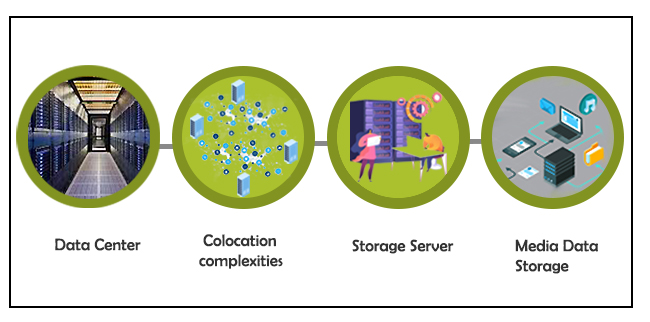
This is where Data Centers around the world have helped OTT players like Netflix provide seamless content to users around the world. Data Centers are secure spaces with controlled environments to host servers that help to store and deliver content to users in and around that region. These media players rent that space on the server rather than going to other countries and building their own and running it, and counter the complexities involved in colocation services.
How Edge Data Centers act as a catalyst
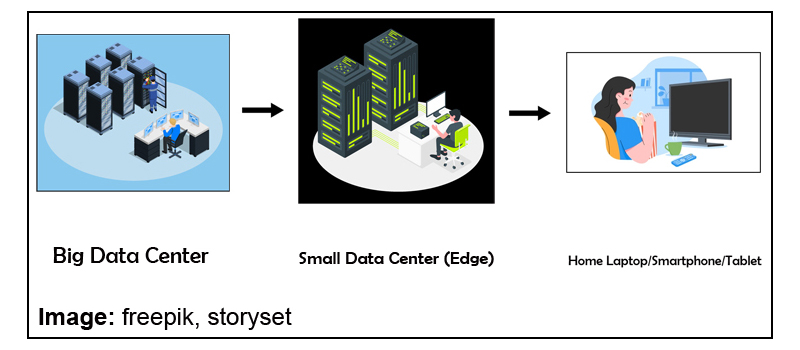
Hosting multiple servers in Data Centers can sometimes be highly expensive and resource-consuming due to multiple server-setups across locations. Moreover, delivering HD quality film content requires a lot of processing and storage. A solution to tackle this problem are Edge Data Centers which are essentially smaller data centers (which could virtually also be a just a regional point of presence [POP] in a network hub maintained by network/internet service providers).
As long as there is a POP to enable smaller storage and compute requirements and interconnected to the data center, the edge data center helps to cache (copy) the content at its location which is closer to the end consumer than a normal Data Center. This results in lesser latency (or time taken to deliver data) and makes the streaming experience fast and effortless.
Role of Content Delivery Networks (CDN)
The edge data center therefore acts as a catalyst to content delivery networks to support streaming without buffering. Content Delivery Networks (CDNs) are specialized networks that support high bandwidth requirements for high-speed data-transfer and processing. Edge Data Centers are an important element of CDNs to ensure you can binge on your favorite OTT series at high speed and high quality.
Although many OTT players like Sony/ Zee opt for a captive Data Center approach due to security reasons, a better alternative would be to colocate (outsource) servers with a service provider and even opt for a cloud service that is agile and scalable for sudden storage and compute requirements. Another reason for colocating with Service providers is the interconnected Data Center network they bring with them. This makes it easier to reach other Edge locations and Data Centers and leverage on an existing network without incurring costs for building a dedicated network.
Demand for OTT services has seen a steady rise and the pandemic, in a way, acted as a catalyst in this drive.
However, OTT platform business models must be mindful of the pitfalls.
Target audience has to be top of the list to build a loyal user base. New content and better UX (User Experience) could keep subscribers, who usually opt out after the free trial, interested.
The infrastructure and development of integral elements of Edge Data Centers are certain to take centerstage to enable content flow more seamlessly in the future that would open the job market to more technical resources, engineers and other professionals.

How Data Center forms the epicenter of IT infrastructure
SPEAKERS:
Kirtikar Ojha, Business Head – Data Center Services, Sify Technologies
DATE:
Wednesday, December 02, 2015
DESCRIPTION:
Businesses are becoming more and more Information-driven. As data becomes the most important organizational asset; Data Centers need to be reliable, safe, optimized, efficient and manageable and de-risked, because any risk to data would have a seismic impact on the entire business. How to formulate a comprehensive Data Center strategy? Find out in this webinar
Empowering Enterprises with Hybrid IT Ready DC & Cloud Connect
SPEAKERS:
Sushant Purushan, Business Head – Data Centre & Cloud Services, Sify Technologies Limited
Vijay Bellam, Vice President – Global Service Delivery, Sify Technologies Limited
DATE:
September 23, 2020 | 6.00 PM
DESCRIPTION:
As cloud computing becomes an integral part of IT, it exerts a greater influence on enterprises, starting from infrastructure and business strategy to design and location. Selection of data center technologies and providers to complement public clouds have become critical to retain agility, flexibility, scalability and choices.
For hybrid cloud deployments, cloud-adjacent or near-cloud data centers with high-performance, secure cloud interconnects are vital for various application configurations, resiliency, availability and to meet expected SLAs. It is important in this context of having a data center and cloud interconnect with minimum latency and flexible bandwidth.
A professionally run data center with all the above capabilities offers peace of mind and stability by way of robust security and compliance to a business during these troubled times and, thereby, allowing them to focus on their transformational objectives.
In an insightful web session, organized by ETCIO.com and Sify, industry experts will throw more light on how enterprises can leverage hybrid IT-ready data centers and cloud interconnect for business growth.