Leadership Byte 3: AI & Digital Transformation in Travel
Speaker: Dr. Shakti Goel, Chief Architect and Data Scientist, Yatra Online Limited Series: Infinit Loop Industry Perspective: Leadership Bytes Episode Summary: In this episode of Infinit Loop Industry Perspective: Leadership Bytes, we speak with Dr. Shakti Goel, Chief Architect and Data Scientist at Yatra Online, about how travel technology is evolving with the rise of digital integration and AI. The conversation highlights how APIs and microservices are reshaping the travel ecosystem, the growing role of AI and GenAI in enabling hyper-personalized experiences, and how changing customer expectations are driving innovation across the industry.
Leadership Byte 2: Technology, Digital Transformation & AI in Healthcare
Speaker: Aravind Sivaramakrishnan, CTO, Asia Healthcare Holdings Series: Infinit Loop Industry Perspective: Leadership Bytes Episode Summary: In this episode of Infinit Loop Industry Perspective:
Leadership Byte 1: Driving Digital Transformation: Leadership, Talent & AI
SPEAKERS: Gitesh Mahajan – Head, Data Center Business,Sify Technologies Limited Sojan Joy – Vice President, Product and Solutions Head, Data Center Services,Sify Technologies Limited

Microsoft Copilot for Nonprofit Success: A Closer Look
AGENDA AND SPEAKERS:
Welcome and Introduction – Justin Polley, CTO – Europe, Sify
Microsoft Technology for Social Impact (TSI) –Chris Lines, Territory Channel Manager, Microsoft
Live Microsoft Copilot Demonstration – Dr. Venu Gopal, Head of Digital Services, Sify
Where to Get Help and Advice –Rob Lungley, Enterprise Sales Lead, Sify
Q&A Session – Panel discussion
Closing Remarks – Justin Polley, CTO – Europe, Sify
DATE:
July 10, 2024 | 11am – 11.45 am (BST)
DESCRIPTION:
Welcome to the second webinar in our Microsoft Copilot series, where we will delve deeper into how this powerful tool can revolutionise nonprofit operations. In this non-technical session, we will continue to explore the value and effectiveness of Copilot for nonprofits and some key steps for a successful Copilot implementation including data readiness and data security.
Justin Polley is your host for this webinar and will open by giving a brief welcome and introduction. Chris Lines will talk about Microsoft’s commitment to social impact and how tools like Copilot align with this mission including a demonstration of Copilot in action.
Next, Dr Venu Gopal will deliver his demonstration of Microsoft Copilot as we explore Copilot Studio and learn how to harness its power for maximum impact. Discover the essential prerequisites for a successful Copilot implementation such as ensuring your data is indexed and in the right place with the right access.
Our final speaker will be Rob Lungley who will provide helpful guidance and support for your Copilot journey.

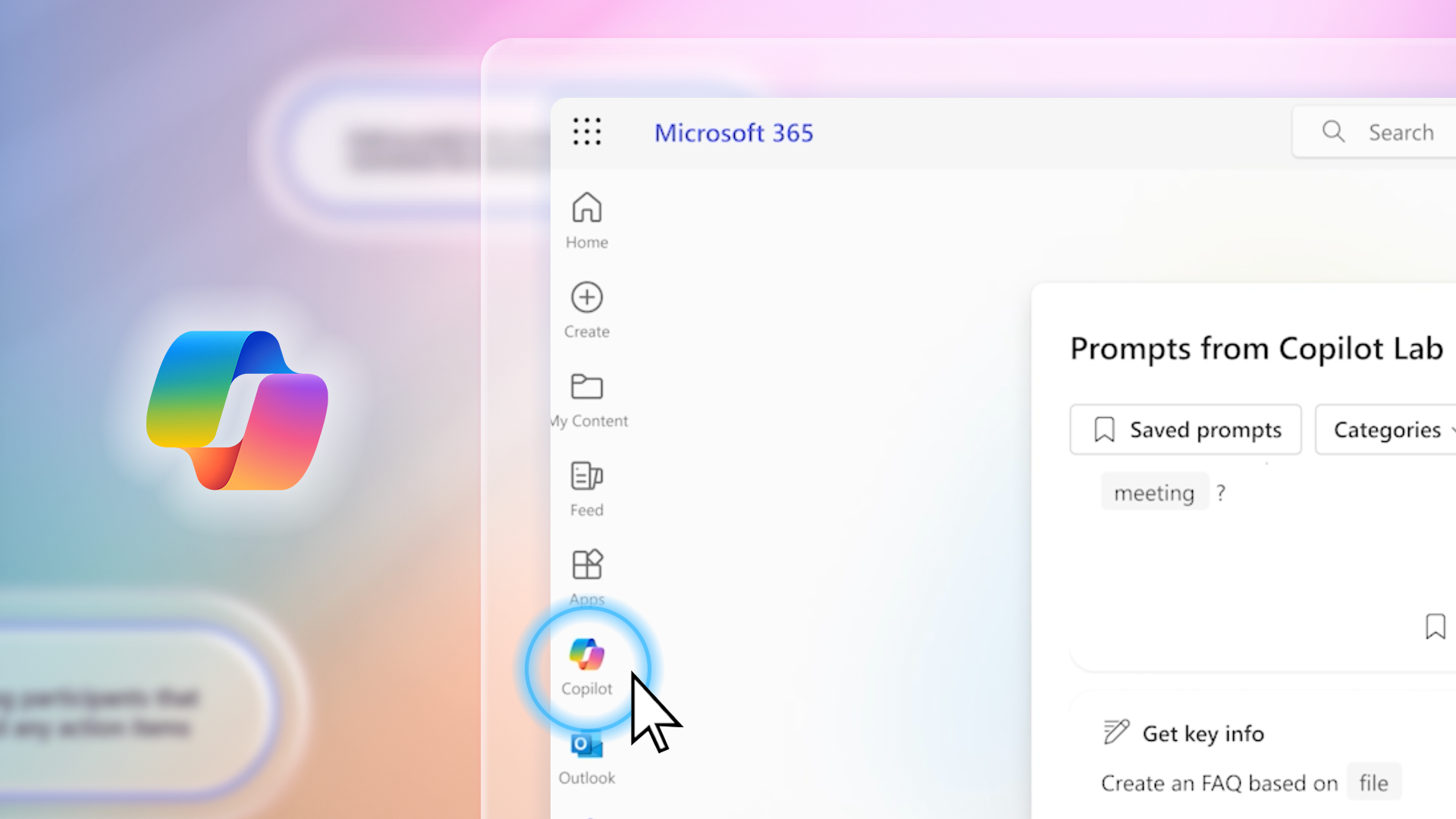
Getting Your Nonprofit Organisation Ready to Implement Microsoft Copilot
As a nonprofit professional, you’re constantly seeking ways to maximise productivity and efficiency to further your mission.

The role of data analytics and AI/ML in optimizing data center performance and efficiency
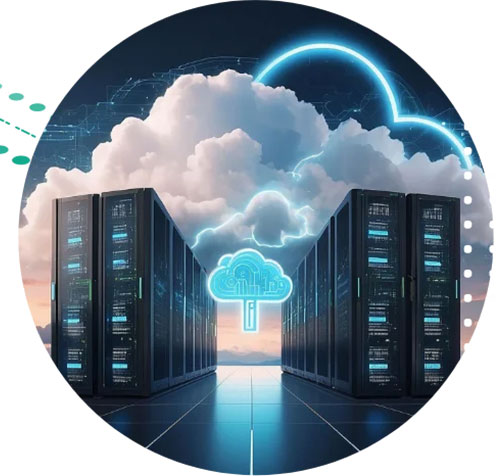
Data centers have emerged as a crucial component of the IT infrastructure of businesses. They handle vast amounts of data generated by various sources, and over the years have transformed into massive and complex entities. Of late, data analytics has emerged as a necessary ally for data center service providers, powered by the growing need to improve parameters like operational efficiency, performance, and sustainability. In this blog, we will discuss the different ways in which data analytics and AI/ML can help enhance data center management and empower data center service providers to deliver better service assurance to end-customers.
How data analytics and AI/ML can help service providers in data center optimization
Today, data center service providers are leveraging data analytics in various ways to optimize data center operations, reduce costs, enhance performance, reliability and sustainability, and improve service quality for customers. They employ a variety of methods to collect data from colocation, on-premise and edge data centers, which include physical RFID/EFC sensors, server, network and storage monitoring tools, security information and event management (SIEM) systems, configuration management databases (CMDBs), API integration, and customer usage data. The data collected is then fed into a centralized monitoring and analytics platform, which uses visualization tools, dashboards, and alert systems to analyze the data and generate insights.
Furthermore, by integrating IoT and AI/ML into data center operations, service providers are gaining deeper insights, automating various processes, and making faster business decisions. One of the most critical requirements today is for analytical tools that can help with predictive assessment and accurate decision-making for desired outcomes. This is achieved by diving deep into factors such as equipment performance, load demand curve, overall system performance, as well as intelligent risk assessment and business continuity planning. Selection of the right tools, firmware, and application layer plays a major role in making such an AI/ML platform successful.
The relationship between analytics and automation from the perspective of data centers is rather symbiotic. Data centers are already automating routine tasks such as data cleaning, data transformation, and data integration, helping data center service providers free up resources for more strategic analytics work, such as predictive modeling, forecasting, and scenario planning. In turn, data analytics provides valuable insights that enable data centers to implement intelligent automation and optimization techniques. This may include workload balancing, dynamic resource allocation, and automated incident response.
Here are some of the key areas where data analytics and automation have a significant impact:
- Enhancing operational reliability: Data analytics, AI/ML and automation can enable data centers to ensure optimal performance. This involves using predictive maintenance, studying equipment lifecycles for maintenance, and incident history analysis to learn from past experiences. In addition, AI/ML-driven vendor performance evaluation and SLA management incorporating MTTR and MTBF further strengthen operations. Leveraging these metrics within the ITIL framework helps data centers gain valuable operational insights and maintain the highest levels of uptime.
- Performance efficiency: Data centers consume a substantial amount of energy to power and maintain desirable operating conditions. To optimize services, track hotspots, prevent hardware failure, and improve overall performance, modern data centers analyze data points such as power usage, temperature, humidity, and airflow related to servers, storage devices, networking equipment, and cooling systems. Prescriptive analytics can take this a step further by providing recommendations to optimize utilization and performance.
- Predictive maintenance: Predictive analytics is a powerful technology that uses data to forecast future performance, identify and analyze risks and mitigate potential issues. By analyzing sensor data and historical trends, data center service providers can anticipate potential hardware failures and perform maintenance before they escalate, with advanced predictive analytics enabling them to improve equipment uptime by up to 20%.
- Capacity planning: Businesses today must be flexible enough to accommodate capacity changes within a matter of hours. Data center service providers also need to understand current usage metrics to plan for future equipment purchases and cater to on-demand requirements. Data analytics helps in optimizing the allocation of resources like storage, compute, and networking while meeting fluctuations in customer needs and improving agility.
- Security and network optimization: Data centers can use analytics to monitor security events and detect vulnerabilities early to enhance their security posture. By analyzing network traffic patterns, data analytics tools help identify unusual activities that may indicate a security threat. They can also monitor network performance, identify bottlenecks, and optimize data routing.
- Customer insights: Data centers collect usage data, such as the number of users, peak usage times, and resource consumption, to better understand customer needs and optimize services accordingly. Analytics helps providers gain insights into customer behavior and needs, enabling them to build targeted solutions that offer better performance and value. For example, through customer-facing report generation, organizations and end-customers can gain valuable insights and optimize their operations. Additionally, analytics accelerates the go-to-market process by providing real-time data visibility, empowering businesses to make informed decisions quickly and stay ahead of the competition.
- Environment sustainability & energy efficiency: Data centers have traditionally consumed significant power, with standalone facilities consuming between 10-25 MW per building capacity. However, modern data center IT parks now boast capacities ranging from 200-400+ MW. This exponential growth has led to adverse environmental impacts, such as increased carbon footprint, depletion of natural resources, and soil erosion. Using AI/ML, performance indicators like CUE (Carbon Utilization Effectiveness), WUE (Water Utilization Effectiveness), and PUE (Power Utilization Effectiveness) are analyzed to assess efficiency and design green strategies, such as adopting renewable energy, implementing zero water discharge plants, achieving carbon neutrality, and using refrigerants with low GHG coefficients. For example, AI/ML modeling can help data centers achieve 8-10% saving on PUE below design PUE – helping to balance environmental impact with an efficiency better than what was originally planned.
- Asset and vendor performance management: The foundation of the AI/ML platform lies in the CMDB, which comprises crucial data, including asset information, parent-child relationships, equipment performance records, maintenance history, lifecycle analysis, performance curves, and end-of-life tracking. These assets are often maintained by OEMs or vendors to ensure reliability and uptime. AI/ML aids in developing availability models that factor in SLA and KPI management. It can provide unmatched visibility into equipment corrections, necessary improvements, and vendor performance. It can also help enhance project models for expansion build-outs and greenfield designs, accurately estimating the cost of POD (point of delivery) design, project construction, and delivery.
- Ordering billing and invoicing: AI/ML plays a vital role in enhancing the efficiency and effectiveness of order, billing, and invoicing processes. Its impact spans various stages, starting from responding to RFPs to reserving space and power, managing capacity, providing early access to ready-for-service solutions, facilitating customer onboarding, and overseeing the entire customer lifecycle. This includes routine processes such as invoicing, revenue collection, order renewal, customer Right of First Refusal (ROFR) management, and exploring expansion options both within and outside the current facility.
Selecting the right data analytics solution
The implementation of data analytics and automation through AI/ML requires careful consideration as several parameters, such as data quality and level of expertise play a crucial role in delivering efficient end-results. To succeed, businesses need to choose user-friendly and intelligent solutions that can integrate well with existing solutions, handle large volumes of data, and evolve as needed.
At Sify – India’s pioneering data center service provider for over 22 years, we continuously innovate, invest in, and integrate new-age technologies like AI/ML in operations to deliver significant and desired outcomes to customers. We are infusing automation led by AI/ML in our state-of-the-art intelligent data centers across India to deliver superior customer experiences, increased efficiency, and informed decision-making, resulting in more self-sustaining and competitive ecosystems. For example, leveraging our AI/ML capabilities has been proven to lead to over 20% improvement in project delivery turnaround time. Our digital data center infrastructure services offer real-time visibility, measurability, predictability, and service support to ensure that our customers experience zero downtime and reduced Capex/Opex.
How do Sify’s AI-enabled data centers impact your business?
- Person-hour savings: Automation of customer billing data and escalations resulting in up to 300 person-hour savings in a month.
- Reduction in failures: Predictive approach for maintenance and daily checks yielding up to 20% reduced MTBF, 10% improved MTTR, and 10% reduction in unplanned/possible downtime.
- Cost savings: Improved power/rack space efficiency and savings on penalties to deliver up to 8% reduction in customer penalties by maintaining SLAs and 10% reduction in operating cost.
- Compliance adherence: Meeting global standards and ensuring operational excellence and business continuity.
To know more about our world-class data centers and how they help enterprises expect positive business outcomes, visit here.


Blue Brain – a tool or a crutch for humanity ?
What if human beings could better their brain, built across millennia through evolution? Gourav looks at the possibility of just such a technology and its implications.
We all think, act, react, ponder, decide, and memorize with the help of our brains. It is a very intriguing, interesting, and exciting part of our human body and contributes drastically to our human ecosystem.
It is also still a mystery as to how our brain, one of the most complex systems found in nature, functions.
Imagine an artificial copy of our human brain that can do the same without our help. If such a machine is created, then the boundaries between a human and a machine would grow thinner bringing to the fore its advantages and disadvantages.
The Brain and Mind Institute of École Polytechnique Fédérale de Lausanne in Switzerland did exactly that when they thought up a project called Blue Brain Project aimed at creating an artificial brain. This project was founded by Henry Markram in 2005.
What is Blue Brain Project?
The Blue Brain Project is bleeding-edge technology research that aims to reverse engineer a typical human brain into a computer simulation. Blue Brain can think, act, respond, make quick decisions, and keep anything and everything in its memory.
It means that a computer can act as a human brain taking artificial intelligence sky high. The simulations are carried out on IBM’s Blue Gene supercomputer, hence the term Blue Brain.
Why do we need this?
Today, we function based on our brain’s capability to respond to different situations. Some people make intelligent decisions and take actions as they have an inborn quality of intelligence. But this intelligence dies when we die. Imagine if such intelligence can be preserved to help the future generation.
A virtual or an artificial brain that can provide the required solution for the stated problem. Our brain tends to forget trivial things that mean more like birthdays, names of people, etc.
Such a brain can help us by storing this information and aiding whenever necessary. Imagine uploading ourselves onto a computer and living inside it.

How can this be made possible?
The information about the brain needs to be uploaded into the supercomputer to perform like a brain. So, retrieval or studying of this information is paramount. This can be made possible by using small robots called nanobots.
These bots can travel between our spine and brain to collect important data. These data contain necessary information such as the structure of the human brain, its current state, etc.
A human brain takes inputs from the sensor throughout the body, and it interprets these inputs to store in the memory or to respond to the desired output.
The artificial brain does a similar job by taking inputs from a sensory chip and it interprets these inputs by associating the input with the value stored in one of its registers which corresponds to different states of the brain.
The Blue Brain Project – Software Development Kit helps the users to utilize the data from the nanobots to visualize and inspect models and simulations. The SDK is a C++ library that is wrapped around Java and Python.
The Einstein Connection

When people think of genius, the list most assuredly includes Albert Einstein. For years, different scientific researchers have been trying to find the mystery behind his genius brain. Imagine if Einstein’s brain could be recreated with the help of the Blue Brain Project. Many intriguing inventions and discoveries could be made. Such intelligence would shape many generations to come.
The Blue Brain Project has many merits such as non-volatile memory that can store anything and everything permanently, and the capability to make intelligent decisions without the presence of a person. This research can help in curing a lot of psychological problems.
If such technology comes to people, they would be dependent on these systems. This can open the door wide open for hack threats which can pose a real danger to people. People might be fearful of using such technology and it can culminate into large resistance.
The Author’s Views
Intelligence is a quality that has always been associated with humans. Now artificially many intelligent systems and tools are available that aim to better people’s lives.
If Blue Brain technology reaches humans, everyone’s life will be enriched.
But people might get too dependent on this technology which will culminate in catastrophic problems for the human psyche. However, if used properly this technology can add new layers to human life than being a replacement.