Sify Technologies
Admin
In 1998, we were India’s first Indian private ISP. Millions experienced the internet for the first time on the Sify network. We pioneered voice and data services from our public internet access points.
Two decades and a smart shift in business positioning later, Sify is now an indispensable convergence bridge that enterprises seek. Sify has matured into India’s largest digital transformation company, bringing together a converged ICT ecosystem for the benefit of market-leading enterprises.
How to leverage hyperscale Data Centers for scalability
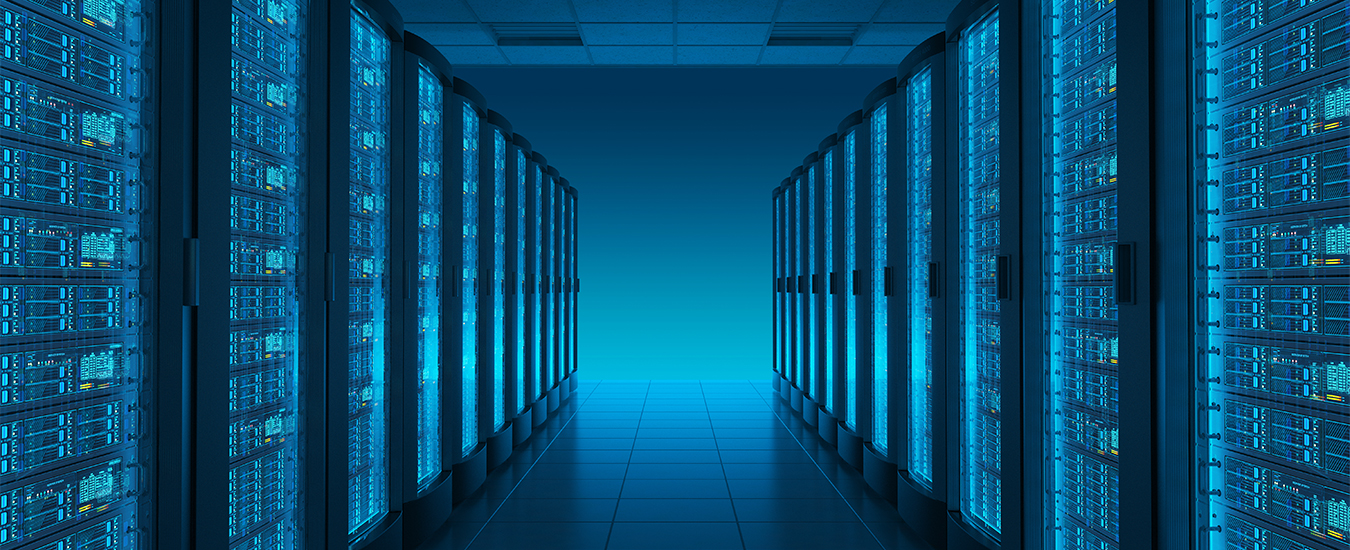
Modern Data Centers are synonymous with massive high-speed computational capabilities, data storage at scale, automation, virtualization, high-end security, and cloud computing capacities. They hold massive amounts of data and provide sophisticated computing capacities. Earlier, a simple network of racks with storage units and a set of management tools to individually manage them were enough. The architecture was simple to understand, and only local resources were consumed in its operation.
However, as organizations became increasingly internet dependent, the volumes of the data exploded with more of it added by the social media and the sensing devices that grew manifold. Remote access to this data through the Web emerged as the trend. The local tools that were used earlier in traditional Data Center were fragmented and were inefficient to handle not just the volumes but also complexities that in effect needed a large infrastructure. There were challenges of scaling up when companies expanded, and performance dipped when peak loads were required to be handled. This led to the evolution of hyperscaling as a solution.
Hyperscale is based on the concept of distributed systems and on-demand provisions of the IT resources. Unlike the traditional Data Center, a hyperscale Data Center calls in a large number of servers working together at high speeds. This ability gives the Data Center a capacity to scale both horizontally and vertically. Horizontal scaling involves on-demand provisioning of more machines from the network when scaling is required. Vertical scaling is about adding power to existing machines to increase their computing capacities. Typically hyperscale Data Centers have lower load times and higher uptimes, even in the demanding situations like the need for high-volume data processing.
Today, there are more than 400 hyperscale Data Centers operating in the world, with the United States alone having 44% of the global Data Center sites. By 2020, the hyperscaled Data Center count is expected to reach 500 as predicted by Synergy Research Group. Other leading countries with hyperscaled Data Center footprints are Australia, Brazil, Canada, Germany, India and Singapore.
Hyperscale Data Center Can Do More at Less Time and Lower Cost
A traditional Data Center typically has a SAN (Storage Area Network) provided mostly by a single vendor. The machines within the Data Center would be running on Windows or Linux, and multiple servers would be connected through commodity switches. Each server in the network would have its local management software installed in it and each equipment connected to them would have its own switch to activate the connection. In short, each component in a traditional Data Center would work in isolation.
In contrast, a hyperscale Data Center employs a clustered structure with multiple nodes housed in a single rack space. Hyperscaling uses storage capacities within the servers by creating a shared pool of resources, which eliminates the need for installation of a SAN. The hyperconvergence also makes it easier to upgrade the systems and provide support through a single vendor solution for the whole infrastructure. Instead of having to manage individual arrays and management interfaces, hyperscaling means integration of all capacities, such as storage, management, networks and data, which are managed from a single interface.
Installing, managing and maintaining a large infrastructure consisting of huge Data Centers would have been impossible for emerging companies or startups that have limited capital and other resources. However, with hyperconvergence, even microenterprises and SMEs, as well as early stage startups can now enjoy access to a large pool of resources that are cost-effective and provide high scalability in addition to flexibility. With hyperconvergence, these companies can use Data Center services in at a much lesser cost with the additional benefit of scalability on demand.
A hyperscale Data Center would typically have more than 5000 servers that are linked through a high-speed fiber optics network. A company can start small with only a few servers configured for use and then, later at any point of time, automatically provision additional storage from any of the servers in the network as their business scales up. An estimate of the demand for additional infrastructure is made based on how the workloads are increasing, and a proactive step can be taken to scale up capacities to meet the increasing need for resources. Unlike traditional Data Centers that work in isolation, hyperscaled infrastructures depend on the idea of making all servers work in tandem, creating a unified system of storage and computing.
When implementing a hyperscale infrastructure, the supplier could play a significant role through the delivery of next-gen technologies that need high R&D investments. According to a McKinsey report, the top five companies using hyperconverged infrastructure have over $50 billion of capital invested in 2017 and these investments are growing at the rate of 20% annually.
Leveraging hyperscaled Data Centers, businesses can achieve superior performance and deliver more at a lower cost and a fraction of time than before. This provides businesses with the flexibility of scaling up on demand and an opportunity to continue operations without any interruptions.
Sify offers state of the art Data Centers to ensure the highest levels of availability, security, and connectivity for your IT infra. Our Data Centers are strategically located in different seismic zones across India, with highly redundant power and cooling systems that meet and even exceed the industry’s highest standards.

How to orchestrate workloads between public and private clouds
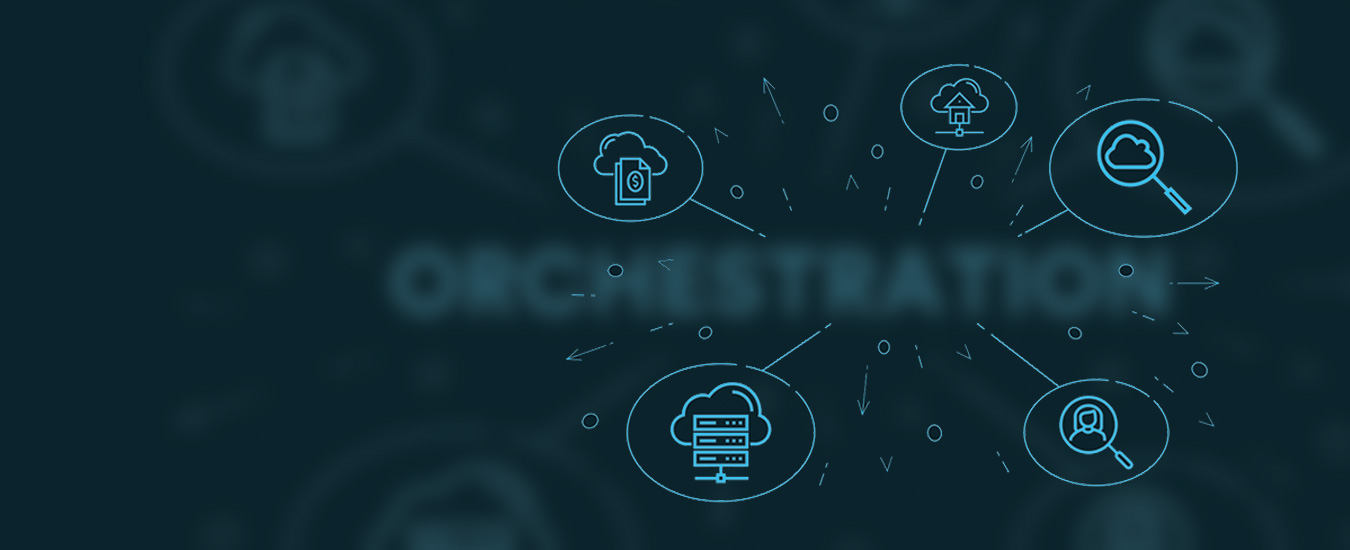
Imagine how an orchestra combines a multitude of instruments to create a symphony. In the same way, a hybrid cloud orchestrates, skillfully combining public and private cloud, to create a seamless cloud infrastructure. As multiple applications on a public–private hybrid infrastructure could add to complexities, with the help of orchestration, a centralized structure can be created to allow management of multiple applications using a single interface. Differences in bandwidths, workloads, and access controls can all be managed by this orchestration software.
Integration of different technologies in a hybrid infrastructure determines how effective the orchestration is. For seamless integration, the compatibility between different systems and applications must be ensured, so that orchestration of workloads between public and private clouds is seamless, providing the needed high-performance compute. In the absence of orchestration, enterprises using a hybrid cloud would be forced to manage the public and private clouds in silos, which can put pressure on their resources and demand additional overheads. In addition, orchestration provides the benefit of streamlining resources for coordination, making it easier to manage multiple workloads.
Orchestration on the Private Cloud
A private cloud may not be cheap, but it brings its advantages. It gives greater control over assets and provides enhanced cloud security, resiliency, and flexibility to the system. With private cloud orchestration, automation of the infrastructure could be managed, by establishing workflows that work without human intervention. While private cloud automation would initiate processes automatically, orchestration results in a unified structure of workflows. In this arrangement, resources can be provisioned as needed to optimize the workloads on a private cloud. Thus, an organization can realize savings in engineering time, and IT costs.
What does orchestration involve?
Orchestration enables a coordinated deployment of automation services on the cloud. Cloud orchestration happens at three levels: resource, workload, and service. At the resource level, IT resources are allocated, and at workload level, they are shared. At the service level, services are deployed so that shared resources are optimally utilized. While individual automation only takes care of a single task, orchestration automates end-to-end processes. It is similar to creating a process flow that automates the sequence of automation. The workflows created in the process enable technologies to manage themselves. There are many orchestration tools available in the market that can be used by organizations based on their individual requirements. Some popular tools are Chef, Puppet, Heat, Juju and Docker. Chef is used at OS level while Puppet is more popular at middleware level. Heat is an orchestration method developed from OpenStack, and it can orchestrate everything in OpenStack. Juju is used at the service level while Docker serves both as a tool for orchestration and technology for virtualization.
Workload placement considerations
In a hybrid cloud, both public and private applications generate different workloads. To manage these workloads, and handle their seamless switch between public and private cloud infrastructure, an appropriate cloud strategy is needed. Distributing the workload between different IT assets is a business decision in which regulatory compliance requirements, trade-offs, business risks, cost, and growth priorities are taken into consideration. For instance, certain countries like China may have certain federal restrictions on the use of the internet for which a private WAN can be deployed. The cost could be a concern for an organization looking to provide last-mile connectivity if private cloud is deployed, but with public infrastructure used for addressing service needs of remote locations, cost savings can be realized. A private or hybrid cloud may require establishing an in-house team for IT support while public cloud can work without any, and with limited, cloud expertise in-house.
Technical parameters such as data volume, performance, security, and integration are considered when orchestrating workloads between different cloud deployments. Based on the level of importance each of these attributes carries, workloads can be shifted between the public and private cloud. Public clouds could be deployed for workloads that require a higher level of security but a lower level of integration and performance, such as CRM and information systems. When a continuous demand for a higher level of integration arises, an organization may have to add a private cloud to the IT infrastructure. Workloads like file printing, networking, and systems management may work with either nature of the cloud. However, if data volumes grow, the public cloud would not suffice, and the organization should orchestrate to a private cloud. Applications like enterprise resource planning, data marts, and Big Data analytics make use of high volumes of data that need a private cloud to manage.
A true hybrid cloud allows for easy migration of workloads between public and private clouds. It is always wise to develop a hybrid cloud strategy depending upon workloads, as portability of workloads becomes possible and traditional applications can be bridged with modern applications across the cloud infrastructure. When cloud deployments are planned based on the changing needs of the workloads using orchestration, the enterprise can make their IT infrastructure more optimized, flexible, and adaptive.
Sify’s many enterprise-class cloud services deliver massive scale and geographic reach with minimum investment. We help design the right solution to fit your needs and budget, with ready-to-use compute, storage and network resources to host your applications on a public, private or hybrid multi-tenant cloud infrastructure.
Hyper convergence And Its Growing Importance
For years, Data Centers formed the backbone of IT infrastructure, in which primarily hardware-driven convergence was deployed to assemble several parts of the IT function. However, in this type of infrastructure, the compute, storage, and networking components are discrete and thus difficult to manage. Hyperconvergence is a system that creates a pool of IT resources, which can be shared over a network by different users.
Going a step further, the components are brought together, which appear as a single entity to the user through the creation of clusters of nodes. In a hyperconverged environment, the components cannot be separated. The software-defined elements are implemented virtually, with seamless integration into the hypervisor environment. ComputerWorld called hyperconvergence “Data Center in a box” as early as 2012 when the concept was only catching on. Today, hyperconvergence is a $5 billion industry and is growing fast.
Why is Hyperconvergence So Popular?
Development of infrastructure earlier entailed a huge spend as many infrastructure units like SANs and blade servers were required. Hyperconvergence brought a pre-integrated infrastructure bundled in a single box, which is managed with a unified layer. Significant cost savings are realized as a hyperconverged infrastructure could be built over low-cost hardware.
Pure software-based architectures and hybrid options make a hyperconverged infrastructure model highly flexible. Using this flexibility, organizations are required to deploy resources only on an as-needed basis, and investment is needed only for the required storage. In the era of unpredictable data growth, this flexibility acts as a reward.
The integrated architecture of a hyperconverged infrastructure makes it robust, in not just handling the business database processing workloads, but also the mission-critical applications. High-performance computation, speed, flexibility, agility, and cost saving are a few benefits of hyperconverged infrastructure. These capabilities have been attractive enough for organizations to move to hyperconverged infrastructure in the past few years.
Need for Hyperconvergence in Business
Today, mission-critical applications have to deal with demanding workloads that fluctuate based on real-time interactions between users and machines. The magnitude of workloads, unimaginable in the past, are now getting into the forefront like Big Data, IoT, Machine Learning, and Artificial Intelligence. These workloads provide business advantages such as operational efficiencies and competitive edge by delivering actionable insights, but an infrastructure that has inherent scalability is required to handle these workloads. Hyperconvergence exactly fits this requirement. WAN latency, which was dreaded earlier with Tier 1 workloads, is no more a concern, thanks to hyperconvergence.
Modern businesses host their solutions on the cloud. Whether it is a private cloud, public cloud or a hybrid cloud, HCI (Hyperconverged Infrastructure) can streamline the resources with finesse. Regulatory compliance and other types of compliance become easier with HCI. The hybrid infrastructures consisting of cloud and on-premise infrastructure provides greater flexibility, data privacy, and data protection when coupled with HCI.
How does HCI make a difference to a business? If the cost of analysis is consuming an unreasonable part of the organization’s business cost, then it becomes difficult to sustain. Hyperconvergence addresses this problem by offering high scalability, on-the-go adoption flexibility, and resource optimization to ultimately reduce overheads and deliver value.
An example of how HCI can deliver scalability and flexibility to a business could be a VDI rollout. Before any company would do a VDI rollout on a large scale, the first step would be to test the system performance with a minimum viable product. However, when this platform is configured for scaling to meet the growing business demands, one single error in prediction of performance could prove to be costly, compromising the whole roll-out. Hyperconvergence ensures the reliability of this process as a provision exists for adding nodes to clusters any time so that scaling for performance doesn’t even count as an issue.
Data Center consolidation is another important area of HCI application that brings savings for a business through resource optimization. Hyperconvergence not only brings down the amount of hardware by eliminating SAN from a network but also reduces the variety of components used through data compression and deduplication. Cutting down both on software and hardware components cuts down the cost of physical infrastructure and reduces complexity.
How HCI Can Shape Businesses
Several applications and benefits have emerged with the wide adoption of HCI and here are some that are shaping modern businesses today.
Digital Transformation with HCI
Digital transformation is seeing wider adoption as companies are keen to embrace evolving technologies and build sustainable competitive advantages. This is because HCI gives them a single flexible platform to consolidate resources and virtualize workloads. The HCI environment can serve as the backbone for the organization’s digital transformation strategy. It is robustly designed for scalability, and so as the organization’s workloads increase, additional components can be provisioned to meet the spurt in demand. As compared to traditional 3-tier architecture, this flexibility would deliver savings in the TCO (Total Cost of Ownership).
Resource Optimization with HCI
Many businesses still use manual processes for provisioning service processes, severely constraining IT efficiencies. This also demands a significant CAPEX, in addition to causing increased workload. HCI can save both cost and time that goes into provisioning by providing a low-cost infrastructure and several automation features. Therefore the organization is required to spend much less time in provisioning, managing, operating, and maintaining IT assets.
Moreover, the organization’s network, storage, and compute can all be scaled up on demand in a pay-per-use model, propelling optimization. This means that every added component gives more value at a lower cost. Organization’s assets also get utilized most efficiently.
With HCI come many benefits that are acting as triggers for its wider adoption and growth. More businesses keen on enhancing their enterprise capabilities would adopt HCI for their needs, and the future looks promising for this technology.
Sify’s many enterprise-class cloud services deliver massive scale and geographic reach with minimum investment. We help design the right solution to fit your needs and budget, with ready-to-use compute, storage and network resources to host your applications on a public, private or hybrid multi-tenant cloud infrastructure.
M2M is shifting to M2M
The final eulogy to ‘Man is the Master of the Machine’ has been written.
In the movie Terminator 3, the sequel delves into the takeover of earth by machines, until the very end, when the machine itself has a change of heart. However ominous those signs are, what is undeniable is that the age of machines is upon us.
From mere input mongers to making sense of the mountain of data, cataloguing them, analysing them and delivering a seemingly analogues interpretation of it, machines have become the new indispensable smartphone for today’s Enterprise. Within this paradigm, the original input feeder, the man, is now relegated to building strategies on top of the results that the machine has spewed to him. The shift from Man to Machines, to Machines to Machines is now here to stay.
The component that has built itself into an indispensable position in this entire equation is that of the Data Center. Not the legacy coLocation versions but the new age, intelligent data player that offers compute, store, analyze, cohabits the Cloud and Applications within itself. One that is intelligent and elastic enough to accommodate the growing data demands of tech-dictated enterprises.
The Data Center, referred rather insipidly to its very reason of its existence, is now a chameleon in the entire IT structure. In some cases, it is the eventual residency point for the data. In others, it is starting point of information that has been decoded and awaits a decision. And in between, is the binding agent in an ever-spawning network.
Come to think of it. What if it was removed from the equation? Or perhaps, more benevolently, scaled down to just a rudimentary Data Center. Before we answer that question, here’s something of an analogy.
Imagine if all your data was not retrievable one not-so-fine morning. Will we see a repeat of the dark ages? Perhaps so. It is therefore not a far-fetched misnomer when Data is referred to as the new economy.
So, what size of data is the world coming to? Here’s a curtain raiser.
Shantanu Gupta, director of Connected Intelligent Solutions at Intel, introduces the next-generation prefixes for going beyond the yottabyte; brontobyte and gegobyte.
A brontobyte, which isn’t an official SI prefix, but is apparently recognized by some people in the measurement community, is a 1 followed by 27 zeros. Gupta uses it to describe the type of sensor data we’ll get from the internet of things. From there, a gegobyte (10 to the power of 30) is just a short distance away.
Now imagine the computational strength required to make sense of this volume. Companies will hence need to have a future-proof strategy in place for collecting, organizing, cleansing, storing, and securing data – and for applying analytics to derive real-time insights to transform their businesses.
A story in Information Management highlights “Big Data Analytics: The Currency of the 21st Century Enterprise.” Quite an interesting read. The gist of the argument: Personal data has an economic value that can be bought, sold, and traded.
Emerging technologies are driving transformation within organizations. The year 2019 will see Artificial Intelligence (AI) and Machine Learning (ML) driving change in enterprises. We already see numerous use cases of these emerging technologies in industries such as BFSI, healthcare, telecom, manufacturing, and home automation. These technologies can cull data and get real-time insights about the business and offer timely solutions or corrective action, often without human intervention. AI-backed automation and predictive analytics will help predict challenges that may arise; it will streamline operations, save costs, enhance customer experience, and perform repetitive tasks. While the adoption of ML technologies will lead to exponential growth of enterprise data, the accuracy of outputs is a factor of the sanctity of the input.
That calls for a trustworthy Data Center partner, not only to store the data but also to analyze and manage it. The ideal Data Center partner should do both — cater to current requirements and also adapt to the changing IT landscape.
According to a Frost & Sullivan report, from an APAC standpoint, it said, the Data Center services market will grow at a compound annual growth rate (CAGR) of 14.7% from 2015-2022 to reach US$31.95 billion at the end of 2022. Specifically, the India Data Center market is expected to reach values of approximately $4 billion by 2024, growing at CAGR of around 9% during 2018-2024. Major cities such as Mumbai, Bangalore, and Hyderabad are witnessing high investments of local and international operators in the Indian market. The increasing construction of hyperscale facilities with the power capacity of over 50 MW will fuel the need for innovative infrastructure in the market over the next few years.
A recent study of 500 International Data Centers threw up key insights into what constitutes a well thought out Data Center strategy and one that ticks the right boxes for an Enterprises when selecting a DC partner.
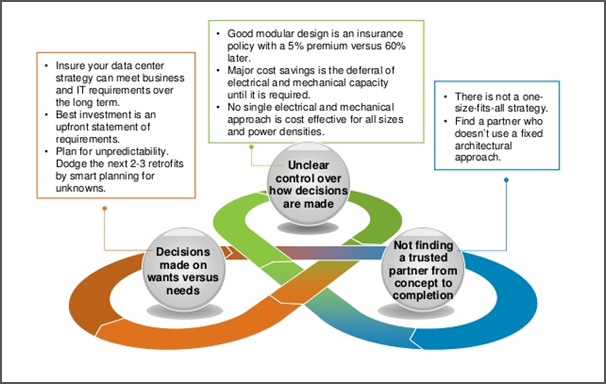
It is therefore evident that the Data Center should be built to solve a business problem – both current and future, should have the flexibility to adapt to changing demands and should be agile enough to accommodate newer dynamics of the business. The paradox in the situation is that as the Data Center grows, the density of the data within it will also expand; all this on hardware that will significantly shrink. Computing power therefore becomes the differentiator and will help negate any push backs that volume will bring up.
It is not lost on DC players that Security is the other differentiator. If this data falls into the wrong hands, it could create havoc, resulting in million dollar loses for corporations. It would impact the credibility of trustworthy institutions, entrusted with sensitive consumer data. Here are two recent incidents.
- In January 2019, the HIV-positive status of 14,200 people in Singapore was leaked online. Details included identification numbers, contact details, and addresses were available in the public domain.
- In December 2018, a cyber-attack exposed the records of 500 million guests of the hotel giant Marriott International. The attack occurred over a period of four years and was traced back to a Chinese spy agency.
The emphasis on security and compliance is even stronger now with the European Union’s General Data Protection Regulation (GDPR). In fact, GDPR is hailed as one of the most critical pivots in data privacy rules in the past two decades. It is going to fundamentally change how data is handled, stored, and processed.
Given the geographic-agnostic nature of such attacks, it is not lost on Indian IT companies to be wary of an impending attack. The Government-steered Personal Data Protection Bill mandates stringent rules for security, consent of customers, data privacy and data localization. Indian businesses will need to realign their Data Center strategies to comply with this Bill, which could eventually become law. This law will push business leaders to rethink identity and access security, encryption, data systems and application security, cloud security, and DDoS, among other things. And that’s where machine to machine will score higher. Little wonder that CIOs are in favour of the benefits of automating the whole of atleast a majority of the work chain.
Machine to machine allows for a predictable, systemic patterns, allowing for hyperscale computing, deep-dive analytics, trend spotting, vulnerability recognition and elimination, risk mitigation, even alternate computing, without the vulnerabilities of man to machine directions. The choice therefore in front of the CIO are to go with a service provider who is an SI or an IT architect who has provisioned the entire landscape and hence can implement machine-derived predictable automated results.
Does this mean it is the end of human thinking? Quite to the contrary, it started because of human thinking.
Sify has always taken pride in supporting technology advancements since the launch of its first Enterprise Data Center in 2001 and we invite you to download a copy of Gartner’s Market Guide that tracks the evolution of Data Center Services Market in India and highlights the wider choice of providers, hosting locations and services.
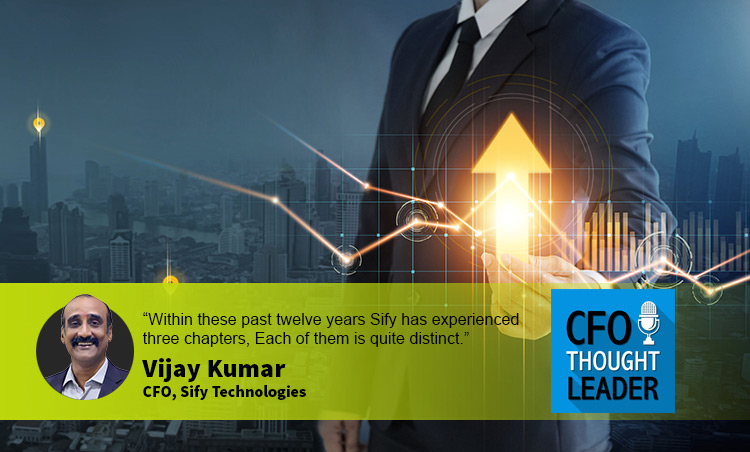
A CFO for All Seasons: Interview of M P Vijay Kumar, CFO on CFOThoughtLeader.com
I have one primary agenda for the next 12 months: to ensure that the organization has enough support available across all of the functions to enable scale. I want to ensure that every part of the organization is in a position to enable scale and monetize market opportunities, explains Vijay. At times, it must seem to Vijay Kumar that his 12-year tenure as a CFO has been spent not at one company, but three. This must be a sense that most C-suite members at Sify Technologies likely experience in light of the company’s appetite for continuous reinvention.
Listen to the Interview
At times, it must seem to Vijay Kumar that his 12-year tenure as a CFO has been spent not at one company, but three. This must be a sense that most C-suite members at Sify Technologies likely experience in light of the company’s appetite for continuous reinvention.
Back in 2007, when Kumar arrived at the information and communications technology company, Sify was widely known as a consumer business–and one perhaps without the will or resources to attract business customers. As CFO, Kumar was part of a management team tasked with changing that perception both inside and outside of Sify’s existing world. More specifically, Kumar and his finance team were responsible for calculating and tracking the necessary capital expenditures that could provide the new business-to-business infrastructure that business customers would demand. Of course, no sooner was the infrastructure in place then Sify decided to super-size its business services menu, making it a bonafide provider of technology services. Looking forward, Kumar says that Sify’s latest innovation involves not so much its customer offerings but how customers buy its offerings by using outcome-based pricing. This is an approach that Kumar believes will empower Sify to open a new chapter of growth.
https://www.cfothoughtleader.com/cfopodcasts/493-vijay-kumar-cfo-sify-technologies/
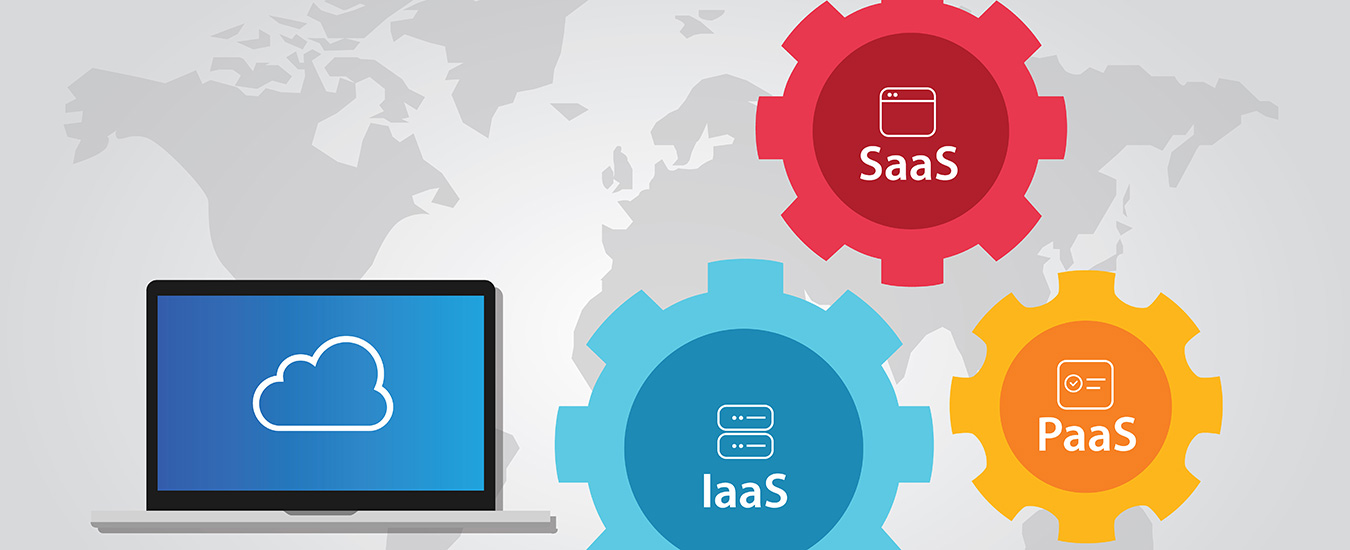
Cloud Service Models Compared: IaaS, PaaS & SaaS
Cloud computing has been dominating the business discussions across the world as it is consumed by the whole business ecosystem and serves both small and large enterprises. Companies are faced with a choice between three predominant models of cloud deployment when adopting the technology for their business. A company may select from SaaS, PaaS, and IaaS models based on their needs and the capabilities of cloud service models. Each model has inherent advantages and characteristics.
SaaS (Software as A Service)
SaaS service models have captured the largest share in the cloud world. In SaaS, third-party service providers deliver applications while the access to them is granted to a client through a Web interface. The cloud service provider manages everything including hardware, data, networking, runtime, data, middleware, operating systems, and applications. Some SaaS services that are popular in the business world are Salesforce, GoToMeeting, Dropbox, Google Apps, and Cisco WebEx.
Service Delivery: A SaaS application is made available over the Web and can be installed on-premise or can be executed right from the browser, depending upon the application. As opposed to traditional software, SaaS-based software is delivered predominantly in subscription-based pricing. While popular end-user applications such as Dropbox and MS Office Apps offer a free trial for a limited period, their extended usage, integrations, and customer support could come at a nominal subscription cost.
How to identify if it is SaaS? If everything is being managed from a centralized location on a cloud platform by your service provider, and your application is hosted on a remote server to which you are given the access through Web-based connectivity, then it is likely to be SaaS.
Benefits: The cost of licensing is less in this model, and it also provides a mobility advantage to the workforce as the applications can be accessed from anywhere using the Web2. In this model, everything at the back-end is taken care of by the service provider while the client can use the features of specific applications. If there are any technical issues faced in infrastructure, the client can depend on the service provider to remove them.
When to Choose? You can choose this model if you do not want to take the burden of managing your IT infrastructure as well as the platform, and only want to focus on the respective application and services. You can pass on the laborious work of installation, upgrading, and management to the third-party companies that have expertise in public cloud management.
PaaS (Platform as A Service)
In the PaaS service model, the third-party service provider delivers software components and the framework to build applications while clients can take care of the development of the application. Such a framework allows companies to develop custom applications over the platform that is served. In this model, the service provider can manage servers, virtualization, storage, software, and networking while developers are allowed to develop customized applications. PaaS model can work with both private cloud and public cloud.
Service Delivery: A middleware is built into the model which can be used by developers. The developer does not need to do hard coding from scratch as the platform provides the libraries. This reduces the development time and enhances the productivity of an application developer enabling companies to reduce time-to-market.
How to identify if it is PaaS? If you are using integrated databases, have resources made available that can quickly scale, and you have access to many different cloud services to help you in developing, testing, and deploying applications, it is PaaS.
Benefits: The processes of development and testing are both cost-effective and fast. PaaS model delivers an operating environment and some on-demand services such as CRM, ERP, and Web conferencing. With PaaS, you can also enjoy additional microservices to enhance your run-time quality. Additional services can also be availed such as directory, workflow, security, and scheduling. Other benefits of using this service model include cross-platform development, built-in components, no licensing cost, and efficient application Lifecycle management.
When to Choose? PaaS is most suited if you want to create your application but need others to maintain the platform for you. When your developers need creative freedom to build highly customized applications and require you to provide tools for development, this would be the model to select.
IaaS (Infrastructure as A Service)
In this cloud service model, Data Center infrastructure components are provided including servers, virtualization, storage, software, and networking. This is a pay-as-you-go model which provides access to all services that can be utilized as per your needs. IaaS is like renting space and infrastructure components from a cloud service provider using a subscription model.
Service Delivery: The infrastructure can be managed remotely by a client. On this infrastructure, companies can install their own platforms and do the development. Some popular examples of IaaS service models are Microsoft Azure, Amazon Web Services (AWS), and Google Compute Engine (GCE).
How to identify if it is IaaS? If you have all the resources available as a service, your cost of operation is relative to your consumption, and you have complete control over your infrastructure, it is IaaS.
Benefits: A company need not invest heavily in infrastructure deployment but can use virtual Data Centers. A major advantage of this service model is that with it, a single API (Application Programming Interface) can be used to access services from multiple cloud providers. A virtualized interface can be used over pre-configured hardware, and platforms can be installed by a client. IaaS service providers also give you security features for the management of your infrastructure through licensing agreements.
When to Choose? IaaS service model is most useful when you are starting a company and need hardware and software setups for your company. You may not commit to specific hardware or software but can enjoy the freedom of scaling up anytime you need with this deployment.
You can choose between the three models depending on your business needs and availability of resources to manage things. Irrespective of the model you choose, cloud Data Center does provide you a great cost advantage and flexibility with experts to back you in difficult times. Your choice of the cloud service model would affect the level of control you have over your infrastructure and applications. Depending on the needs of your business, you can select a model after a careful evaluation of the benefits of each of the cloud service models.
Sify’s many enterprise-class cloud services deliver massive scale and geographic reach with minimum investment. We help design the right solution to fit your needs and budget, with ready-to-use compute, storage and network resources to host your applications on a public, private or hybrid multi-tenant cloud infrastructure.
From Legacy to the Modern-day Data Center Cooling Systems
Modern-day Data Centers provide massive computational capabilities while having a smaller footprint. This poses a significant challenge for keeping the Data Center cool, since more transistors in computer chips, means more heat dissipation, which requires greater cooling. Thereby, it has come to a point where traditional cooling systems are no longer adequate for modern Data Center cooling.
Legacy Cooling: Most Data Centers still use legacy cooling systems. They use raised floors to deliver cold air to Data Center servers, and this comes from Computer Room Air Conditioner (CRAC) units. These Data Centers use perforated tiles to allow cold air to leave from the plenum to enter the main area near the servers. Once this air passes through the server units, heated air is then returned to the CRAC unit for cooling. CRAC units have humidifiers to produce steam for running fans for cooling. Hence, they also ensure the required humidity conditions.
However, as room dimensions increased in modern Data Centers, legacy cooling systems become inadequate. These Data Centers need additional cooling systems besides the CRAC unit. Here is a list of techniques and methods used for modern Data Center cooling.
Server Cooling: Heat generated by the servers are absorbed and drawn away using a combination of fans, heat sinks, pipes within ITE (Information Technology Equipment) units.1 Sometimes, a server immersion cooling system may also be used for enhanced heat transfer.
Space Cooling: The overall heat generated within a Data Center is also transferred to air and then into a liquid form using the CRAC unit.
Heat Rejection: Heat rejection is an integral part of the overall cooling process. The heat taken from the server is displaced using CRAC units, CRAH (Computer Room Air Handler) units, split systems, airside economization, direct evaporative cooling and indirect evaporative cooling systems. An economizing cooling system turns off the refrigerant cycle drawing air from outside into the Data Center so that the inside air can get mixed with the outside air to create a balance. Evaporated water is used by these systems to supplement this process by absorbing energy into chilled water and then lowering the bulb temperature to match the temperature of the air.
Containments: Hot and cold aisle containment use air handlers to contain cool or hot air and let the remaining air out. A hot containment would contain hot exhaust air and let cooler air out while cold containment would do vice versa.3 Many new Data Centers use hot aisle containment which is considered as a more flexible cooling solution as it can meet the demands of increased density of systems.
Closed-Couple cooling: Closed-Couple Cooling or CCC includes above-rack, in-rack or rear-door heat exchanger systems. It involves bringing the cooling system closer to the server racks itself for enhanced heat-exchange.2 This technology is very effective as well as flexible with long-term provisions but requires significant investments.
Conclusion
Companies can choose a cooling system based on the cooling needs, infrastructure density, uptime needs, space factors, and cost factors. The choice of the right cooling system becomes critical when the Data Center needs to have high uptime and avoid any downtime due to energy issues.
Sify offers state of the art Data Centers to ensure the highest levels of availability, security, and connectivity for your IT infra. Our Data Centers are strategically located in different seismic zones across India, with highly redundant power and cooling systems that meet and even exceed the industry’s highest standards.
Sify is now a Google Cloud Interconnect Partner
Enterprises can now easily connect from 45 Data Centers and their offices in over 1600 cities across India
INDIA, February 13, 2019 – Sify Technologies Limited (NASDAQ: SIFY), an ICT Solutions and Services leader in India, today announced support for Google Cloud’s Partner Interconnect, a Google Cloud service that enables its customers to connect to Google Cloud Platform globally. Sify Technologies Limited’s GlobalCloudConnect (GCC) platform will now offer secure, deterministic network connectivity services to Google Cloud in India, in addition to Amazon Web Services and Microsoft Azure.
Through Google Cloud’s Partner Interconnect, Sify is enabling Google Cloud customers to connect with their offices, Data Centers and workloads in other public clouds, leveraging Sify’s country wide IP VPN (MPLS) network, which reaches over 1600 Indian towns and cities.
Google Cloud customers can also utilize Sify’s Data Center Interconnect services, which provide cutting-edge performance for mission-critical and latency/high-availability sensitive applications. This service is offered from 45 Data Centers in the country, including six of Sify’s own carrier-neutral colocation facilities.
Write to gccenquiries@sifycorp.com to know further about this service.
About Sify Technologies
Sify is the largest ICT service provider, systems integrator, and all-in-one network solutions company on the Indian subcontinent. We have also expanded to the United States, with headquarters in the heart of California’s Silicon Valley.
Over 10000 businesses have become Sify customers. We also partner with other major network operators to deliver global network solutions. Our customers can access Sify services via India’s largest MPLS network. Among the very few Enterprise class players in India, Sify, today has a presence in more than 1600 cities in India and in North America, the United Kingdom and Singapore.
Sify, www.sify.com, Sify Technologies and www.sifytechnologies.com are registered trademarks of Sify Technologies Limited
Forward Looking Statements
This press release contains forward-looking statements within the meaning of Section 27A of the Securities Act of 1933, as amended, and Section 21E of the Securities Exchange Act of 1934, as amended. The forward-looking statements contained herein are subject to risks and uncertainties that could cause actual results to differ materially from those reflected in the forward-looking statements. Sify undertakes no duty to update any forward-looking statements.
For a discussion of the risks associated with Sify’s business, please see the discussion under the caption “Risk Factors” in the company’s Annual Report on Form 20-F for the year ended March 31, 2018, which has been filed with the United States Securities and Exchange Commission and is available by accessing the database maintained by the SEC at www.sec.gov, and Sify’s other reports filed with the SEC.
For further information, please contact:
Sify Technologies Limited
Praveen Krishna
Investor Relations & Public Relations
+91 44 22540777 (ext.2055)
praveen.krishna@sifycorp.com
20:20 Media
Nikhila Kesavan
+91 9840124036
nikhila.kesavan@2020msl.com
Grayling Investor Relations
Shiwei Yin
+1-646-284-9474
Shiwei.Yin@grayling.com
Sify Technologies and GMO GlobalSign to jointly offer SSL/ TLS Certificates in the SAARC region
GlobalSign SSL/TLS certificates are being offered by Safescrypt, the data security business of Sify across India and other SAARC countries.
New Delhi, India, December 19, 2018 – Sify Technologies Limited (NASDAQ: SIFY), an ICT Solutions and Services leader in India, today announced a partnership with GMO GlobalSign, a leading provider of trusted identity and security solutions and one of the longest established Certificate Authorities in the world to offer SSL/ TLS Certificates to customers across India and other SAARC countries. This partnership makes Safescrypt, the data security solution arm of Sify, one of the largest Channel Partners for GMO GlobalSign in the region.
The partnership would expand the geographical reach for both organizations and importantly, make SSL Certificates more accessible to customers from across industries in the region. It would also ensure quick and hassle-free certificate installations.
In the wake of recent developments in online security, when Google Chrome started labelling non-HTTPS sites as “Not Secure”, SSL Certificates have become essential for businesses of all sizes. As a trusted Certificate Authority, GMO GlobalSign is uniquely positioned to offer reliable solutions to organizations looking to secure their online presence.
SSL Certificates from GlobalSign allows trusted, secure and encrypted information exchange between browsers and webservers, websites and networks. GlobalSign’s fully automated and scalable, managed PKI solution helps organizations manage enterprise-wide certificates. With over 60 million digital certificates/identities issued to people, servers and devices, the Japan-based Certificate Authority has built an enviable reputation globally.
“We are excited about this partnership. As the world moves towards a secure web, GMO GlobalSign, as a trusted CA, has a larger role to play in the security ecosystem of the region. This partnership would provide further impetus to our consistently growing market share”, said Aditya Anand, General Manager, India, SAARC & Middle East, GMO GlobalSign.
Debanjan Kumar, Business Head–AIS, Sify, said, “As security certification becomes generic to business environments, the need of the hour is credibility, reach and turnaround time. Sify chose to partner with GMO GlobalSign given their reputation in the Digital Certification market globally. In extending this service to the SAARC markets, both Sify and GlobalSign are seeking to explore a hitherto nascent market.”
About Sify Technologies
Sify is the largest ICT service provider, systems integrator, and all-in-one network solutions company on the Indian subcontinent. We’ve also expanded to the United States, with headquarters in the heart of California’s Silicon Valley.
Over 10000 businesses have become Sify customers. We also partner with other major network operators to deliver global network solutions. Our customers can access Sify services via India’s largest MPLS network. Among the very few Enterprise class player in India, Sify, today has presence in more than 1600 cities in India and in North America, the United Kingdom and Singapore.
Sify, www.sify.com, Sify Technologies and www.sifytechnologies.com are registered trademarks of Sify Technologies Limited. Discover how we can help guide your organisation in these times of ‘Digital’ here.
About GMO GlobalSign
GlobalSign is the leading provider of trusted identity and security solutions enabling businesses, large enterprises, cloud-based service providers and IoT innovators around the world to conduct secure online communications, manage millions of verified digital identities and automate authentication and encryption. Its high-scale PKI and identity solutions support the billions of services, devices, people and things comprising the Internet of Everything (IoE). The company has offices in the Americas, Europe and Asia.
For more information, visit https://www.globalsign.com/en-in/
Latika Raman
Marketing Manager
GMO GlobalSign Certificate Services Private Ltd.
Phone: +91 11 4110 6033
Email: latika.raman@globalsign.com
For further information, please contact:
Sify Technologies Limited
Mr. Praveen Krishna
Investor Relations & Public Relations
+91 44 22540777 (ext.2055)
praveen.krishna@sifycorp.com
20:20 Media
Nikhila Kesavan
+91 9840124036
nikhila.kesavan@2020msl.com
Grayling Investor Relations
Shiwei Yin
+1-646-284-9474
Shiwei.Yin@grayling.com

Five ways cloud is transforming the business world
Organizations around the globe are inclining towards the cloud technology and cloud platforms for enhanced data management and security, cost-efficient services, and of course, the ability to access distributed computing and storage facilities from anywhere, anytime.
In a recent study it was found that nearly 41% of the surveyed respondents showed interest in investing in and increasing the spending on cloud technologies, with over 51% large and medium companies planning to expand their budgets for cloud tech. As a result of this rapidly increasing interest and demand for cloud-based services, cloud computing service providers and cloud computing companies are on the rise.
But, why is the business world rapidly shifting to the cloud computing?
Cloud computing can bring about major positive transitions for businesses as it offers grounds for innovation coupled with organizational efficiency. Let’s look at the five ways in which cloud computing is transforming the business world.
1. Enhanced Operations
One of the best features of cloud computing solutions is that they can scale as a company grows. Cloud computing service providers allow companies (big or small) to move a part or all of their operations from a local network to the cloud platform, thereby making it easier for them to access a host of facilities such as data storage, data processing, and much more. Usually, cloud computing service providers have a strong and dedicated support team that can assist users through real-time communication.
Another major benefit of using a third-party service is that the responsibility of data and system management and the associated risks falls under the purview of the service provider. So, one can take advantage of the cloud services without having to worry about the risks.
2. Cost Reduction
Cloud computing services are highly cost-effective. Companies and businesses using the services of third-party cloud computing providers need not bear extra expenses in setting up the required infrastructure or hire additional in-house IT professionals for installing, managing, and upgrading the systems. As mentioned above, all these needs are taken care of by the cloud computing providers. Also, small companies can take advantage of the same tools and resources that are used by large corporations, without having to incur additional IT overhead. This means cloud computing services can reduce IT costs and increase the operating capital which can be steered towards improving other core areas of the business. With increased productivity, efficiency, flexibility and reduced costs, businesses can become more innovative and agile in their operations.
3. Fortified Security And Storage
Unlike the past, cloud computing service providers are now extremely cautious about the security and safety of their users. All the sensitive user data, files, and other important documents are stored across a distributed network. Since the data is never stored in one single physical device and the enforcement of encrypted passwords and restricted user access, the safety and security of the user data are enhanced. Steps are taken to further protect the data by incorporating firewall and anti-malware software within the cloud infrastructure.
Furthermore, cloud computing service providers allow businesses to leverage the best quality hardware for faster data access and exchange. This further boosts the operational efficiency, speed, and productivity.
4. Improved Flexibility
With cloud services, employees can access the same resources while working remotely that they could access while working from the office. Thanks to cloud technology, employees can now work within the comfort zone of their homes and get work done seamlessly. Mobile devices make this even more convenient by allowing employees to enjoy the flexibility of working at their own pace while also facilitating real-time communication between them and the users. Cloud companies can, thus, deliver better and more efficient services by investing in a band of dedicated remote employees instead of maintaining a full-house of on-site employees. This fast increasing mobile workforce delivering quality cloud solutions is a big reason why businesses today are making the transition to cloud computing providers.
5. Better Customer Support
Today, cloud computing providers have upgraded their game by offering an array of support options for businesses to choose from. Apart from the conventional telephone service, businesses can now opt for AI-powered chatbots that can interact with customers like a real human being. As most cloud computing providers offer impressive bandwidth, it facilitates improved communications which allow a firm’s customer support team to handle customers requests swiftly. The speedy and prompt delivery of support services will ensure that the customers don’t have to wait for hours for their queries/requests to be addressed. All this together leads to a richer customer support experience.
The end result? Happy customers who endorse the brand to a larger network.
Cloud computing is a versatile platform that offers an extensive variety of solutions to the common challenges and hurdles that businesses face in their day-to-day functioning. And that is precisely why cloud computing solutions and services are increasingly penetrating the business world by the minute and transforming it for the better.
Opt for dedicated private cloud infrastructure services for your mission-critical workloads.
To learn more about SIFY’S GOINFINIT PRIVATE – an enterprise-grade, fully integrated private cloud IT platform with specific controls, compliance and IT architecture available in a flexible consumption model.