Sify Technologies
Admin
In 1998, we were India’s first Indian private ISP. Millions experienced the internet for the first time on the Sify network. We pioneered voice and data services from our public internet access points.
Two decades and a smart shift in business positioning later, Sify is now an indispensable convergence bridge that enterprises seek. Sify has matured into India’s largest digital transformation company, bringing together a converged ICT ecosystem for the benefit of market-leading enterprises.
Sify Technologies to Deliver 400G-ready Metro Networks Using Ciena’s WaveLogic Ai Technology
Leading ICT Solutions and Services provider in India adds significant capacity and greater network intelligence
HANOVER, Md. and CHENNAI, India – June 28, 2018 – Sify Technologies Limited (NASDAQ: SIFY), an acknowledged ICT leader in the Indian Telecom and Data Center centric IT services space with global delivery capabilities, has selected Ciena’s (NYSE: CIEN) converged packet optical solutions to address rising customer demand and provide greater support for increasing data volumes, the Internet of Things (IoT), cloud-based services and Big Data analytics.
Sify can now scale its network capacity from 100G to 400G to deliver ultra-high, data-heavy bandwidth services and manage unpredictable traffic growth for its customers, which include Over the Top (OTT) providers, financial services institutions and healthcare organizations.
Key Facts:
Sify Technologies Limited is an information and communications technology provider (ICT) offering end-to-end solutions delivered over a telecom data network reaching more than 1,550 cities and towns in India.
With the growing adoption of both private and public clouds in India, bandwidth demand for connecting Data Centers and cloud providers is growing exponentially. Sify’s Data Center Interconnect and Cloud Interconnect offerings are designed to deliver the required bandwidth and performance characteristics for reliable and cost-effective solutions that power the cloud strategies of large enterprises in the financial services, media and digital verticals. Today, Sify’s Data Center Interconnect footprint covers more than 40 Data Centers in India. The Cloud Interconnect offering provides on-demand access to leading public cloud and SAAS providers in India. The Ciena deployment helps Sify scale its network on demand and provides the key network characteristics to support its customers’ requirements.
By leveraging Ciena’s Waveserver Ai and 6500 Packet-Optical Platforms powered by WaveLogic Ai coherent technology, Sify can program its network to adapt to changing service requirements in real-time while supporting large capacities in the metro networks.
Another key attribute of this deployment is Ciena’s advanced software capabilities, including PinPoint™ software that will allow Sify to address with precision any potential trouble spots, reducing the risk of outages and accelerating repair times from days to hours. Additionally, Ciena’s Blue Planet Manage, Control and Plan (MCP) software will give Sify real-time software control and improve network visibility.
Executive Comments:
“The elasticity of our network to support multi-cloud, multi-Data Center scenarios and its programmability to monitor, control and adapt to meet user demands in real-time is critical. Ciena’s understanding of our network infrastructure and their clarity in where and how we would benefit from integrating their solutions for more flexibility and scale in the network, especially in the context of Data Center/cloud driven east-west traffic, made them the right fit for our growth plans.”
Daniel Alex, President Telecom Business, Sify Technologies Limited
“As Sify Technologies supports more users, digital applications and connected things across India, they face the challenge of adapting to the demands being placed on their network. Ciena is committed to supporting Sify Technologies through its extensive experience and expertise, to deliver a more programmable infrastructure aided by software control and analytics to respond to changing network demands intuitively.”
Ryan Perera, Vice President and General Manager, Ciena India
About Sify Technologies
Sify Technologies Limited (NASDAQ NM: SIFY), is an acknowledged ICT leader in the Telecom and Data Center centric IT services space with global delivery capabilities. Among the very few Enterprise class players in India, Sify, today has presence in more than 1550 cities in India and offices in North America, United Kingdom and Singapore.
More than 8500 Enterprises access Sify’s IT services that’s focused on the Data Center and Cloud platform and connected through India’s largest MPLS network. As a truly converged ICT solutions and services provider, Sify is the preferred IT Services partner with a full suite of services ranging from Telecom connectivity services to Data Center transformation services along with Application and Security Services delivered on the same infrastructure.
Sify, Sify Technologies and www.sifytechnologies.com are registered trademarks of Sify Technologies Limited
About Ciena
Ciena (NYSE: CIEN) is a network strategy and technology company. We translate best-in-class technology into value through a high-touch, consultative business model – with a relentless drive to create exceptional experiences measured by outcomes. For updates on Ciena, follow us on Twitter @Ciena, LinkedIn, the Ciena Insights blog, or visit www.ciena.com.
Note to Ciena Investors
You are encouraged to review the Investors section of our website, where we routinely post press releases, SEC filings, recent news, financial results, and other announcements. From time to time we exclusively post material information to this website along with other disclosure channels that we use. This press release contains certain forward-looking statements that are based on our current expectations, forecasts, information and assumptions. These statements involve inherent risks and uncertainties. Actual results or outcomes may differ materially from those stated or implied, as a result of risks and uncertainties, including those detailed in our most recent annual or quarterly report filed with the SEC. Forward-looking statements include statements regarding our expectations, beliefs, intentions or strategies and can be identified by words such as “anticipate,” “believe,” “could,” “estimate,” “expect,” “intend,” “may,” “should,” “will,” and “would” or similar words. Ciena assumes no obligation to update the information included in this press release, whether as a result of new information, future events or otherwise.
For further information, please contact:
Sify Technologies Limited
Mr. Praveen Krishna
Investor Relations & Public Relations
+91 44 22540777 (ext.2055)


What Are the Trending Research Areas in Cloud Computing Security?
Cloud computing is one of the hottest trends. Most technological solutions are now on cloud and the ones remaining are vying to be on cloud. Due to its exceptional benefits, it has magnetized the IT leaders and entrepreneurs at all levels.
What is Cloud Computing?
Cloud Computing is when many computers are linked through a real-time communication network. It basically refers to a network of remote servers that are hosted in Data Center, which further can be accessed via internet from any browser. Hence, it becomes easy to store, manage, and process data as compared to a local server or personal computer.
What is Cloud Networking?
The access to the networking resources from a centralized third-party provider using Wide Area Network (WAN) is termed as Cloud Networking. It refers to a concept where the unified cloud resources are accessible for customers and clients. In this concept, not only the cloud resources but also the network can be shared. With Cloud Networking, several management functions ensure that there are lesser devices required to manage the network.
When data began to move to cloud, security became a major debate, but cloud networking and cloud computing security has come a long way with better IAM and other data protection procedures.
Cloud networking and cloud computing security revolves around three things-
- Safeguarding user accounts in the cloud
- Protecting the data in the cloud
- And, then the third aspect is application security.
Trending Research Areas in Cloud Computing Security
Following are the trending research areas in the Cloud Computing Security:
- Virtualization: Cloud computing itself is based on the concept of virtualization. In this process, virtual version of a server, network or storage is created, rather than the real one. Hardware virtualization refers to the virtual machines that can act like a computer with an operating system. Hardware virtualization is of two types: Full Virtualization and Para-Virtualization.
- Encryption: It is the process of protecting data by sending it in some other form. Cloud computing uses advanced encryption algorithms in order to maintain the privacy of your data. Crypto-shedding is another measure in which the keys are deleted when there is no requirement of using the data. There are two types of encryption used in cloud computing security including Fully Homomorphic Encryption and Searchable Encryption.
- Denial of Service: It is a type of attack in which an intruder can make the resources of the users unavailable by disrupting the services of the internet. The intruder makes sure that the system gets overloaded by sundry requests and also blocks the genuine incoming requests. Application layer attack and Distributed DoS attack are some of its types.
- DDoS Attacks: It stands for Distribution Denial of Service. It is a type of Denial of Service attack in which hostile traffic comes from various devices. Hence, it becomes difficult to differentiate between the malicious traffic and the genuine one. Application layer DDoS attack is another type of DDoS attack in which the attacker targets the application layer of the OSI model.
- Cloud Security Dimensions: Software called Cloud Access Security Brokers (CASB) in between the cloud applications and cloud users, monitors all the policies related to cloud security and also enforces the cloud security policies.
- Data Security: The Encryption method is used in protecting and maintaining the privacy of the data because security in the cloud-based services has always been the focal point. Due to some vulnerabilities and loopholes, data might get exposed to the public cloud.
- Data Separation: An important aspect of data separation is the geolocation. Organizations should make sure that the geolocation for data storage must be a trusted one. Geolocation and tenancy are the major factors in data separation.
Cloud is one of the topics with no limit at all. With its help, you can perform any kind of project in order to enhance the performance in speed and magnify the security algorithm so as to prevent the files from being hacked.
Sify allows enterprises to store and process data on a variety of Cloud options, making data-access mechanisms more efficient and reliable.
Data Center Interconnect: Details, Challenges & Solution
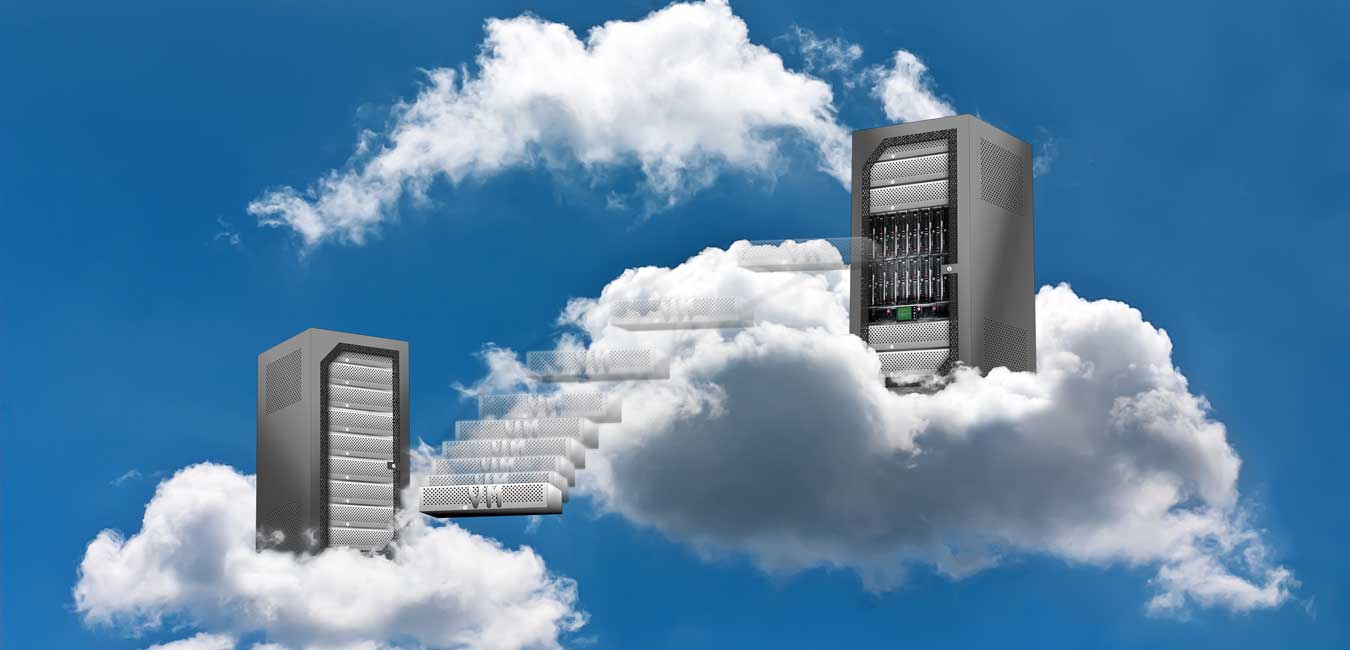
The ever-increasing demand for the Data-Center and network virtualization has its ramifications on the Data Center interconnect (check out Cloud Cover). It has gained the attention of the service provider’s network architecture making them think in the direction of load-sharing and distributed workloads. It has also become a way to connect various Data Centers in the cloud using SDN to allocate resources as per the requirement, automatically.
There was a time when Data Center interconnect (DCI) used to be simple. But due to the many technological advances and the availability of various options, there is a lot of confusion in the market. First, let’s take a look at the Data Center interconnect market:
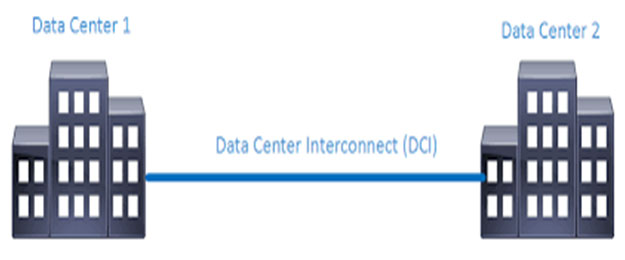
Intra-Connections-The intra Data Center interconnect refers to all the connections within the Data Center. They can be within one building, or between Data-Center buildings within the campus. The connections may be at a distance of meters to few kilometers.
Inter-Connections-These refer to the connections that are between the 10km-80km range. Undoubtedly, the connections may be far apart, but inter-Data Center connectivity market is focused within this range.
There are Data Centers situated to serve the entire continent and there are others focused in a specific metro area.
Case-Study (Online Retailer)
You are a global retailer, and you might have several thousand transactions running in a second. When the Data Center is far away, the data is more secure from the various natural disasters. But, then there is a challenge that comes with greater distance. The transactions that are in-flight may get lost due to latency.
So for online transactions, there is a local Data Center (primary Data-Center), and the other is a secondary Data Center that’s almost 80Km away. The benefits, in this case, are dual. First, your transactions will not be affected by the distance and the data is secure. Second, none of the transactions are lost due to latency. So in the worst case, only a small number of transactions might get affected or lost.
The traffic may be within Data-Centers, or between two Data-Centers for the load-balancing. Now the two important traffic categorization:
- East-West Traffic: The traffic between Data-Centers is referred as East-West.
- North-South: The traffic to the user is referred to North-South.
Which DCI Challenges Have To Be Overcome?
There are many challenges that have to be overcome. Let’s take a look at some of them.
Distance: The DCI applications vary greatly in size and scope in response to the Data Centers that may be dispersed across the globe or metro area or around a country. So it becomes critical to carry most of the bits farthest, but when the distance increases the latency increases as well. While choosing shortest route may minimize latency, bad equipment may also lead to latency.
Connection Capacity: The Data Centers store and deliver applications. The data sets that are coming in a Data-Center or leaving it may be very large. The range may vary from few hundred Gigabits to Terabits. To handle such large data, the equipment should offer reliable and high-capacity connections. It’ll make sure that they may quickly scale to address the spikes in traffic.
Data Security: Data Centers store a large amount of critical information. It demands that the Data Center connections are reliable, safe, and encrypted to avoid costly breaches and also data losses. While the security of stored data is crucial, what’s more, crucial is the security of in-flight data.
Automated Operations: As we know, manual operations may be labor-intensive, complicated, slow and may be error-prone as well. So it is very much imperative that complexity and lower speed of connection that arises out of manual operations may be minimized by moving towards automation. It shouldn’t take much time to establish a connection between Data-Centers and shouldn’t require on-going manual operations.
Rising Costs: When a large stream of data enters and leaves the Data-Center, it should be carried out in the most cost-efficient manner. If the Data Centers remain viable, the costs shouldn’t rise in the same way as the bandwidth. To take care of these issues, the solutions in high-speed networking should offer a solution that connects Data Centers at the lowest cost per bit.
Finally, Solution to Look Forward
Cloud cover is a solution that provides reliable and affordable connectivity to leverage your Data Center and cloud investments.
It offers
- 45 Data Centers with a high capacity fiber
- Zero latency access to AWS & Other CSPs
It is also carrier neutral with the presence of significant operators within the Data Center. The settlement comes at a low price that fits the budget of small to large scale businesses.
Our Cloud Cover connects 45 Data Centers, 6 belonging to Sify and 39 other Data Centers, on a high-speed network.

Key Advantages Dedicated Web Server Hosting
Are you in search of the best application hosting? Well, choosing the best-dedicated server for your enterprise could be a task in itself. But why dedicated web server? A dedicated web server ensures resilience and resources to host a web application.
Selecting a dedicated server which is fast, secure, properly managed, and has the perfect software tools is very much essential for the growth of your business. A company looking forward to having more control and power will opt for a service provider who offers dedicated server hosting. The server is built and maintained by the provider, thus cutting down the cost of purchasing your own server.
So, let us take a sneak peek into the advantages of choosing a dedicated server hosting provider and some other useful tips in getting started with your new dedicated server.
Advantages:
- High Performance and SecurityHow can you maximize the uptime for your website or application? It is through a dedicated hosting provider. Dedicated servers provide more reliability and stability than the shared hosting. It makes sure that you are not sharing your space with any other malicious software or a potential spammer. Dedicated server leads to enhanced security, this is the reason it is essential for companies taking transactions over FTP or SSL. Moreover, the best-dedicated server hosting comes with 24×7 support to deal with failures and complaints which further ensures high uptimes.
- FlexibilityA dedicated server comes up with flexibility, as you can always customize your server as per client’s requirements of RAM, disk space, CPU, and software. If you want a customizable server environment, then a dedicated server might fit your needs.
- Server Resources are not sharedChoosing a dedicated server fetches you all the resources of a server. With a dedicated server, your server won’t slow down, as there are no other applications sharing your space and clogging up the server’s RAM and CPU. In case of dedicated hosting, your server bandwidth is only yours.
- No Purchase and MaintenanceIf a company requires a dedicated hosting, and it does not have the time and resources to manage a server, the dedicated hosting is a low-cost way to access the resources of the server. Dedicated server hosting helps in maintaining the server equipment, thus reducing the overhead for a business.
- Full ControlOne of the most widely held benefits of dedicated hosting is that you have full control on your server. You decide which site management tool and application you wish to deploy, provided your hosting provider can service them.
Factors to Consider while Purchasing Best Dedicated Server Hosting Plan
Developers and business owners try to find the best-dedicated server hosting because they can be configured easily in order to quench the programming requirements, server load support, and top-notch security. So, here are the points which should be kept in mind before purchasing a dedicated server hosting plan:
- Different types of RAM- Primarily used is DDR3, DDR4, and ECC options in present
- Focus on CPU Benchmark Performance- Know the difference between Xeon, Atom, and Opteron product lines
- Choice of Bandwidth and Data Center Concerns- Internet Backbone Network Speeds, Power Supply, and Cooling
- OS- Windows and LINUX; and choosing between different LINUX distributions
- Technical Support- the capability to support your clients
- Disk Drive Storage- HDD vs Solid State Drives (SSDs)
Almost all the users of dedicated servers yearn for the best hardware configurations at the lowest possible price. However, some choose to bargain on the older equipment available at a particular discount. Legions of mobile applications that come with custom code require complex web server that shared hosting plans do not support. However, it is advised that the business owner should consult with their system administrator to discover the development requirements for their productive applications. Novice development in cloud hosting may soon have an upper hand over the dedicated server plans, and cheaper cum better plans are available on VPS plans with more resource allocation. Hence it becomes quintessential, as how to keep your online business up to date in a rapidly innovating web hosting industry.
Focus on your core business and outsource the complexities of Data Center management with Sify
Comparing internet lease lines and broadband services
The internet can be accessed in many ways, as evidence in the form of the evolution of the internet connections over the last few years. Today, the broadband is usually considered as the most popular medium for accessing the internet, especially in homes. However, when it comes to larger establishments and commercial spaces such as hospitals, corporate offices, and colleges, internet leased lines are preferred. Why is that, exactly?
Defining internet leased lines and broadband connections
An internet leased line is a premium, dedicated internet connection between the local exchange and one’s premises. Usually delivered over fibre, an internet leased line, which is also otherwise called as a private line, data circuit, a dedicated line or an ethernet leased line, provides symmetrical, uncontended, and identical internet upload and download speeds. An internet leased line has a fixed bandwidth and isn’t dependent in contention with other users.
Broadband, on the other hand, is a non-dedicated connection between the local exchange and one’s premises. Not only does it have a variable bandwidth, but it also provides asymmetric speeds which are slower for uploads and faster for downloads as well as is subject to contention with other users.
Difference between internet leased lines and broadband
- Connection: Internet leased lines and broadband connect to the business premises in different ways. While they both are transferred via cables, the difference lies in how. An individual gets their internet from the local cabinet/box on the street/apartment building where one lives. That box contains a copper-wire or fibre connection to one’s premises and delivers the internet. Thus, the exchange is via a series of cables in both cases. However, in broadband connections, cables are split between all other local premises, while leased lines are dedicated circuits coming only to your premises – that means no sharing in leased lines
- Consistent speeds and contention: Since various premises share the same cable split ‘n’ number of ways in broadband, the speed is also affected. So, even if one gets a 76Mbps connection, the speed varies according to how many other people are using the broadband at the same time. Realistically, at peak time, one might be getting a much slower speed if everyone is using unlimited downloads. However, with an internet leased line, there is no slower speed because there is no contention with others. Even if you have only a 10Mbps connection, you’re getting the 10Mbps in its entirety.
- Reliability and SLAs: When it comes to issues such as the internet being down, for how long can you work without it? This is where Service Level Agreements come in. Some broadband providers don’t even provide SLAs, but do mention about the internet being fixed as quickly as they can in their service terms. However, one might have to wait for a few days. With internet leased lines, users can expect strong, to-the-point SLAs with better reliability. In fact, leased line issues might even get fixed within a matter of a few hours, while of course, keeping the issue in mind.
- Bandwidth choices: When it comes to internet leased lines, users can take their pick from a wide range of bandwidth choices, right from 64 Kbps and 128 Kbps to 2 Mbps, 80 Mbps, and even as high as 155Mbps. The choices are much more restricted and lesser when it comes to broadband.
So, while broadband might be cheaper than an internet leased line, but it certainly isn’t a match for the latter when it comes to the above-mentioned aspects. When one is considering a new internet solution, the best thing would be to analyse what you exactly need and compare the options for both broadband and internet leased lines before zeroing in on one.
There are numerous internet leased line providers in India and Sify is proud to be one of the oldest & widest network coverage providers.
Press Release AMS-IX and Sify Carrier-Neutral Internet Exchange Mumbai
New Internet Exchange aims for acceleration of Internet growth in the Indian market
Amsterdam -6 February 2017 – AMS-IX (Amsterdam Internet Exchange) and Sify today announced the launch of AMS-IX India, a carrier-neutral, open Internet Exchange in Mumbai, India.
Job Witteman, CEO of AMS-IX, explains, “India is one of the world’s fastest growing internet markets. The growth is being accelerated by 4G adoption, large content players establishing a footprint in India and the supportive policies of the Government.” Mumbai, being the Internet gateway to the country, was picked as the initial location for the AMS-IX India exchange. This also gives accessibility to some of India’s largest Data Centers. The IX builds on the successful formula of AMS-IX in Europe, which has grown into the leading Internet Exchange of the world. The exchange in Mumbai is ready for orders as of today.
AMS-IX India is a collaboration between the India based ICT service provider Sify and the European based AMS-IX. Customers will be able to connect to the IX via dedicated ports with speeds of (multiple) 1Gbps or 10Gbps. AMS-IX India will serve as a neutral and independent peering platform with unrivalled quality offering both private and public peering services at carrier-grade level to Internet Service Providers (ISPs), Internet Content Providers (ICPs), and Telecom operators. By connecting to the exchange, content providers and eyeball networks are able to exchange their internet traffic and benefit from reduced latency and costs.
“We already see a major interest in this new exchange.” says Raju Vegesna, Chairman of Sify. “We believe, the exchange will create the right eco-system for acceleration of Internet adoption in India and will support the Digital India initiatives. The open nature of AMS-IX India will provide all content and internet service providers a truly global standard.”
Witteman, “AMS-IX is able to contribute to the success of this IX by bringing its know-how and experience in building and maintaining neutral and independent Internet Exchanges. We are very pleased to partner with Sify who brings a lot of local knowledge.”
About AMS-IX
Established in the early 1990s, AMS-IX (Amsterdam Internet Exchange) is a neutral, non-profit and independent Internet Exchange based in Amsterdam, the Netherlands. Internet traffic at AMS-IX has a peak of 5 Terabits per second (Tbps) and it interconnects more than 800 IP networks, making it one of the largest Internet Exchanges in the world.
The AMS-IX platform provides IP interconnection and peering services of a guaranteed high quality for all types of IP traffic, irrespective whether this is traditional data, Voice over IP, mobile Internet traffic or video. By means of peering, these networks can provide their end users (both consumers as well as companies) with stable, fast and cost-efficient Internet services.
AMS-IX also manages the world’s first mobile peering points: the Global Roaming Exchange (GRX), the Mobile Data Exchange (MDX) and the Internetwork Packet Exchange (IPX) interconnection points. Furthermore, AMS-IX also manages two additional Internet Exchanges abroad: AMS-IX Hong Kong and AMS-IX Caribbean on Curaçao. AMS-IX’s subsidiary company AMS-IX USA Inc. manages AMS-IX Bay Area, AMS-IX Chicago and AMS-IX New York in the United States of America. www.ams-ix.net
Information on AMS-IX India can be found on http://www.ams-ix.in/
About Sify Technologies
Sify is one of the the largest integrated ICT Solutions and Services companies in India, offering end-to-end solutions with a comprehensive range of products delivered over a common telecom data network infrastructure reaching more than 1400 cities and towns in India. This telecom network today connects 45 Data Centers across India including Sify’s 6 concurrently maintainable Data Centers across the cities of Chennai, Mumbai, Delhi and Bengaluru.
A significant part of the company’s revenue is derived from Enterprise Services, comprising of Telecom services, Data Center services, Cloud and Managed services, Applications Integration services and Technology Integration services. Sify also provides services that cater to the burgeoning demands of the SMB community, much of it on its Cloud services platform.
Sify has a unified licence to operate NLD (National Long Distance), ILD (International Long Distance) services and ISP services and offers VoIP backhaul for international carriers. With the Sify Cable landing station and partnerships with submarine cable companies globally, Sify is present in almost all the spheres of the ICT eco system.
Sify has an expanding base of Managed Services customers, both in India and overseas, and is India’s first enterprise managed services provider to launch a Security Operations Center (SOC) to deliver managed security services. The software team develops applications and offers services to improve business efficiencies of its current and prospective client bases. Sify also offers services in the specialized domains of eLearning, both in India and globally. For more information about Sify, visit www.sifytechnologies.com
Forward Looking Statements
This press release contains forward-looking statements within the meaning of Section 27A of the Securities Act of 1933, as amended, and Section 21E of the Securities Exchange Act of 1934, as amended. The forward-looking statements contained herein are subject to risks and uncertainties that could cause actual results to differ materially from those reflected in the forward-looking statements. Sify undertakes no duty to update any forward-looking statements.
For a discussion of the risks associated with Sify’s business, please see the discussion under the caption “Risk Factors” in the company’s Annual Report on Form 20-F for the year ended March 31, 2016, which has been filed with the United States Securities and Exchange Commission and is available by accessing the database maintained by the SEC at www.sec.gov, and Sify’s other reports filed with the SEC.
For further information, please contact:
Sify Technologies Limited
Mr. Praveen Krishna
Investor Relations & Public Relations
+91 44 22540777 (ext.2055)
Grayling Investor Relations
Shiwei Yin
+1-646-284-9474
Shiwei.Yin@grayling.com
20:20 Media
Nikhila Kesavan
+91 9840124036
nikhila.kesavan@2020msl.com
AMS-IX
Petra Wensing
Mobile: +31 (0)6 22 31 28 49
Email: pr@ams-ix.net
Bex*communicatie
Stijn Stortelder
Mobile: +31 (0)6 14 555 794
Email: sstortelder@bexcommunicatie.nl
Sify elevated to Local Gold Partner Status in Akamai’s NetAlliance Partner Program
Chennai, India, December 12, 2017 – Sify Technologies Limited (NASDAQ: SIFY), the largest ICT service provider, systems integrator, and all-in-one network solutions company on the Indian subcontinent, with global delivery capabilities, today announced that it has been elevated to Local Gold Partner status in the Akamai NetAlliance Partner Program. Akamai Technologies, Inc. is the world’s largest and most trusted Cloud delivery platform.
The Akamai NetAlliance Program was set up for companies to incorporate and combine Akamai’s technologies and services with their own products and services in order to create more robust and innovative solutions for their customers. For a partner to qualify as Gold Partner, they need to show consistent business growth over four successive quarters while helping organizations reduce infrastructure costs through off-load capabilities, extend services globally without capital investment, and increase the breadth and depth of partner product lines.
As a Gold Partner, Sify is now part of the league of Akamai partners who have advanced technical expertise across Solutions and Operations as well as having significant experience across different business verticals, including Government.
Sify has been a Silver NetAlliance Partner since 2014. The partnership is designed to help Enterprises, especially those in banking, finance, IT-enabled services, and manufacturing verticals to enhance Cloud adoption for business and functional applications.
“It is an honour for all of us at Sify Technologies to have been accorded the Gold local partner status by Akamai. As we extend and further strengthen our partnership, we believe that together, we will continue to enrich our customers’ experience by delivering consistent and high-quality content over the Cloud” said Kamal Nath, CEO, Sify Technologies.
Danny Mesrop, Senior Director, Channels & Alliances, APJ, Akamai Technologies, said, “I believe that India is on the cusp of a digital revolution that straddles users, Enterprises, and government-run organizations. In our endeavours to make the internet fast, reliable and secure for everyone, we work with partners like Sify to help deliver the best possible digital experience. Sify Technologies’ elevation to an Akamai Gold partner is a reflection of their capability in helping Enterprises to make the most of what the internet has to offer.”
About Sify Technologies
Sify is the largest ICT service provider, systems integrator, and all-in-one network solutions company on the Indian subcontinent. We’ve also expanded to the United States, with headquarters in the heart of California’s Silicon Valley.
Over 8500 businesses have become Sify customers. We also partner with other major network operators to deliver global network solutions. Our customers can access Sify services via India’s largest MPLS network. Among the very few Enterprise class player in India, Sify, today has presence in more than 1550 cities in India and in North America, the United Kingdom, and Singapore.
Sify, Sify Technologies and www.sifytechnologies.com are registered trademarks of Sify Technologies Limited
About Akamai
As the world’s largest and most trusted Cloud delivery platform, Akamai makes it easier for its customers to provide the best and most secure digital experiences on any device, anytime, anywhere. Akamai’s massively distributed platform is unparalleled in scale with over 200,000 servers across 130 countries, giving customers superior performance and threat protection. Akamai’s portfolio of web and mobile performance, Cloud security, Enterprise access, and video delivery solutions are supported by exceptional customer service and 24/7 monitoring. To learn why the top financial institutions, e-commerce leaders, media & entertainment providers, and government organizations trust Akamai please visit www.akamai.com, blogs.akamai.com, or @Akamai on Twitter.
Forward Looking Statements
This press release contains forward-looking statements within the meaning of Section 27A of the Securities Act of 1933, as amended, and Section 21E of the Securities Exchange Act of 1934, as amended. The forward-looking statements contained herein are subject to risks and uncertainties that could cause actual results to differ materially from those reflected in the forward-looking statements. Sify undertakes no duty to update any forward-looking statements.
For a discussion of the risks associated with Sify’s business, please see the discussion under the caption “Risk Factors” in the company’s Annual Report on Form 20-F for the year ended March 31, 2017, which has been filed with the United States Securities and Exchange Commission and is available by accessing the database maintained by the SEC at www.sec.gov, and Sify’s other reports filed with the SEC.
For further information, please contact:
Sify Technologies Limited
Mr. Praveen Krishna
Investor Relations & Public Relations
+91 44 22540777 (ext.2055)
Network Security, the key to VoIP adoption
With growing Internet infrastructure and new technologies, VoIP (Voice over Internet Protocol) has gained tremendous popularity among businesses. Regardless of size and industry, organizations are migrating their communication network from traditional PSTNs to VoIP. The wide-ranging benefits of the system are bound to attract businesses from across the board – reliability combined with steep cost savings and a plethora of productivity-enhancing features make it the communication network of choice for enterprises.
But, in today’s landscape of increasing cyber-attacks, VoIP must also strengthen its security protocols to ensure businesses are not left vulnerable to malicious cyber agents.
Main Security Threats faced by VoIP
VoIP networks are open to the following threats
- Identity and service threat – this usually involves eavesdropping and phreaking – Eavesdropping is a scenario in which attackers infiltrate the VoIP lines to listen in to conversations to gain access to sensitive business data or private information and accounts to carry out corporate sabotage or identity theft. Phreaking is a term used for the practice of passing off call charges to other accounts by getting unauthorized access to their VoIP service.
- Viruses and Malware – the bane of all Internet-based services – VoIP services are also open to attacks by malware, worms, and viruses.
- Denial of Service – Another threat that is used most often against Internet-based services – DOS can bring the communication network to a halt by flooding it with unnecessary messages.
- Call tampering – call tampering refers to the practice of interrupting the call by injecting noise packets in the network or withholding call packets to cause call delays and poor call quality. Call hijacking is another form of call tampering in which an outside party enters the call and tricks the person on the other line by masquerading as the original caller.
How are VoIP service providers countering these security challenges?
Service Providers understand that the continued popularity of VoIP services depends, to a large degree, on how secure and comfortable businesses feel while using these services. The VoIP providers and organizations have given top priority to securing their communication networks and have spent the considerable amount of effort and money in putting together some of the most cutting-edge security solutions to safeguard their systems.
The threats listed above can be taken care of by a judicious mix of preventive measures –
- SBCs (Session Border Controllers) – SBCs manage VoIP protocol signals and with in-built security firewalls they are the first and one of the most effective lines of defense against cyber threats.
- Anti-virus – installing and operating an updated anti-virus or anti-malware on all connected computer hardware is especially important as they can enter the VoIP network through unsecured channels.
- Encryption – usually provided by the service providers as an add-on service to secure the network and is highly recommended for enterprise users. VoIP encryption is especially important when the organization has many users connecting from outside the office network – from mobiles or from home devices.
- Call restrictions, authorization, and passwords – businesses must restrict access to the VoIP network by making sure that only the required people are given access to the network. This along with call restrictions, to track and monitor call activity and stringent password policies can ensure that people within the organizations are made aware of the importance of keeping the network secure.
- Deep Packet Inspection (DPI) – DPI monitors the network and can identify extra or fraudulent data packets and flag them for review.
- VoIP authentication protocols – the most stringent of these protocols is the so-called three-way handshake – Challenge-Handshake Authentication Protocol (CHAP) uses a three-step process to test the legitimacy of the incoming messages and is far superior to basic password protection which is widely used.
Conclusion
While the future of VoIP services is secure – the benefits of the technology ensures that – security concerns that have dogged all Internet-based services are also giving network engineers sleepless nights. From cloud platforms to on-premise IT infrastructures, all systems have vulnerabilities that can be exploited and as Cyber-attacks become more aggressive and better organized no one is truly safe.
It is estimated that the global cost of cybercrime will reach $2 trillion by 2019 – keeping these numbers in mind organizations can no longer count on just plain old luck to keep their businesses safe, they need to be prepared for the worst. And this is especially true for mission-critical functions like communication!
Here, VOIP is clearly the solution of choice for organizations looking for a secure communications network.

The 3 core components that make up Enterprise Collaboration Services
A lot is being written these days about the increasingly important role of communication and collaboration services in running a business smoothly. As the world becomes more connected and doing business across vast geographies becomes the norm – the expectation of the employees, clients and end customers also rise – employees and clients demand to be connected 24×7 from anywhere in the world and customers expect near instantaneous resolution of their problems.
In this scenario, most organizations need to revaluate their collaboration systems. Several ICT players have harnessed technology to provide solutions that allow real time collaboration across devices – making it easier for people to work together without wasting time and money in traveling across distances.
Many of you might wonder what services are available under the umbrella of collaboration services and this is just what we will address below.
Components of Collaboration solutions
A comprehensive end-to-end Collaboration solution has three main components –
Audio Visual Collaboration Solutions
A few years ago, AV collaboration meant basic video conferencing solutions from fixed meeting or boardrooms, but service providers are now leveraging latest digital technologies such as cloud computing to offer exceptional communication and collaboration services to users, where they are – either within office or outside.
This includes a Wide Range of Services and Solutions with Capex and Pay-as-You-go models–
- Basic Video conferencing
- Mobility solutions to connect people on the go
- High end bridging solutions
- Large display solutions for niche applications such as NOCs and digital signage.
- AV integration solutions for creating immersive communication environments for large areas such as board rooms, VC rooms, auditoriums etc.
Collaboration services also offer additional functionalities and benefits – recording and streaming facilities, integration with business applications, flexible and user-friendly interface etc. And businesses have added flexibility in terms of using these services either as an on-premise, hosted or hybrid model.
Hosted Contact center solutions
The second element of collaboration services is tailored to the needs of businesses – small, medium or large – whose business models revolve around customer interactions which necessitates the need to run customer care centers.
Customer experience during their interactions with provider organizations are key business drivers and hence critical to businesses. To enable enhanced customer experience, Contact center solutions have evolved over years with the help of state-of-the-art technology. These technologies are normally Capex intensive. However, today businesses can opt for Contact center-as-a-service model which has no upfront CAPEX costs and is completely flexible and scalable. This as-a-service model allows businesses to outsource all the technological aspects of contact centers and concentrate on their core business operations.
VoIP security and TDM to IP conversion with SBCs
VoIP services have taken on a mission critical role in many organizations, hence it is imperative to protect and isolate the VoIP infrastructure from external threats and allow seamless communication between multiple voice devices.
VoIP security forms an important component of Collaboration services. With SBCs (Session Border controllers) organizations can centrally manage VoIP policies and bandwidth for VoIP devices and applications and protect the network from cyber-attacks.
One of the hallmarks of a successful enterprise is how well its employees work together as a team. Teamwork and Collaboration is essential for running a successful organization, more so in today’s global workplace. Professional collaboration solutions based on the latest technology delivers on several fronts – cost, productivity and flexibility – and for many organizations is one of the smartest business moves for staying competitive in the current global marketplace.
When it comes to providing collaboration and communication services to organizations spread over continents, Sify which is a pioneer in Voice and Data services, with its decades of experience in data communication solutions, network integration services, Data Center services and application integration services can provide enterprise grade collaboration services to verticals ranging from Healthcare, IT/ITes, Manufacturing, Retail, Education and more.

VoIP services – How does it work?
The world over, communication – reliable and secure – is taking on a more critical role in the functioning of organizations and businesses. The more geographically spread your organization is, the more important it becomes to keep communication networks up and running.
Voice Over Internet Protocol (VoIP) has gained tremendous traction over the last decade and has become a popular choice for organizations looking for cost-effective and reliable communication networks to manage their growing business – VoIP services market is predicted to expand 10 % every year until 2021 and touch $140 billion.
What is VoIP (Voice over Internet Protocol)?
VoIP services use Internet connections to make phone calls. The analog voice signal is turned into data packets and transmitted over the Internet, enterprise local networks or Wide area networks. Apart from voice data, VoIP also transmits multimedia content over IP networks.
How does VoIP work?
VoIP has become an increasingly popular choice for business communications and provides a stable alternative for traditional telephone networks known as Public Switched Telephone Networks(PSTN).
VoIP provides a reliable and secure communication channel with highly cost-effective models. To understand how VoIP can achieve this, one needs to look at the technology behind the services.
VoIP uses a codec to encapsulate audio into data packets and transmits them across an IP network and decapsulates them back into audio at the other end of the connection. VoIP uses standard codecs by the International Telecommunication Union, such as G.711 for transmitting uncompressed packets, or G.729 for compressed packets. This compression is typically used to decrease bandwidth requirements.
After it is encapsulated onto IP, voice data is transmitted via the real-time transport protocol or through its encrypted variant, secure real-time transport protocol. The most common communication protocol is Session Initiation Protocol (SIP) and is used for signaling that is necessary to create, maintain and end calls.
In an enterprise setup, VoIP emulates the traditional telephone networks with dedicated instruments – endpoints include applications running on mobile devices or dedicated desktop VoIP phones. VoIP is also available as a computer to computer service wherein you don’t need any extra hardware – calls can be made directly from the computer with just a microphone or a soundcard – the most popular example of this is Skype!
In many organizations, there may be an existing PBX system and VoIP system can use a SIP codec to connect with the PBX and allow it to manage user phone numbers; gateways to connect networks and provide failover in the event of a network outage.
VoIP networks have several other components such as session border controllers to provide security, call-policy management and inter-operator network connections. VoIP also has a host of additional functionalities which help users and management to operate smoothly – these are location-tracking databases for call routing and management platforms to collect call-performance statistics for voice-quality management.
Conclusion
A peek into the VoIP technology lays bare the reason for its popularity, especially among businesses – while cost savings may be one of the main reasons for migrating to VoIP (on an average, businesses can save between 50 – 75 % after switching to VoIP), businesses have consistently seen enormous jumps in productivity thanks to additional functionalities such as unified communication and telecommuting. In the current market scenario, where customers expect quick responses and a seamless customer experience is key to business success, VoIP has quickly become the only communication choice for most organizations.
As India’s first ICT Company to be listed on NASDAQ, Sify has years of experience in providing reliable and secure Network Integration services to enterprises across industry verticals.
Our cutting-edge networking services ensure reliable data connectivity services as well as the best-in-class Voice services in India – all available as cost-effective payment models aligned to scale with the growing needs of individual businesses.