Sify Technologies
Admin
In 1998, we were India’s first Indian private ISP. Millions experienced the internet for the first time on the Sify network. We pioneered voice and data services from our public internet access points.
Two decades and a smart shift in business positioning later, Sify is now an indispensable convergence bridge that enterprises seek. Sify has matured into India’s largest digital transformation company, bringing together a converged ICT ecosystem for the benefit of market-leading enterprises.
How Unreal and Unity are changing filmmaking
Ramji writes on the ‘Unreal Unity’ of technology and art…
The highly acclaimed Unreal and Unity3D engines are among the most popular tools with employed by the augmented Reality (AR), virtual reality (VR) and gaming professionals. But what in fact are these ‘engines’ and how is this new technology revolutionising cinema? In this article let us see what powers these new age solutions and how these technologies are changing filmmaking.
Imagine you are playing a computer game which is usually a set of sequences that appear at random, and you, the player, react or engage with them. All these happen in something called as ‘real-time’. In the computer graphics terminology, something happening in real-time means it happens instantaneously. When you are moving in the game or a VR environment, there is no way to predict what direction you would turn towards. And wherever you look within the game, there should be some visuals or environment with respective to your position. This is done by real-time rendering. Images or visuals that are produced instantly depending on the point of view. There are a lot of mathematical calculations that happen in milli or microseconds and the resultant images are shown to the user. These calculations and all other game dynamics are handled by the game engines.
Some of the popular engines right now are Unity3D and Unreal. It is interesting to see how these engines are evolving beyond the gaming industry. With realistic lighting, and almost realistic human character generators, these engines are blurring the lines between gaming and moviemaking.
For example, in the Disney+ series The Mandalorian, a novel idea called virtual production was used.
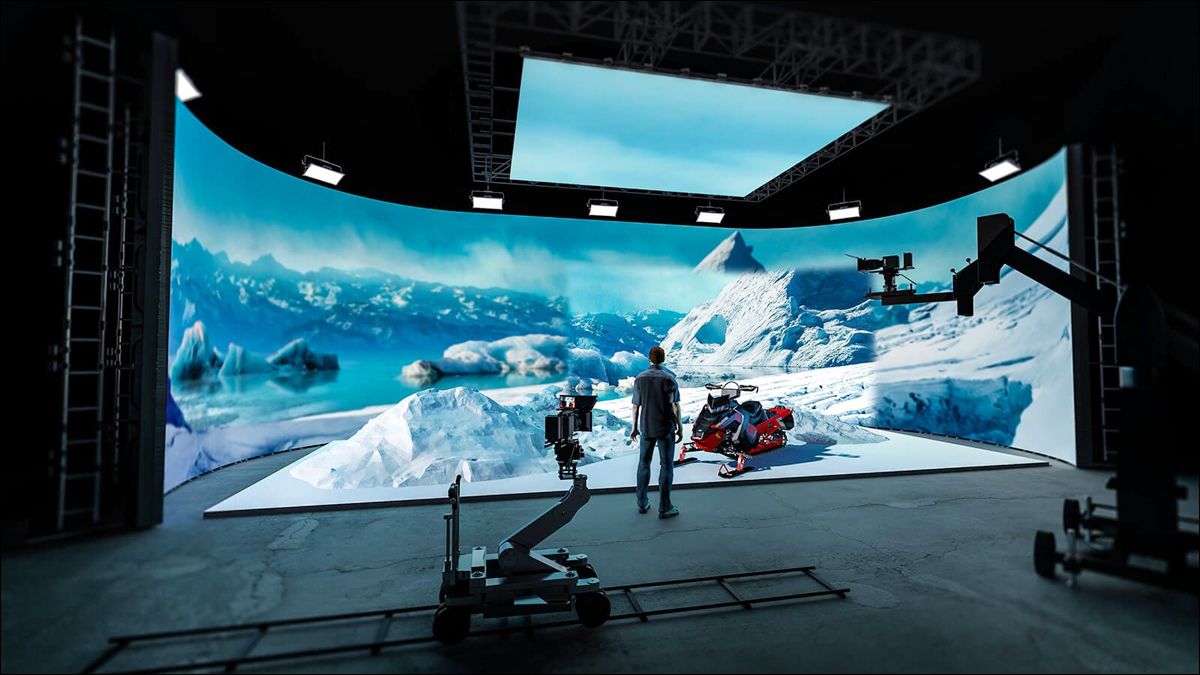
What is virtual production? This is a stage surrounded by a semi-circular LED screen on which the background or the environment is shown. The actors stand in front of the screen and enact their roles. All this while the camera records the scene with the background. This is very much like the background projections used in older movies. But the novel idea is that the backgrounds that are projected are dynamic, and the perspective will change as the camera moves. This makes the scene look realistic. And it also captures the ambient light from the background fall on the characters and the actors also know where they are located. This greatly helps in removing the usage of blue/green screen and reducing long postproduction hours.
This is how the real set and virtual set (LED Wall) is placed in the production floor. The part that is separated by the white outline is the real set with real people while the background is on the LED wall. They blend seamlessly thereby creating a continuous set.
The production team for The Mandalorian used Unreal engine to create the hyper-realistic backgrounds and these backgrounds can be changed dynamically during the filming. Using a virtual reality headset, the production team can alter the backgrounds as per the director’s vision. The real filming camera is linked to a virtual camera in Unreal engine and as the real camera moves or pans, the linked virtual camera mimics the movement thereby shifting the perspective of the (virtual) background. All these are done instantly and in “real-time”. This provides a very realistic shot, and the virtual sets can be quickly changed or altered in a jiffy!
Not only this, but there are also other dynamics like the time of the day that are made available to the filming team. They are provided by web-based controls on an iPad using REST APIs. This enables the production team to change the lighting, sky colour and time of the day all instantly. This saves a lot of time for the team and helps in improvising the shot or scene on the go.
Not the one to be left behind, Unity3D, is another popular engine that is in the fray of creating hyper-realistic movie-quality renders. They recently released a teaser called Enemies which involves completely computer-generated imagery complete with high-definition render pipeline (HDRP) for lighting, real-time hair dynamics, raytraced reflections, ambient occlusions, and global illumination. Well, these terms themselves will warrant a separate article. That’s for another day and time. Here, take a look at the teaser:
In this case, the entire shot is computer generated including the lady character. Unity3D has its own set of digital human models and Unreal has its Metahuman package that offer hyper-realistic digital characters which can be used in real-time.
This is just the tip of an iceberg. The possibilities are endless, and it is a perfect amalgamation of two fields, and this opens a lot of doors for improving filmmaking with real-time rendering technology and the line between gaming and filming are blurred by game changing technology revolutions driven by Unreal and Unity3D!
In case you missed:
- VFX – Dawn of the digital era
- VFX – The evolution
- VFX: The beginning
- Is Augmented Reality the future of retail?
- The future of training is ‘virtual’
- Putting the ‘Art’ in Artificial Intelligence!
- Into the Metaverse


How to use Acceptance Criteria to deliver high quality Product Features
Credits: Published by our strategic partner Kaiburr
As a Product Manager, when you define features for development and / or enhancement, it is important to ensure that the requirements are well-defined and unambiguous. This ensures that the product is built according to the vision and intent that you have for it.
Lack of rigorous, well-defined Acceptance Criteria can lead to delays and even poorly built products which do not answer the need for which they were intended.
What are acceptance criteria and why are they important
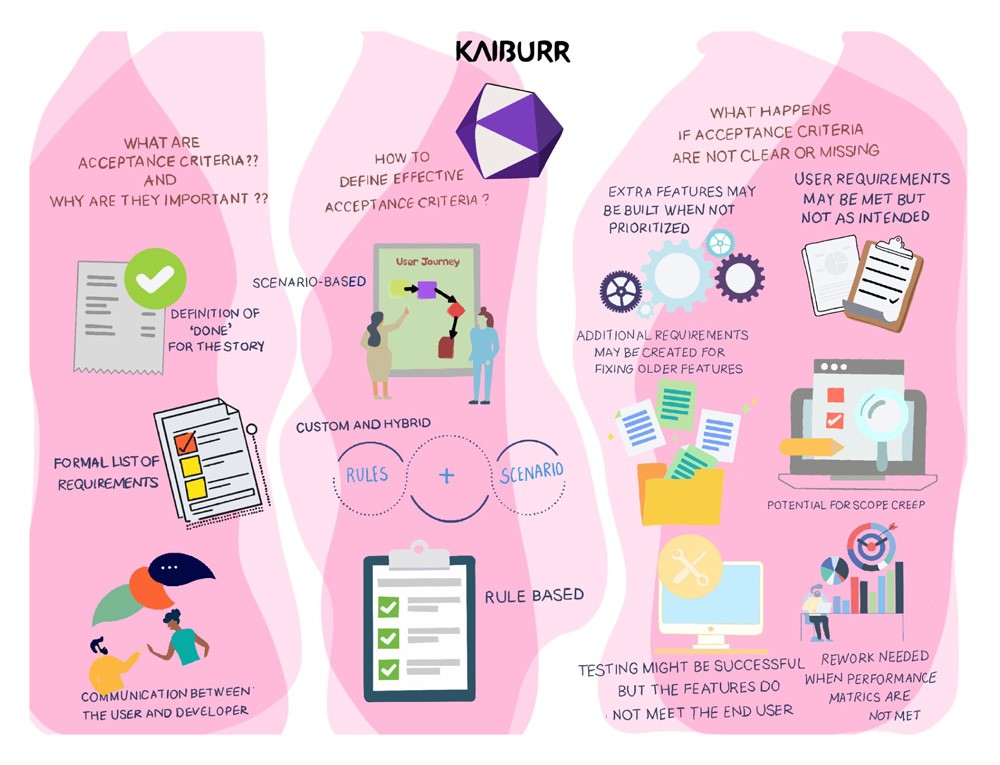
- Acceptance criteria in a story are the definition of ‘done’ for the story.
- They are a formal list of requirements that describe a set of features, capabilities, conditions that meet the user’s needs as defined in the story.
- Acceptance criteria set the bounds for the story and the scope of the work the story entails.
- They are a key piece of communication between the user / client / product owner and the builder / developer.
- While they do not define the implementation details and ‘how’ the story must be built, the acceptance criteria define ‘what’ requirements must be met for the story to be considered ‘done’.
- This allows the development teams to design and build the user story with a clear idea of what must be built and what must be tested.
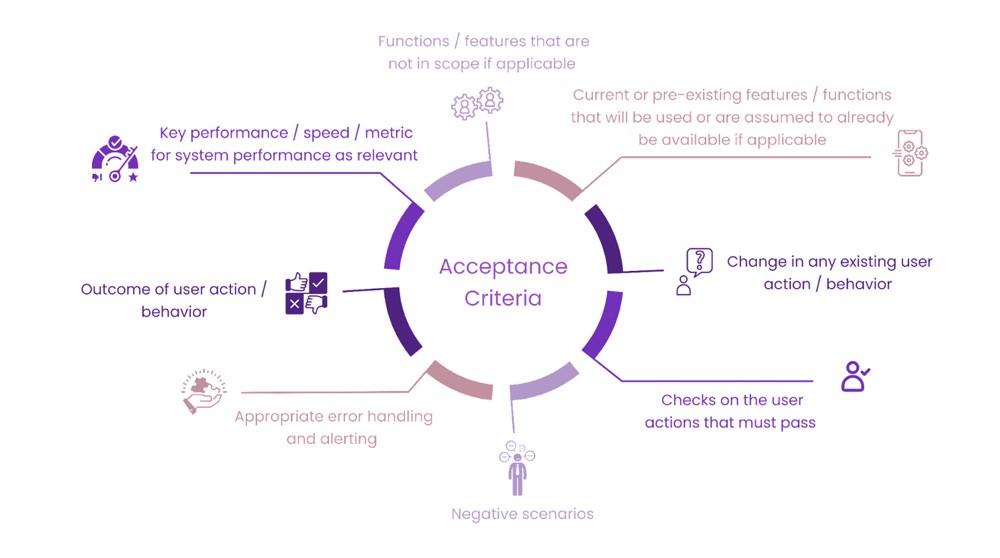
Acceptance criteria should define:
- current or pre-existing features / functions that will be used or are assumed to already be available if applicable
- change in any existing user action / behavior
- checks on the user actions that must pass
- negative scenarios
- appropriate error handling and alerting
- outcome of user action / behavior
- key performance / speed / metric for system performance as relevant
- functions / features that are not in scope if applicable
Who defines acceptance criteria:
Usually acceptance criteria are defined by consensus. Ideally the user behavior and system performance expectation, as perceived by a user, should be defined by the Product Manager. Additional standards that must be met for performance, tracking and internal system use may be defined by the Development and Operations teams as well.
What are effective acceptance criteria:
There are several ways to define acceptance criteria and depending upon the type of product and user story, different methods may be more relevant or easier to implement.
Before jumping into the actual methods that may be used to define acceptance criteria, the following points must be kept in mind:
- Anyone who reads the acceptance criteria should be able to understand them
- Must define ‘What’ must be done not ‘How’ it must be done
- Must always be from the user’s perspective
- Must be specific, clear, concise and testable
- Must be within the scope of the story
How to define effective acceptance criteria
- Scenario-based acceptance criteria define the user journey or user experience through describing various scenarios that the user will encounter and how the experience must be handled.
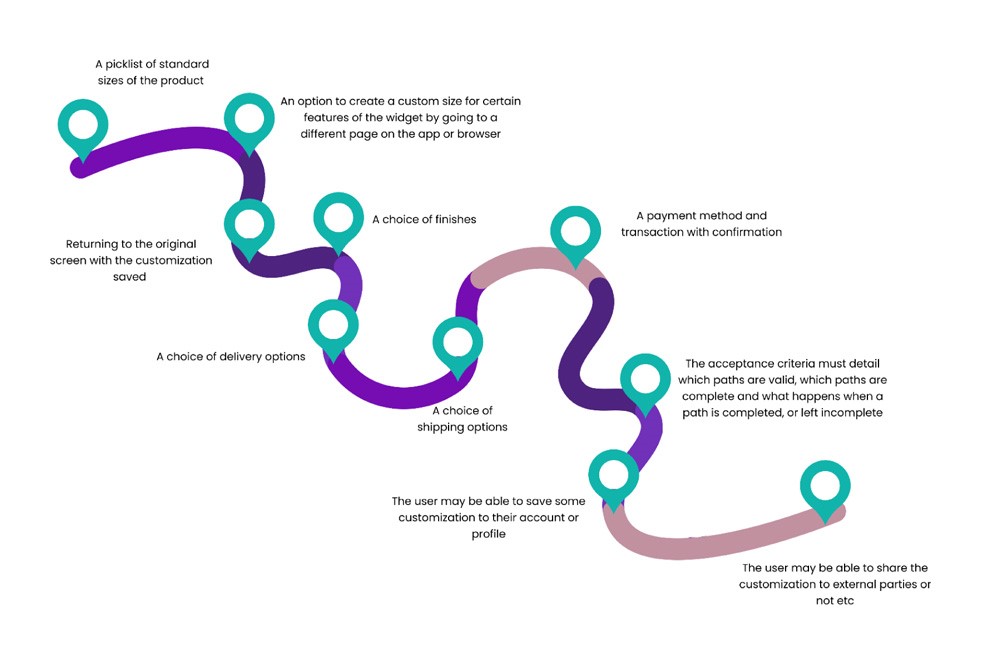
Example: A user has the choice of several options for choosing and customizing a widget that we build for them: The navigation paths that are possible and allowed should be detailed.
- A picklist of standard sizes of the product
- An option to create a custom size for certain features of the widget by going to a different page on the app or browser.
- Returning to the original screen with the customization saved.
- A choice of finishes.
- A choice of delivery options.
- A choice of shipping options.
- A payment method and transaction with confirmation.
- The acceptance criteria must detail which paths are valid, which paths are complete and what happens when a path is completed, or left incomplete.
- The user may be able to save some customization to their account or profile.
- The user may be able to share the customization to external parties or not etc.
- Rule based acceptance criteria usually list a set of criteria that must be met for the story to be ‘done’. These include display fields and branding colors / logos etc. , size, appearance and shapes of visual elements.
Example: A landing page for a first time or returning user, who is requested to create an account or login with existing account:
- The logos and standard branding colors for the page or app are displayed.
- Check for existing users with email or userid as the case may be.
- Checks for password requirements for strength.
- Checks for MFA rules.
- Checks for recovery options etc.
- Custom and hybrid Rules+Scenarios used together are, not surprisingly, the most common form of defining acceptance criteria for complex product features, where both Scenarios of user experience are defined along with specific Rules and additional testable descriptive requirements.
No one way of defining criteria is better than another, and the best way is usually the one that answers all questions that any reader of the story may have, be it from the product team, development team, executive sponsor or another product and project stakeholder.
What happens if acceptance criteria are not clear or missing:
Unclear acceptance criteria can cause many headaches and derailments in the product development process:
- User requirement may be met but not in the way intended by the product manager / or described in the product roadmap.
- Testing may be successfully completed but the feature does not meet the user’s needs.
- Rework may be needed or additional requirements may be created for fixing or changing older features affected by current change.
- Rework is needed as performance metrics are poor or not met.
- Error handling for negative scenarios is ambiguous or undefined.
- Extra features / functions may be built when not needed or prioritized.
- Potential for scope creep
- Additional spending of resources – time and money – to ‘fix’ the story
Kaiburr helps identify stories missing acceptance criteria like the example below –
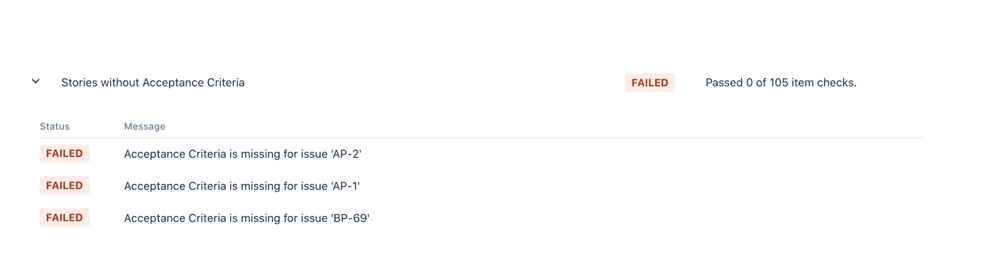
With just 15 minutes of configuration, Kaiburr produces real time actionable insights on end-to-end software delivery with 350+ KPIs, 600+ best practices and AI/ML models. Kaiburr integrates with all the tools used by the enterprise Agile teams to collect the metadata and generates digital insights with a sophisticated next generation business rules engine.
Reach us at marketing@sifycorp.com to get started with metrics driven continuous improvement in your organization.
Credits: Published by our strategic partner Kaiburr

eLearning Solutions to Mitigate Unconscious Hiring Bias
The Hiring Bias
In study after study, the hiring process has been proven biased and unfair, with sexism, racism, ageism, and other inherently extraneous factors playing a malevolent role. Instead of skills or experience-based recruiting, it is often the case that interviewees get the nod for reasons that have little to do with the attributes they bring to an employer.
“This causes us to make decisions in favor of one person or group to the detriment of others,” says Francesca Gino, Harvard School of Business professor describing the consequences in the workplace. “This can stymie diversity, recruiting, promotion, and retention efforts.”
Companies that adhere to principles of impartial and non-biased behavior and that want to increase workforce diversity are already hard-pressed to hire the best talent in the nation’s current environment of full-employment and staff scarcity.
Five Main Grounds for Hiring Bias
Researchers have identified a dozen or so hiring biases, starting with a recruiting ad’s phrasing that emphasizes attributes such as “competitive” and “determined” that are associated with the male gender. In fact, study findings have reiterated that even seasoned HR recruiters often fall prey to faulty associations.
Here are five of the most frequently cited reasons for the unintended bias in the hiring process:
- Confirmation Bias: Instead of proceeding with all the traditional aspects of an interview, interviewers often make up their minds in the first few minutes of talking with a candidate. The rest of the interview is then conducted in a manner to simply confirm their initial impressions.
- Expectation Anchor: In this case, interviewers get fixated on one attribute that the interviewee possess at the expense of what backgrounds and skills other applicants can bring to the interview process.
- Availability Heuristic: Although this may sound somewhat technical, all it means is that the interviewer’s judgmental attitude takes over. Examples might be the applicant’s height or weight, or something as mundane as his or her name, reminding the interviewer of someone else.
- Intuition-Based Bias: This applies to interviewers who pass judgment based on their “gut feeling” or “sixth sense”. Instead of evaluating the candidate’s achievements, this depends solely on the interviewer’s frame of mind and his or her own prejudices.
- Confirmation Bias: When the interviewer has preconceptions on significant aspects of what an applicant ought to offer, everything else gets blotted out. This often occurs when, within the first few minutes of talking with an applicant, the interviewer decides in his or her favor at the expense of everything else that other candidates may have to offer.
Why Bias Is a Problem
In a book titled The Difference: How the Power of Diversity Creates Better groups, Firms, Schools and Societies, Scot E. Page, professor of Complex Systems, Political Science and Economies at the University of Michigan, employs scientific models and corporate backgrounds to demonstrate how diversity in staffing leads to organizational advantages.
Despite the mountain of evidence, the fact remains that many fast-growing companies are still not deliberate enough in their recruiting practices, often times ending up allowing unconscious biases to permeate in their methods.
Diversity in hiring, an oft-used term, is essentially a reflection on different ways of thinking rather than on other biases. For example, a group of think-alike employees might have gotten stuck on a problem that a more diverse team might have tackled successfully using diverse thinking angles.

Automated Solutions
Although hiring bias is normally shunned, this in no way implies that it doesn’t proliferate amidst large and small organizations alike. The tech industry—and Silicon Valley in particular—was shaken recently by accusations of bias in the workplace, driving many HR managers and C-Suite executives to look for “blind” hiring solutions.
To pave the way for a more diverse workforce—one that is built purely on merit—there is recruiting software built to systematize vetting and maintain each candidate’s anonymity. These packages enable companies to select candidates through a blind process. Instead of looking at an applicant’s resumé through the usual prism of schools, diplomas and past company employers, the first wave of screening can be done based purely on abilities and achievements.
Other packages also enable the employer to write blind recruiting ads, depicting job descriptions that do away with key phrases and words that are associated with a particular demographic—masculine-implied words such as “driven”, “adventurous”, or “independent”, and those that are feminine-coded such as “honest”, “loyal”, and “interpersonal”.
eLearning Case Studies
Companies are now attempting to make diversity and inclusion—from entry-level employees to the executive suite—hallmarks of their corporate culture. With an objective to identify and address unconscious bias in all processes and behaviors, companies can introduce unconscious bias training curriculum for first-line managers, by calling on eLearning companies for their eLearning courseware and content.

Confronting Hiring Bias in a Virtual Reality Environment
Virtual Reality (VR) technology can further boost unintended hiring bias. In a simulated setting, the user manipulates an avatar that was able to assume any number of demographics for applicants in the hiring process. Based on the gender or ethnicity of the avatar, the user experiences bias during question and answer sessions. The solution would use an immersive VR environment, a diverse collection of avatars, and sample scenarios to pinpoint to participants where bias is demonstrated and understood.

Transform High-tech Curriculum with Sify eLearning Experts
For high-tech curriculums, Training Directors (TD) need to address Millennial and Gen-Z (MGZ) workforce’s
need for self-paced content in addition to the traditional instructor-led, in-person courses. “Meeting the learner”
has become a term reflecting a corporate necessity. In a perfect world, SME’s could easily transform their
knowledge and the classroom instruction to engaging, effective self-paced content. Often, organizations do not
have the bandwidth to keep instructors out of the classrooms for long periods to support content creation.
Download whitepaper
To Infinity and Beyond!
Vamsi Nekkanti looks at the future of data centers – in space and underwater
Data centers can now be found on land all over the world, and more are being built all the time. Because a lot of land is already being utilized for them, Microsoft is creating waves in the business by performing trials of enclosed data centers in the water.
They have already submitted a patent application for an Artificial Reef Data Center, an underwater cloud with a cooling system that employs the ocean as a large heat exchanger and intrusion detection for submerged data centers. So, with the possibility of an underwater cloud becoming a reality, is space the next-or final-frontier?
As the cost of developing and launching satellites continues to fall, the next big thing is combining IT (Information Technology) principles with satellite operations to provide data center services into Earth orbit and beyond.
Until recently, satellite hardware and software were inextricably linked and purpose-built for a single purpose. With the emergence of commercial-off-the-shelf processors, open standards software, and standardized hardware, firms may reuse orbiting satellites for multiple activities by simply downloading new software and sharing a single spacecraft by hosting hardware for two or more users.
This “Space as a Service” idea may be used to run multi-tenant hardware in a micro-colocation model or to provide virtual server capacity for computing “above the clouds.” Several space firms are incorporating micro-data centers into their designs, allowing them to analyze satellite imaging data or monitor dispersed sensors for Internet of Things (IoT) applications.
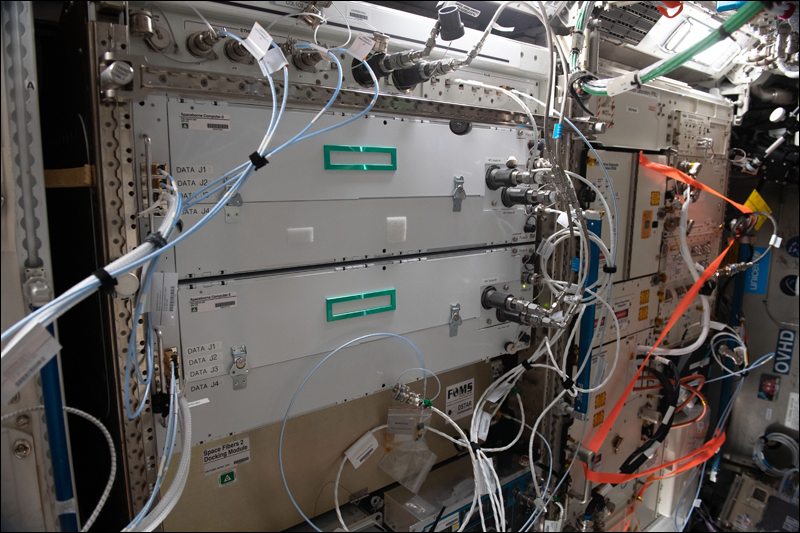
HPE Spaceborne Computer-2 (a set of HPE Edgeline Converged EL4000 Edge and HPE ProLiant machines, each with an Nvidia T4 GPU to support AI workloads) is the first commercial edge computing and AI solution installed on the International Space Station in the first half of 2021 (Image credit: NASA)
Advantages of Space Data Centers
The data center will collect satellite data, including images, and analyze it locally. Only valuable data is transmitted down to Earth, decreasing transmission costs, and slowing the rate at which critical data is sent down.
The data center might be powered by free, abundant solar radiation and cooled by the chilly emptiness of space. Outside of a solar flare or a meteorite, there would be a minimal probability of a natural calamity taking down the data center. Spinning disc drives would benefit from the space environment. The lack of gravity allows the drives to spin more freely, while the extreme cold in space helps the servers to handle more data without overheating.
Separately, the European Space Agency is collaborating with Intel and Ubotica on the PhiSat-1, a CubeSat with AI (Artificial Intelligence) computing aboard. LyteLoop, a start-up, seeks to cover the sky with light-based data storage satellites.
NTT and SKY Perfect JV want to begin commercial services in 2025 and have identified three primary potential prospects for the technology.
The first, a “space sensing project,” would develop an integrated space and earth sensing platform that will collect data from IoT terminals deployed throughout the world and deliver a service utilizing the world’s first low earth orbit satellite MIMO (Multiple Input Multiple Output) technology.
The space data center will be powered by NTT’s photonics-electronics convergence technology, which decreases satellite power consumption and has a stronger capacity to resist the detrimental effects of radiation in space.
Finally, the JV is looking into “beyond 5G/6G” applications to potentially offer ultra-wide, super-fast mobile connection from space.
The Challenge of Space-Based Data Centers
Of course, there is one major obstacle when it comes to space-based data centers. Unlike undersea data centers, which might theoretically be elevated or made accessible to humans, data centers launched into space would have to be completely maintenance-free. That is a significant obstacle to overcome because sending out IT astronauts for repair or maintenance missions is neither feasible nor cost-effective! Furthermore, many firms like to know exactly where their data is housed and to be able to visit a physical site where they can see their servers in action.
While there are some obvious benefits in terms of speed, there are also concerns associated with pushing data and computing power into orbit. In 2018, Capitol Technology University published an analysis of many unique threats to satellite operations, including geomagnetic storms that cripple electronics, space dust that turns to hot plasma when it reaches the spacecraft, and collisions with other objects in a similar orbit.
The concept of space-based data centers is intriguing, but for the time being-and until many problems are worked out-data centers will continue to dot the terrain and the ocean floor.


Elite Teams recover Systems from Failures in No time (MTTR)
Credits: Published by our strategic partner Kaiburr
Effective Teams in a right environment under Transformative Leadership by and large achieves goals all the time, innovates consistently, resolves issues or fixes problems quickly.
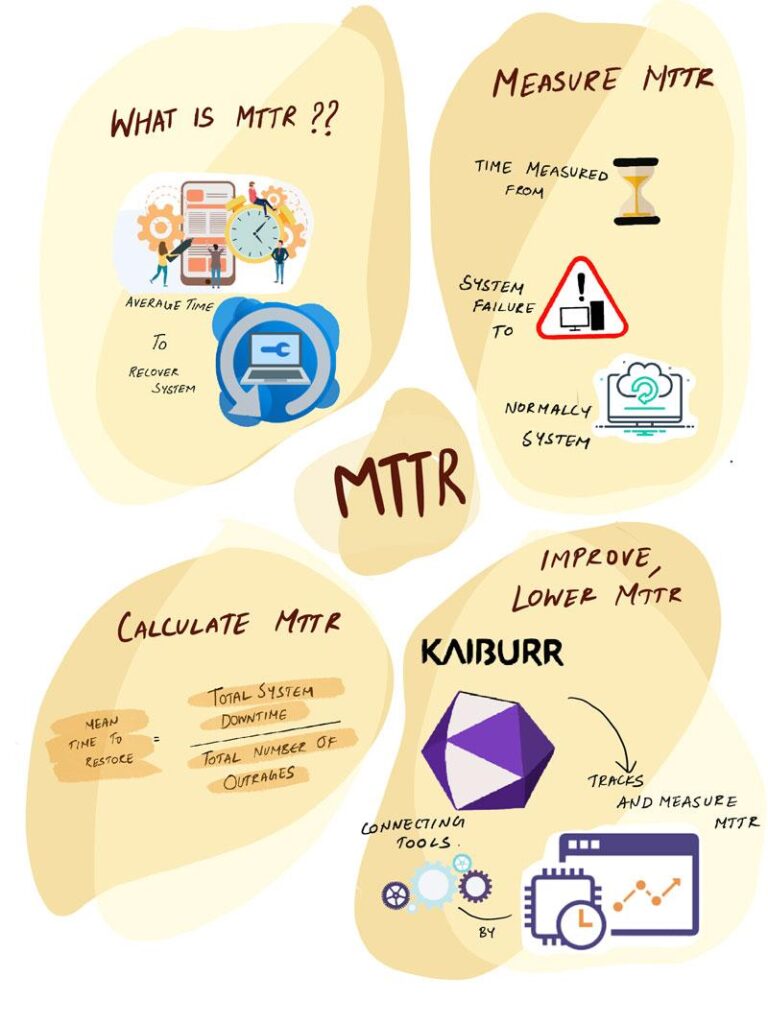
DevOps is to primarily improve Software Engineering practices, Culture, Processes and build effective teams to better serve and delight the Users of IT systems. DevOps focuses on productivity by Continuous Integration and Continuous Deployment (CI-CD) to effectively deliver services with speed and improve Systems Reliability.
The productivity of a System is higher with high performance teams and slower with low performance teams. High performance teams are more agile and highly reliable. We can have better insights on Team performance by measuring Metrics.
DORA (DevOps research and assessment) with their research on several thousands of software professionals across wide geographic regions had come up with their findings that the Elite, High performance, medium and low performance can be differentiated by just the four metrics on Speed and Stability.
The metric ‘Mean time to restore(MTTR) ‘, is the average time to restore or recover the system to normalcy from any production failures. Improving on MTTR, Our teams become Elite and reduces the heavy cost of System downtime.
Measure MTTR
MTTR is the time measured from the moment the System fails to serve the Users or other Systems requests in the most expected way to the moment it is brought back to normalcy for the System’s intended response.
The failure of the System could be, because of semantic errors in the new features or new functions or Change requests deployed, memory or integration failures, malfunctioning of any physical components, network issues, External threats(hacks) or just the System Outage.
The failure of the running system against its intended purpose is always an unplanned incident and its restoration to normalcy in the least possible time depends on the team’s capability and its preparedness. Lower MTTR values are better and a higher MTTR value signifies an unstable system and also the team’s inability to diagnose the problem and provide a solution in less time.
MTTR doesn’t take into account the amount of time and resources the teams spend for their preparedness and the proactive measures but its lower value indirectly signifies teams strengths, efforts and Savings for the Organization. MTTR is a measure of team effectiveness.
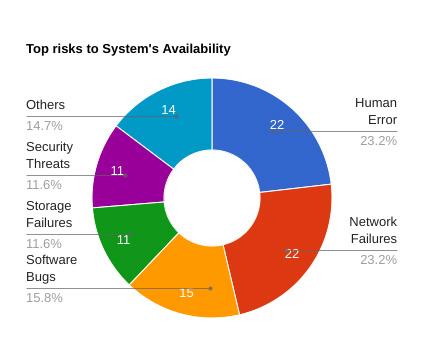
As per CIO insights, 73% say System downtimes cost their Organization more than $10000/day and the top risks to System availability are Human error, Network failures, Software Bugs, Storage failures and Security threats (hacks).
How to Calculate MTTR
We can use a simple formula to calculate MTTR.
MTTR, Mean time to restore = Total Systems downtime / total no. of Outages.
If the System is down for more time, MTTR is obviously high and it signifies the System might be newly deployed, complex, least understood or it is an unstable version. A system down for more time and more frequently causes Business disruptions and Users dissatisfaction. MTTR is affected by the team’s experience, skills and the tools they use. A highly experienced, right skilled team and the right tools they use helps in diagnosing the problem quickly and restoring it in less time. Low MTTR value signifies that the team is very effective in restoring the system quickly and that the team is highly motivated, collaborates well and is well led in a good cultured environment.
Well developed, elite teams are like the Ferrari F1 pit shop team, just in the blink of an eye with superb preparedness, great coordination and collaboration, they Change tyres, repairs the F1 Car and pushes it into the race. MTTR’s best analogy is the time measured from the moment the F1 Car comes into the pit shop till the moment it is released back onto the F1 track. All the productivity and Automation tools our DevOps teams use are like the tools the F1 pitstop team uses.

How to improve, lower MTTR
Going with the assumption that a System is stable and still the MTTR is considerably high then there is plenty of room for improvement. In the present times of AI, we have the right tools and DevOps practices to transform teams to high performance and Systems to lower MTTR. Reports of DORA says high performance teams are 96x faster with very low mean time to recover from downtime.
It seems they take very less time, just a few minutes to recover the System from failures than others who take several days. DevOps teams that had been using Automation tools had reduced their costs at least by 30% and lowered MTTR by 50%. The 2021 Devops report says 70% of IT organizations are stuck in the low to mid-level of DevOps evolution.
Kaiburr’s AllOps platform helps track and measure MTTR by connecting to tools like JIRA, ServiceNow, Azure Board, Rally. You can continuously improve your MTTR with near real time views like the following

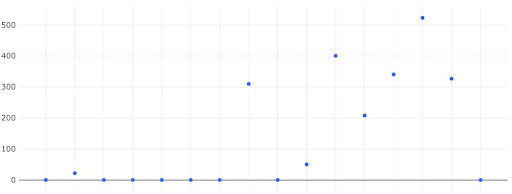
You can also track and measure other KPIs, KRIs and metrics like Change Failure Rate, Lead Time for Changes, Deployment Frequency. Kaiburr helps software teams to measure themselves on 350+ KPIs and 600+ Best Practices so they can continuously improve every day.
Reach us at marketing@sifycorp.com to get started with metrics driven continuous improvement in your organization.
Credits: Published by our strategic partner Kaiburr
Visit DevSecOps – Sify Technologies to get valuable insights
AI and human existence: The ABCs of ADLs
Explained: How even the simplest of day-to-day activities are deeply influenced by ML & AI. Will it become a life-changer?
On any given day, a regular human being does several activities which are performed ritually and without fail. From cleaning to eating and drinking and finding our way across our environments, human life involves many activities that are deemed Activity of Daily Living, or ADL. We have performed these activities in the past without any technological help or advice. Throughout human history, man has invented many a tool to improve the execution of these ADLs, and our current age is no different. Technologies such as ‘Machine Learning’ and ‘Artificial Intelligence’ have enabled many advancements to our lifestyle. Some assist us, however there a few that we need to be cautious about.
Let us stride through these ADLs one by one by following a simple activity timeline of a person’s one-day life as we discover how Machine Learning is shaping human life.
Morning – 5 AM to 10 AM
A day for us typically starts with several activities. Brushing, eating, washing, etc., are a few morning routines that we follow in our day-to-day life.
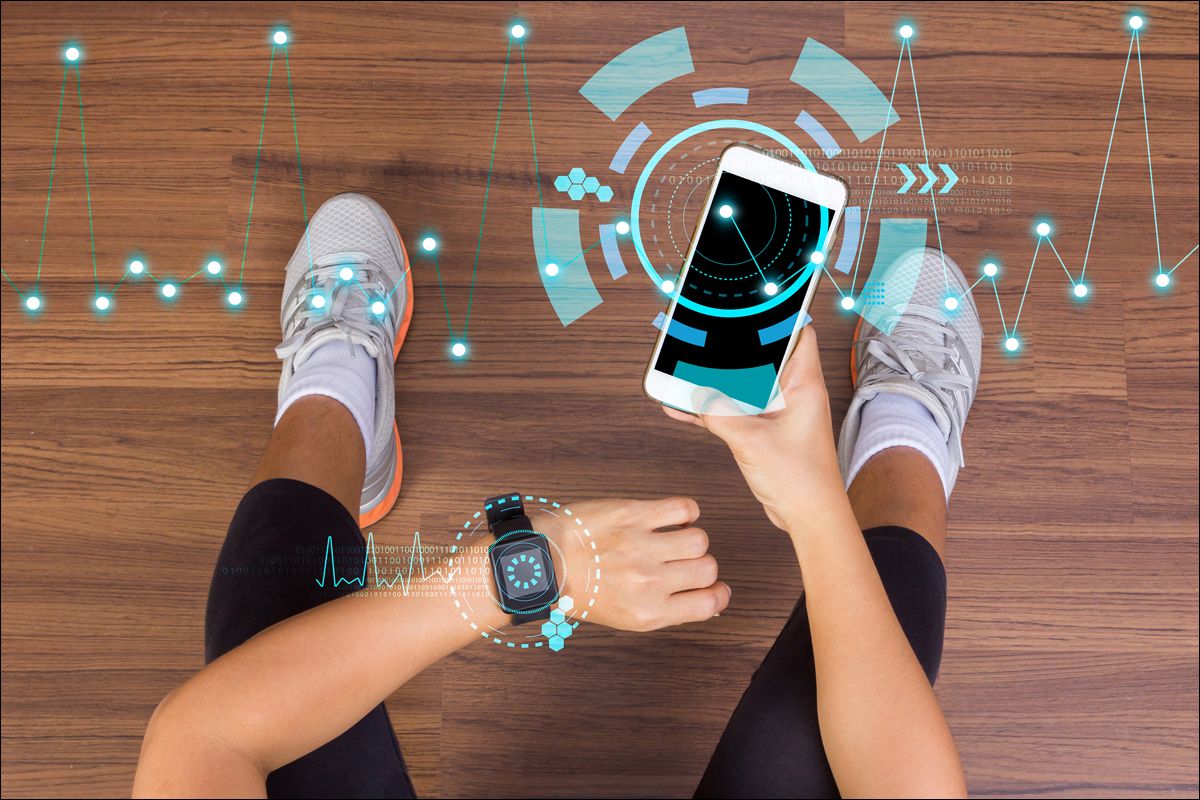
A day begins by waking up from sleep. Nowadays smart devices such as wrist-fit bands, and smartwatches tell us more about our sleep. These devices take leverage of AI and Machine Learning to provide accurate results with improvement. They help us to improve our sleep quality and behavior which in turn improves our health.

After waking up, we essentially brush our teeth to maintain hygiene and dental wellness. Even in this activity with the help of novel smart wrist devices and smart toothbrushes which use AI and Machine Learning, we study and measure our hand movements, direction, speed, etc., that improve the quality of our brushing which in turns keep our oral health in check. An example of such an application is Oral B Genius X.
Nowadays, washing our hands regularly to maintain hygiene and immunity is very important especially given the COVID scenario around the globe. Many kinds of research have been made to take advantage of the technological development to help in monitoring hand hygiene and give a quality assessment to an individual. Many privatized hospitals have tied up with several industries to implement a smart solution for providing hand hygiene quality assessment. The doctors from these hospitals take advantage of it daily to improve their hygiene and their patients’ as well. An example of such an application is The MedSense Clear system by the MIT Medlab Alumni.
Physical health and maintaining shape have become very underrated due to the new awareness around mental health and its importance. Nevertheless, staying in shape is a very important aspect of people’s lives as it indirectly constitutes mental well-being. Diet planning and eating healthy is something that must be taken care of. With the help of smart mobile and computer applications, we nowadays plan our diet efficiently. With the rise of ‘Machine Learning’, this system is scrutinized, and further research is being conducted to find solutions for problems such as people’s preferences in their eating habits to provide an even better solution.
Mid-Day Activities – 10 AM to 3 PM
Mid-day activities constitute a very wide range of tasks. We regularly use map applications to commute to a certain location. These applications use AI and Machine Learning extensively to provide the best route possible by predicting traffic and other obstacles well before we commute. These applications suggest the best means of transport and the best route to take, they even track and alert us on breakdown of transport services. Examples of such applications are Google Maps, Apple Maps, etc.
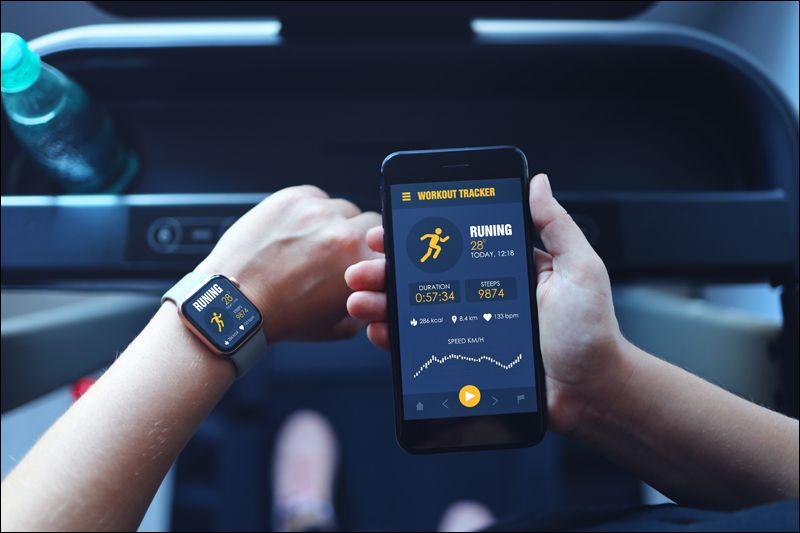
Many people work in closed environments either in the office or at home. We are always sedentary, and desk bound. It becomes inevitable to take breaks and go for a short walk and stretch ourselves. And, equally important is to keep ourselves hydrated. With the help of smart devices, we can track the amount of time that we sit continuously. They help us to take a break or even correct our posture if required. Some also help us stay hydrated and suggest improvements based on the environment and atmosphere quality around us. Examples of such devices are Apple Watch, Mi Band, etc.
Evening Activities – 3 PM to 8 PM
Evenings are when we generally try to relax after work and indulge in leisure activities that differs from individual to individual. These activities involve a lot of AI and Machine Learning as it takes advantage of our data right from our preferences to our recent practices. These technology-driven applications and systems need to be handled with utmost caution. We all use the e-commerce facility extensively as it helps us to reduce the time and energy to buy a product as it enables us to shop from wherever we are. This has huge benefits. But we sometimes are ignorant and innocent about the implications that might come. Few applications read our technology usage colossally as they keep track of us more than we know. They improve their recommendation system using this data with the help of AI and Machine Learning and suggest products well before we want to search. If we are not using an official or a recognized application, we are at risk of a privacy breach with the history of our shopping data being stolen or hacked.
Social media applications have invaded our lives. We connect via different platforms to share, exchange ideas and also to relax. However, some of these applications hold sensitive data about us. These applications have plenty of recommendation systems that are constantly updated to feed posts enjoyable to us. But are we compromising on the sensitive data like our name, address, phone number, etc., as well as our preferences that reveal who we are while doing so? An imminent danger to watch out for here is ‘data leakage’. Some of these applications never encode or cipher our passwords. Other activities during the evening include working out, which a few people prefer in the morning too. With the prevailing COVID situation, we have restricted using the gym frequently. Many applications and systems have been created to assist us to work from home. With the help of AI and Machine Learning, they streamline our workout routine.
End Day Activities – 8 PM to 5 AM
End-day activities help us unwind as we call it a day. We perform certain activities as mentioned previously like eating, brushing, washing, etc. Some smart devices assist us by providing an alarm to indicate our sleeping time. This heavily depends upon technology as it tracks our previous sleep history to let us know in what areas we need to improve. These applications help us learn from our sleep pattern, like how much time we spent in deep sleep and so on. This system heavily uses AI and other sensors to read our breathing, heartbeat and measures those accurately to provide insights. Many wristwatches and fit bands provide this feature.
As we get to the end of it, these applications help us save energy and time as well as lead an enriching life.Having said that, we must also be cautious regarding their influence on us. Take precautions and double-check the application for privacy policies. Always use trusted applications, instead of randomly selecting one that might store unwanted cookies to store sensitive data which might lead to an imminent threat. So, what’s your ADL?
In case you missed:
Blue Brain – a tool or a crutch for humanity?


How Hyperscale Data Centers are reshaping India’s IT
In today’s times, a common question arises while discussing technology: what is the difference between Data Centers and Hyperscale Data Centers?
The answer: Data Centers are like hotels – the spaces are shared with multiple guests, whereas, in the case of Hyperscale Data Centers, the entire building/campus are dedicated to a single customer.
Companies like Amazon, Google, Microsoft, Facebook, and OTTs, which have millions and millions of end-users, have infused their services into our day-to-day life to cater to our personal and professional needs. Data centers are the backbone of this digital world.
This is where Hyperscale Data Centers come into play and provide seamless experiences to such massive end-users.
The term Hyperscale means the ability of an infrastructure to scale up when the demand for the service increases. The infrastructure comprises of computers, storage, memory, networks etc. The maintenance of such infrastructure is not an easy task. Constant monitoring of the machines, the server hall temperature and humidity control check and other critical parameters are monitored 24×7 by the Building Management System (BMS).
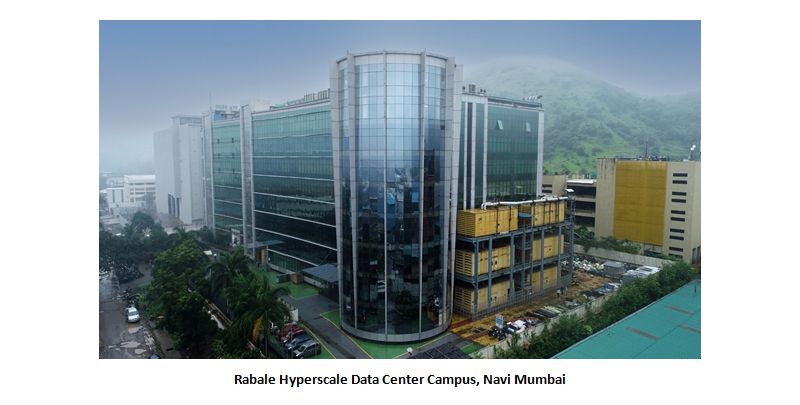
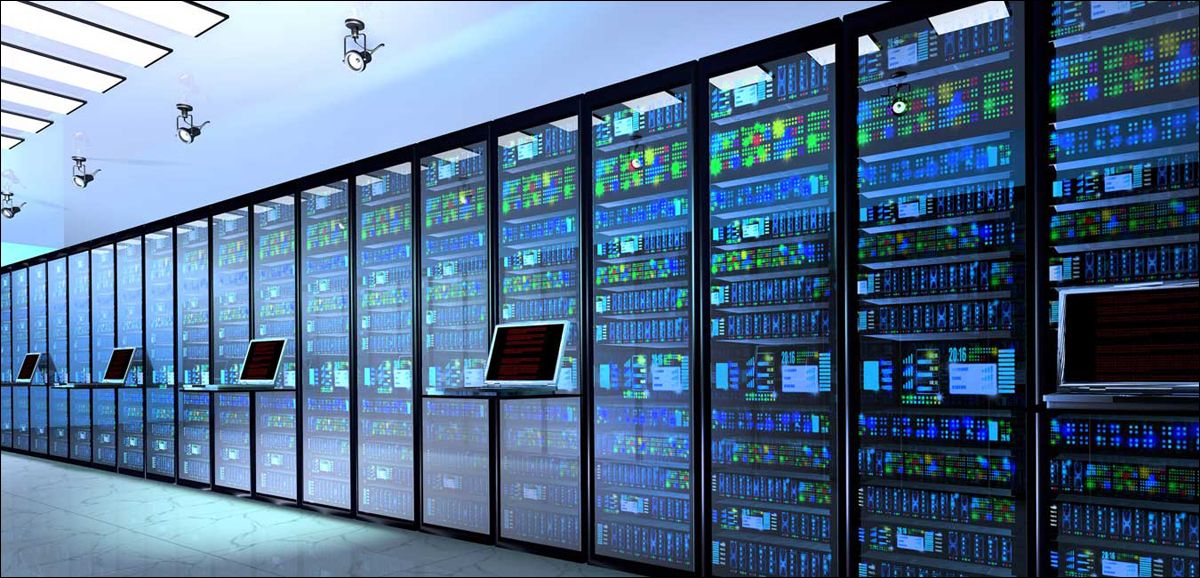
Data Centers are important because everyone uses data. It is safe to say that perhaps everyone, from individual users like you and me to multinationals, used the services offered by data centers at some point in their lives. Whether you’re sending emails, shopping online, playing video games, or casually browsing social media, every byte of your online storage is stored in your data center. As remote work quickly becomes the new standard, the need for data centers is even greater. The cloud data center is rapidly becoming the preferred mode of data storage for medium and large enterprises. This is because it is much more secure than using traditional hardware devices to store information. Cloud data centers provide a high degree of security protection, such as firewalls and back-up components, in the event of a security breach. The COVID-19 pandemic paved the way for the work-from-home culture, and the global internet traffic increased by 40% in 2020
Also, the rise of new technologies like the Internet of Things (IoT), Artificial Intelligence (AI), Machine Learning (ML), 5G, Augmented Reality (AR), Virtual Reality (VR) and Blockchain caused an explosion of data generation and an increased demand for storage capacities.
Cloud infrastructure has helped businesses and governments with solutions to respond to the pandemic. To cater to such needs, the demand for cloud data center facilities has increased. A heavy infrastructure with a lot of power is needed to cater to such needs.
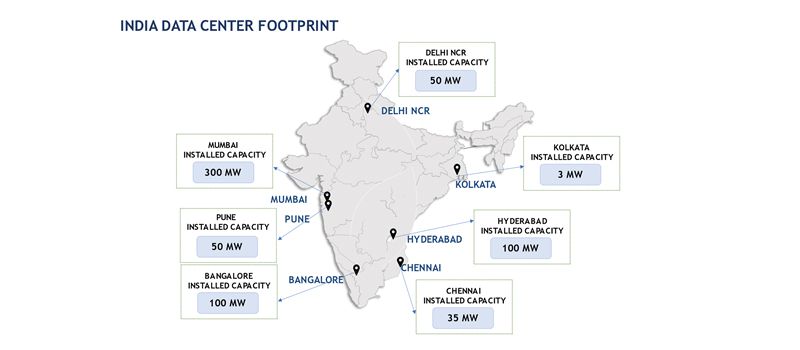
Data Centers have quite a negative impact on the environment, because of the large consumption of power sources and has 2% of the global contribution of greenhouse gas emissions. To reduce these carbon footprints and work towards a sustainable environment, many data center providers globally have started using power from renewable energy sources like solar and wind energy through Power Purchase Agreements (PPA). The Data Center power consumption can be lowered by regularly updating their systems with new technologies and regular maintenance of the existing infrastructure.
The Indian market will see multifold growth in the Data Center industry due to ease of doing business in the country and thanks to the attractive subsidiaries provided by the state governments, huge investments are committed in the next four years.
Interesting facts about Data Center:
- A large Data Center uses the electricity equivalent to a small Indian town.
- The largest data center in the world is of 10.7 million sq.ft. in China, approximately 1.5 times of the Pentagon building in USA.
- Data Centers will nearly consume 2% of the world’s electricity by 2030. Hence, the Green Data Center initiatives are taken up by various organizations.

How OTT platforms provide seamless content – A Data Center Walkthrough
With the number of options and choices available, it almost seems like there’s no end to what you can and can’t watch on these platforms. It shouldn’t be difficult for a company like Netflix to store such a huge library of shows and movies at HD quality. But the question remains as to how they provide this content to so many people, at the same time, at such a large scale?
The India CTV Report 2021 says around 70% users in the country spend up to four hours watching OTT content. As India is fast gearing up to be one of the largest consumers of OTT content, players like Netflix, PrimeVideo, Zee5 et al are competing to provide relevant and user-centric content using Machine Learning algorithms to suggest what content you may like to watch.
With the number of options and choices available, it almost seems like there’s no end to what you can and can’t watch on these platforms. It shouldn’t be difficult for a company like Netflix to store such a huge library of shows and movies at HD quality. But the question remains as to how they provide this content to so many people, at the same time, at such a large scale?
Here, we attempt to provide an insight into the architecture that goes behind providing such a smooth experience of watching your favourite movie on your phone, tablet, laptop, etc.
Until not too long ago, buffering YouTube videos were a common household problem. Now, bingeing on Netflix shows has become a common household habit. With Data-heavy and media-rich content now being able to be streamed at fast speed speeds at high quality and around the world, forget about buffering, let alone downtime due to server crashes (Ask an IRCTC ticket booker). Let’s see how this has become possible:
Initially, to gain access to an online website, the data from the origin server (which may be in another country) needs to flow through the internet through an incredulously long path to reach your device interface where you can see the website and its content. Due to the extremely long distance and the origin server having to cater to several requests for its content, it would be near impossible to provide content streaming service for consumers around the world from a single server farm location. And server farms are not easy to maintain with the enormous power and cooling requirements for processing and storage of vast amounts of data.
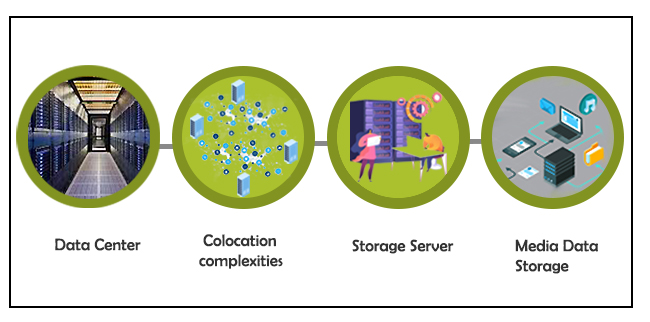
This is where Data Centers around the world have helped OTT players like Netflix provide seamless content to users around the world. Data Centers are secure spaces with controlled environments to host servers that help to store and deliver content to users in and around that region. These media players rent that space on the server rather than going to other countries and building their own and running it, and counter the complexities involved in colocation services.
How Edge Data Centers act as a catalyst
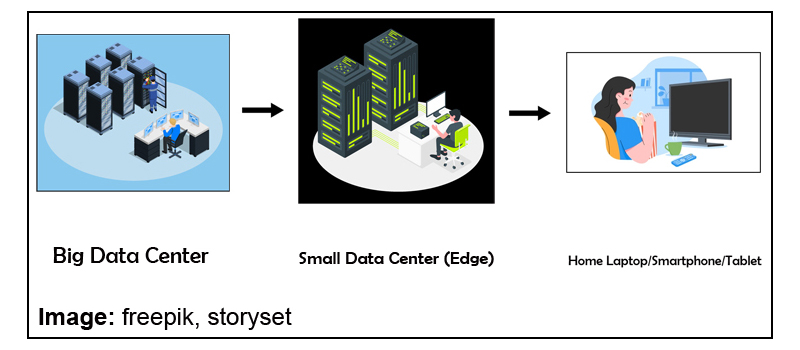
Hosting multiple servers in Data Centers can sometimes be highly expensive and resource-consuming due to multiple server-setups across locations. Moreover, delivering HD quality film content requires a lot of processing and storage. A solution to tackle this problem are Edge Data Centers which are essentially smaller data centers (which could virtually also be a just a regional point of presence [POP] in a network hub maintained by network/internet service providers).
As long as there is a POP to enable smaller storage and compute requirements and interconnected to the data center, the edge data center helps to cache (copy) the content at its location which is closer to the end consumer than a normal Data Center. This results in lesser latency (or time taken to deliver data) and makes the streaming experience fast and effortless.
Role of Content Delivery Networks (CDN)
The edge data center therefore acts as a catalyst to content delivery networks to support streaming without buffering. Content Delivery Networks (CDNs) are specialized networks that support high bandwidth requirements for high-speed data-transfer and processing. Edge Data Centers are an important element of CDNs to ensure you can binge on your favorite OTT series at high speed and high quality.
Although many OTT players like Sony/ Zee opt for a captive Data Center approach due to security reasons, a better alternative would be to colocate (outsource) servers with a service provider and even opt for a cloud service that is agile and scalable for sudden storage and compute requirements. Another reason for colocating with Service providers is the interconnected Data Center network they bring with them. This makes it easier to reach other Edge locations and Data Centers and leverage on an existing network without incurring costs for building a dedicated network.
Demand for OTT services has seen a steady rise and the pandemic, in a way, acted as a catalyst in this drive.
However, OTT platform business models must be mindful of the pitfalls.
Target audience has to be top of the list to build a loyal user base. New content and better UX (User Experience) could keep subscribers, who usually opt out after the free trial, interested.
The infrastructure and development of integral elements of Edge Data Centers are certain to take centerstage to enable content flow more seamlessly in the future that would open the job market to more technical resources, engineers and other professionals.