Naveenkumar
Sify Technologies announces the appointment of C R Srinivasan as CEO of Sify Digital Services Limited
Chennai, India, July 25, 2024: Sify Technologies Limited (NASDAQ: SIFY), India’s leading Digital ICT solutions provider with global service capabilities spanning Data Center, Cloud, Networks, Security and Digital services, today announced the appointment of Mr. C R Srinivasan as the Chief Executive Officer of Sify Digital Services Limited, wholly owned subsidiary of Sify Technologies Limited.
C.R. Srinivasan has over 30 years of experience in global telecom, IT, cybersecurity, and digital services. As a seasoned technologist and business leader, C R Srinivasan has an established track record in large enterprises, start-ups, and platform-based businesses. He has leveraged technology to enhance customer experiences and develop unique business models, successfully turning around and rapidly scaling businesses by building platforms and services focussed on the right technology.
Prior to Sify, Srini led Tata Communications’ Cloud and Cybersecurity businesses. He also co-founded Sevenstrata IT Services, a remote infrastructure management company acquired by Mindtree. Srini was part of the initial team that established Sify’s network services and developed its managed services capabilities.
Commenting on his appointment, Chairman, Mr. Raju Vegesna, said, “Srini is well versed in the transformation that the ecosystem has undergone. His experience in building digital services across the ICT ecosystem will be valuable in steering Sify Digital Services in a new direction. He will be responsible for building the business both in India and into new territories.”
Mr. C R Srinivasan, said, “I am proud of what the company has become under the leadership of Raju and the ambitious roadmap ahead. I will look to realize Sify’s untapped potential in digital services and contribute to making Sify a truly converged ICT ecosystem leader.”
About Sify Technologies
A Fortune India 500 company, Sify Technologies is India’s most comprehensive ICT service & solution provider. With Cloud at the core of our solutions portfolio, Sify is focussed on the changing ICT requirements of the emerging Digital economy and the resultant demands from large, mid and small-sized businesses.
Sify’s infrastructure comprising state-of-the-art Data Centers, the largest MPLS network, partnership with global technology majors and deep expertise in business transformation solutions modelled on the cloud, make it the first choice of start-ups, SMEs and even large Enterprises on the verge of a revamp.
More than 10000 businesses across multiple verticals have taken advantage of our unassailable trinity of Data Centers, Networks and Digital services and conduct their business seamlessly from more than 1700 cities in India. Internationally, Sify has presence across North America, the United Kingdom and Singapore.
Sify, www.sify.com, Sify Technologies and www.sifytechnologies.com are registered trademarks of Sify Technologies Limited.
Forward Looking Statements
This press release contains forward-looking statements within the meaning of Section 27A of the Securities Act of 1933, as amended, and Section 21E of the Securities Exchange Act of 1934, as amended. The forward-looking statements contained herein are subject to risks and uncertainties that could cause actual results to differ materially from those reflected in the forward-looking statements. Sify undertakes no duty to update any forward-looking statements.
For a discussion of the risks associated with Sify’s business, please see the discussion under the caption “Risk Factors” in the company’s Annual Report on Form 20-F for the year ended March 31, 2024, which has been filed with the United States Securities and Exchange Commission and is available by accessing the database maintained by the SEC at www.sec.gov, and Sify’s other reports filed with the SEC.
For further information, please contact:
Sify Technologies Limited
Mr. Praveen Krishna
Investor Relations & Public Relations
+91 9840926523

Netskope and Sify Partner to Deliver Managed Sase Services With Netskope One Platform
In the rapidly evolving digital landscape, Software-Defined Wide Area Networking (SD-WAN) has emerged as a pivotal technology for enterprises looking to enhance their network infrastructure’s flexibility, agility, reliability, and security. As you consider making a critical decision for your enterprise, understanding what sets the best SD-WAN solutions and managed SD-WAN providers apart from the rest is crucial. This blog aims to guide you through the decision, helping you align your organizational needs with the capabilities offered by leading SD-WAN providers in India.

The future of training is ‘virtual’
What sounds like the cutting edge of science fiction is no fantasy; it is happening right now as you read this article
Imagine getting trained in a piece of equipment that is part of a critical production pipeline. What if you can get trained while you are in your living room? Sounds fantastic, eh. Well, I am not talking about e-learning or video-based training. Rather what if the machine is virtually in your living room while you walk around it and get familiar with its features? What if you can interact with it and operate it while being immersed in a virtual replica of the entire production facility? Yes, what sounds like the cutting edge of science fiction is no fantasy; it is happening right now as you read this article.
Ever heard of the terms ‘Augmented Reality’ or ‘Virtual Reality’? Welcome to the world of ‘Extended Reality’. What may seem like science fiction is in reality a science fact. Here we will try to explain how these technologies help in transforming the learning experience for you.
Let’s get to the aforementioned example. There was this requirement from a major pharmaceutical company where they wanted to train some of their employees on a machine. Simple, isn’t it? But here’s the catch. That machine was only one of its kind custom-built and that too at a faraway facility. The logistics involved were difficult. What if the operators can be trained remotely? That is when Sify proposed an Augmented Reality (AR) solution. The operators can learn all about the machine including operating it wherever they are. All they needed was an iPad which was a standard device in the company. The machine simply augments on to their real-world environment and the user can walk around it as if the machine were present in the room. They could virtually operate the machine and even make mistakes that do not affect anything in the real world.

What is the point of learning if the company cannot measure the outcome? But with this technology several metrics can be tracked and analysed to provide feedback at the end of the training. So, what was the outcome of the training at the pharma company? The previous hands-on method took close to one year for the new operators to come up to speed of experienced operators. But even then, new operators took 12 minutes to perform the task that experienced operators do in 5 minutes. The gap was a staggering 7 minutes. But using the augmented reality training protocols, all they needed was one afternoon. New operators came to up speed of experienced operators within no time. This means not only can more products reach deserving patients but also significantly reduces a lot of expenditure for the company. And for the user, all they need is a smartphone or a tablet that they already have. This is an amazingly effective training solution. Users can also be trained to dismantle and reassemble complex machines without risking their physical safety.
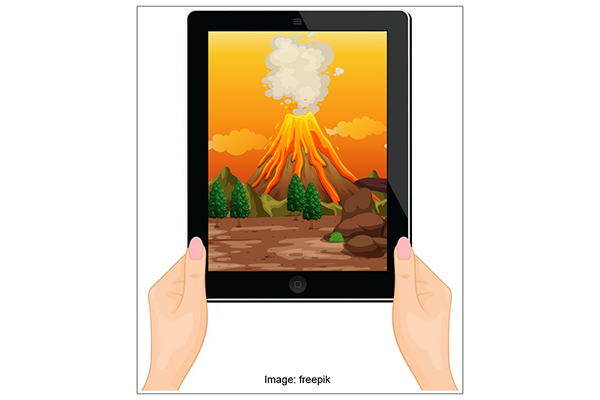
Not only corporates but even schools can also utilise this technology for effective teaching. Imagine if the student points her tablet on the textbook and voila, the books come alive with 3D models of a volcano erupting, or even make history interesting through visual storytelling.
Now imagine another scenario. A company needs their employees to work at over 100 feet high like on a tower in an oil rig or on a high-tension electricity transmission tower. After months of training and when employees go to the actual work site, some of them realize that they cannot work at the height.

They suffer from acrophobia or a fear of heights. They would not know of this unless they really climb to that height. What if the company could test in advance if the person can work in such a setting?

Enter Virtual Reality (VR). Using a virtual reality headset that the user can strap on to their head, they are immersed in a realistic environment. They look around and all they see is an abyss. They are instructed to perform some of the tasks that they will be doing at the work site. This is a safe way to gauge if the user suffers from acrophobia. Since VR is totally immersive, users will forget that they are safely standing on the floor and might get nervous or fail to do the tasks. This enables the company to identify people who fear heights earlier and assign them to a different task.
Any risky work environment can be virtually re-created for the training. This helps the employees get trained without any harm and it gives them confidence when they go to the actual work location.
VR requires a special headset and controllers for the user to experience it. A lot of different headsets with varying capabilities are already available for the common user. Some of these are not expensive too.
A multitude of metrics can be tracked and stored on xAPI based learning management systems (LMS). Analytics data can be used by the admin or the supervisor to gauge how the employee has fared in the training. That helps them determine the learning outcome and ROI (return on investment) on the training.
Training is changing fast and more effective using these new age technologies. A lot of collaborative learning can happen in the virtual reality space when multiple users can log on to the same training at the same time to learn a task. These immersive methods help the learner retain most of what they learnt when compared to other methods of training.
Well, the future is already here!

SAP Security – A Holistic View
With 90%+ of Fortune-500 organizations running SAP to manage their mission-critical business processes and considering the much-enhanced risk of cyber-security breach in today’s volatile and tech-savvy geo-socio-political world, security of your SAP systems deserves much more serious consideration than ever before.
The incidents like hacked websites, successful Denial-of-Service attacks, stolen user data like passwords, bank account number and other sensitive data are on the rise.
Taking a holistic view, this article captures possible ways, remediation to plug in all the possible gaps in various layers. (Right from Operating system level to network level to application level to Cloud and in between). The related SAP products/solutions and the best practices are also addressed in the context of security.
1. Protect your IT environment
Internet Transaction Server (ITS) Security
To make SAP system application available for safe access from a web browser, a middleware component called Internet Transaction Server (ITS) is used. The ITS architecture has many built-in security features.
Network Basics (SAP Router, Firewalls and Network Ports)
The basic security tools that SAP uses are Firewalls, Network Ports, SAP Router. SAP Web dispatcher and SAP Router are examples of application level gateways that can be used for filtering SAP network traffic.
Web-AS (Application Server) Security
SSL (Secure Socket Layer), is a standard security technology for establishing an encrypted link between a server and client. SSL authenticates the communication partners(server & client), by determining the variables of the encryption.
2. Operating System Security hardening for HANA
SAP pays high attention on the security topic. At least as important as the security of the HANA database is the security of the underlying Operating System. Many hacker attacks are targeted on the Operating System and not directly on the database. Once a hacker gained access and sufficient privileges, he can continue to attack the running database application.
Customized operating system security hardening for HANA include:
- Security hardening settings for HANA
- SUSE/RHEL firewall for HANA
- Minimal OS package selection (The fewer OS packages a HANA system has installed, the less possible security holes it might have)
For any server hardening, following procedure is used –
- Benchmark templates used for hardening
- Hardening parameters considered
- Steps followed for hardening
- Post-hardening test by DB/application team
The above procedures should help SAP customers in securing their servers (mostly on HP UNIX, SUSE Linux, RHEL or Wintel) from threats, known/unknown attacks and vulnerabilities. It also adds one more layer of security at the host level.
3. SAP Application (Transaction-level security)
SAP Security has always been a fine balancing act of protecting the SAP data and applications from unauthorized use and access and at the same time, allowing users to do the transactions they’re supposed to. A lot of thinking needs to go in designing the SAP authorization matrix taking into account the principle of segregation of duties. (SoD)
The Business Transaction Analysis (Transaction code STAD) delivers workload statistics across business transactions (that is, a user’s transaction that starts when a transaction is called (/n…) and that ends with an update call or when the user leaves the transaction) and jobs. STAD data can be used to monitor, analyse, audit and maintain the security against unauthorized transaction access.
4. SAP GRC
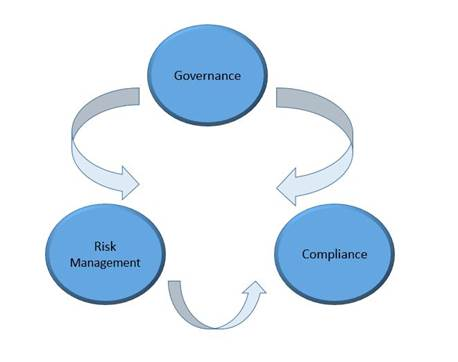
SAP GRC (Governance, Risk & Compliance) , a key offering from SAP has following sub-modules:
Access control
SAP GRC Access Control application enables reduction of access risk across the enterprise by helping prevent unauthorized access across SAP applications and achieving real-time visibility into access risk.
Process control –
SAP GRC Process Control is an application used to meet production business process and information technology (IT) control monitoring requirements, as well as to serve as an integrated, end-to-end internal control compliance management solution.
Risk Management
- Enterprise-wide risk management framework
- Key risk indicators, automate risk alerts from business applications
5. SAP Audit –
AIS (Audit Information System) –
AIS or Audit Information System is an in-built auditing tool in SAP that you can use to analyse security aspects of your SAP system in detail. AIS is designed for business audits and systems audits. It presents its information in the Audit Info Structure.
Besides this, there can be license audit by SAP and or by the auditing firm of your company (like Deloitte/PwC).
Basic Audit
Here the SAP auditors collaborate strongly with a given license compliance manager who is responsible for ensuring that the audit activities correspond with SAP’s procedure and directives. The number of basic audits undertaken is subject to SAP’s yearly planning, and it is worth noting that not all customers are audited annually.
The auditors perform below tasks (though they will vary a bit from organization to organization & from auditor to auditor):
- Analysis of the system landscape to make sure that all relevant systems (production and development) are measured.
- Technical verification of the USMM log files: correctness of the client, price list selection, user types, dialog users vs. technical users, background jobs, installed components, etc.
- Technical verification of the LAW: users’ combination and their count, etc.
- Analysis of engine measurement – verification of the SAP Notes
- Additional verification of expired users, multiple logons, late logons, workbench development activities, etc.
- Verification of Self Declaration Products, HANA measurement and Business Object.
SAP Enhanced Audit –
Enhanced audit is performed remotely and/or onsite and is addressed to selected customers. Besides the tasks undertaken in ‘Basic Audit’, it additionally covers –
- Checking interactions between SAP and non-SAP systems
- Data flow direction
- Details of how data is transferred between systems/users (EDI, iDoc, etc)
6. Security in SAP S/4 HANA and SAP BW/4 HANA
SAP S/4 HANA & SAP BW/4 HANA use the same security model as traditional ABAP applications. All the earlier explained components/security solutions are fully applicable in S/4 HANA as well as BW/4 HANA.
But these are increased security challenges posed by its component, SAP Fiori, which brings in mobility. But increased mobility means that data can be transferred over a 4G signal, which is not as secure and is easier to hack into. If a device falls into the wrong hands, due to theft or loss, that person could then gain unlawful access to your system. Its remediation is elaborated next.
7. Security in Fiori
While launching SAP Fiori app, the request is sent from the client to the ABAP front-end server by the SAP Fiori Launchpad via Web Dispatcher. ABAP front-end server authenticates the user when this request is sent. To authenticate the user, the ABAP front-end server uses the authentication and single sign-on (SSO) mechanisms provided by SAP NetWeaver.
Securing SAP Fiori system ensures that the information and processes support your business needs, are secured without any unauthorized access to critical information.
The biggest threat for an SAP app is the risk of an employee losing important data of customers. The good thing about mobile SAP is that most mobile devices are enabled with remote wipe capabilities. And many of the CRM- related functions that organizations are looking to use on mobile phones, are cloud-based, which means the confidential data does not reside on the device itself.
SAP Afaria, one of the most popular mobile SAP security providers, is used by many large organizations to enhance the security in Fiori. It helps to connect mobile devices such as smartphones and tablet computers. Afaria can automate electronic file distribution, file and directory management, notifications, and system registry management tasks. Critical security tasks include the regular backing up of data, installing patches and security updates, enforcing security policies and monitoring security violations or threats.
8. SAP Analytical Cloud (SAC)
SAP Analytics Cloud (or SAP Cloud for Analytics) is a software as a service (SaaS) business intelligence (BI) platform designed by SAP. Analytics Cloud is made specifically with the intent of providing all analytics capabilities to all users in one product.
Built natively on SAP HANA Cloud Platform (HCP), SAP Analytics Cloud allows data analysts and business decision makers to visualize, plan and make predictions all from one secure, cloud-based environment. With all the data sources and analytics functions in one product, Analytics Cloud users can work more efficiently. It is seamlessly integrated with Microsoft Office.
SAP Analytical Cloud use the same security model as traditional ABAP applications.
The concept of roles, users, teams, permissions and auditing activities are available to manage security.
9. Identity Management
SAP Identity Management is part of a comprehensive SAP security suite and covers the entire identity lifecycle and automation capabilities based on business processes.
It takes a holistic approach towards managing identities & permissions. It ensures that the right users have the right access to the right systems at the right the time. It thereby enables the efficient, secure and compliant execution of business processes.
10. IAG – (Identity Access Governance) for Cloud Security
SAP Identity Access Governance (IAG) is a multi-tenant solution built on top of SAP Business Technology Platform (BTP) and SAP’s proprietary HANA database. It is SAP’s latest innovation for Access Governance for Cloud.
It provides out of the box integration with SAP’s latest cloud applications such as SAP Ariba, SAP Successfactors, SAP S/4HANA Cloud, SAP Analytics Cloud and other cloud solutions with many more SAP and non-SAP integrations on the roadmap.
11. SAP Data Custodian
To allay the fears of data security in SAP systems hosted on Public Cloud, SAP introduced its latest solution called ‘SAP Data Custodian’. It is an innovative Governance, risk and compliance SaaS solution which can give your organization similar visibility and control of your data in the public cloud that was previously available only on-premise or in a private cloud.
- It allows you localize your data and to restrict access to your cloud resources and SAP applications based on user context including geo-location and citizenship
- Restricts access to your data, including access by employees of the cloud infrastructure provider
- Puts encryption key management control in your hands and provides an additional layer of data protection by segregating your keys from your business data
- Uses tokenization to secure sensitive database fields by replacing sensitive data with format-preserving randomly generated strings of characters or symbols, known as tokens
- With data discovery you can scan for sensitive data categories such as SSN / SIN, national ID number, passport number, IBAN, credit card, email address, ethnicity, et cetera, based on pattern determination and machine learning
12. Futuristic approach towards securing ERP systems
Driven by the digital transformation of businesses and its demand for flexible computing resources, the cloud has become the prevalent deployment model for enterprise services and applications introducing complex stakeholder relations and extended attack surfaces.
Mobility (access from smart phones/tablets) & IOT (Internet of things) brought in new challenges of scale (“billions of devises”) and required to cope with their limited computational and storage capabilities asking for the design of specific light-weight security protocols. Sensor integration offered new opportunities for application scenarios, for instance, in distributed supply chains.
Increased capabilities of sensors and gateways now allow to move business logic to the edge, removing the backend bottleneck for performance.
SAP has been investing a lot in drawing, refining its roadmap for security for the future.
It used McKinsey’s 7S strategy concept to review SAP Security Research and adapt supporting factors. Secondly, it assessed technology trends provided by Gartner, Forrester, IDC and others to look into probable security challenges.
As per SAP’s research, today’s big challenges in cybersecurity emanate around ML (Machine Learning). The trend is ML anywhere! ML itself provides a new attack vector which needs to be secured. In addition, ML is used by attackers and so needs to be used by us to better defend our solutions.
Machine Learning that has the most significant impact on the security and privacy roadmap these days, both providing the power of data to design novel security mechanisms as well as requiring new security and privacy paradigms to counter Machine Learning specific threats.
Deceptive applications is another trend SAP foresees. Applications must be enabled to identify attackers and defend themselves.
Thirdly, still underestimated, SAP foresees the attacks via Open Source or Third-party software. SAP has been adapting its strategy accordingly to tackle those new trends.
Wishing all SAP Customers a Happy, Safe and Compliant SAP experience!

Sify leverages Aquila Clouds FinOps on its CloudInfinit Platform
SAN RAMON, Calif., Sept. 13, 2022 /PRNewswire/ — Sify Technologies Limited (NASDAQ: SIFY), India’s leading Digital ICT solutions provider with global service capabilities spanning Data Center, Cloud, Networks, Security and Digital services, and Aquila Clouds, a leader in cloud financial management solutions, today announced a strategic partnership that has added FinOps capabilities to Sify’s industry-leading cloud management platform, CloudInfinit.
Today’s announcement marks the availability of CloudInfinit FinOps, powered by Aquila Clouds. This technology-leading FinOps platform provides cloud asset management, performance, and cost trend analysis, cloud cost optimization and automation, budget control, chargeback, security and compliance management, and more. This FinOps addition to CloudInfinit now enables cloud operators and finance managers to run lean, optimized, and secure cloud operations.
“We see a huge win-win situation for Sify and Aquila Clouds in this partnership,” said Jitender Durairajan, Head of Cloud Engineering and Solutions at Sify Technology. “Using Aquila Clouds to power Sify’s CloudInfinit FinOps capabilities significantly shortens our time-to-market and creates immediate value for our customers who increasingly need a decipherable pattern to their cloud financials.”
Besides FinOps, Aquila Clouds also powers Sify’s billing operations with its BillOps platform. Aquila Clouds BillOps streamlines and automates billing operations, providing capabilities to customize pricing rules that perfectly fit Sify’s’ business model.
“We are delighted that Aquila Clouds FinOps solution has been included to power Sify’s CloudInfinit FinOps offering,” said Desmond Chan, co-founder, and CPO at Aquila Clouds. “Being chosen by such a strong Enterprise Cloud Solutions Provider is a great testament to the strength of our solution. We look forward to creating great success for both companies in the near future.”
About Sify Technologies
A Fortune India 500 company, Sify Technologies is India’s most comprehensive ICT service & solution provider. With Cloud at the core of our solutions portfolio, Sify is focussed on the changing ICT requirements of the emerging Digital economy and the resultant demands from large, mid, and small-sized businesses.
Sify’s infrastructure comprising 11 state-of-the-art Data Centers, the largest MPLS network, partnership with global technology majors, and deep expertise in business transformation solutions modeled on the cloud, make it the first choice of start-ups, SMEs, and even large Enterprises on the verge of a revamp.
Internationally, Sify has a presence across North America, the United Kingdom, and Singapore. Sify, www.sify.com, Sify Technologies, and www.sifytechnologies.com are registered trademarks of Sify Technologies Limited.
About Aquila Clouds
Aquila Clouds is a cloud financial management solution that enables managed service providers, cloud resellers, and enterprises to manage billing and optimize cloud costs and performance. We help organizations that are invested in public clouds to monitor and optimize their cloud deployments and automate their billing operations. Our FinOps and BillOps solutions apply data analytics and AI/ML techniques to achieve continuous monitoring and continuous optimization that has delivered over 20% in cloud cost savings and reduced billing operation time by as much as 82%.
For further information, please contact:
Sify Technologies Limited
Mr. Praveen Krishna
Investor Relations & Public Relations
+91 9840926523