


Digital native learners — from Generation Y through Gen Z and Gen Alpha — expect different training experiences than previous generations. These learners spend significant time online across devices, expect instant access to information, and require interactive, technology-enabled approaches rather than passive instruction.
Traditional classroom lectures and self-paced modules no longer match how modern learners construct knowledge. This gap between conventional instruction and contemporary learning styles creates barriers to achieving educational outcomes — particularly in technical fields like engineering and medicine where real-life application matters most.
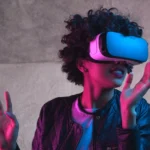
Virtual reality recreates real-time experiences by combining visual, sound, and motion to give learners realistic sensations. Yet high costs have prevented widespread VR adoption in training settings. Sify Technologies addresses this challenge through mobile VR — leveraging learners’ existing smartphones with low-cost viewing devices to make immersive learning accessible at scale.
About Sify Technologies
Sify Technologies delivers digital transformation solutions across India and globally. The company’s learning and development division creates technology-enabled training that addresses the evolving needs of modern workforces across industries including manufacturing, healthcare, and education.
The Training Challenge
Technical training faces persistent obstacles that limit learning effectiveness:
- Traditional lecture-based approaches fail to engage digital native learners who expect interactive experiences
- Abstract concepts in engineering and medical fields prove difficult to visualize through textbooks or 2D diagrams
- Physical equipment access remains limited—students cannot explore internal machine components or practice surgical procedures without direct hands-on opportunities
- Passive learning models produce lower knowledge retention compared to active, constructivist approaches where learners build knowledge through interaction
- Real-world practice opportunities remain constrained by cost, safety, and availability considerations
- Conventional VR solutions require expensive headsets and specialized equipment, preventing scalable adoption
These challenges particularly impact technical disciplines where learners must translate theoretical knowledge into practical, on-the-job application throughout their careers.
The Sify Mobile VR Training Solution
Sify’s mobile VR platform transforms how organizations deliver technical training. The solution combines affordability with advanced functionality to match how modern learners prefer to engage with content.
Accessible Implementation The platform uses a Bring Your Own Device (BYOD) strategy — learners use their existing Android or iOS smartphones with minimal-cost viewing accessories. No specialized equipment required. No significant infrastructure investment needed.
Organizations benefit from minimal investment while achieving broad reach. BYOD has become standard practice in training and education settings where smartphone penetration runs high, making VR accessible without the traditional cost barriers.
Immersive Learning Experiences
- Interactive 3D learning objects that respond to head movements and gestures
- Panoramic 360-degree stereoscopic views of equipment and environments
- Hands-on interactions using intuitive controls
- Built-in assessments with color-coded remediation feedback
- Immersive sound that enhances realism and engagement
The mobile apps allow participants to visualize abstract concepts, observe learning events at micro and macro scales in 3D environments, and interact directly with objects — creating the active, constructivist learning experiences that digital natives require.
Robust Analytics xAPI-compliant learning analytics track participant activities, interactions, and performance. Organizations gain visibility into learning outcomes and can measure effectiveness against traditional training methods.
Customizable Content Sify develops VR applications tailored to specific training goals and requirements. The development process leverages existing CAD models from clients where available, reducing time and costs while ensuring technical accuracy.
Technical Architecture The platform leverages:
- Unity3D game engine for immersive 3D environments
- 3Ds Max for 3D modeling
- Android/iOS SDKs for mobile app packaging
- Mobile VR SDKs for cross-device compatibility
- C# and JavaScript programming for complex interactions
- Device sensors (magnetometer, accelerometer, gyroscope) for motion tracking
Use Case: Engineering Training at AMET University
The Academy of Maritime Education and Training (AMET), a deemed university in India, implemented Sify’s VR Turbine App for mechanical engineering students. The university needed an effective way to teach turbine machinery concepts while overcoming physical equipment access limitations.
Implementation Approach Students use the VR app as a pre-lab tutorial. The application provides virtual access to turbine machinery, allowing students to:
- Handle virtual turbine equipment safely without physical constraints
- Explore internal components not easily accessible in physical labs
- Manipulate objects and observe mechanisms at both macro and micro scales
- Complete assessments within the immersive environment
- Receive immediate, color-coded feedback on their understanding
The interactive learning objects, combined with the virtual turbine machine, provide students actual experiences of handling equipment and exploring components that pose accessibility challenges in real-world situations.
Measurable Results AMET conducted a quasi-experimental study adopting a reversed treatment non-equivalent control group design with mechanical engineering students. The evaluation compared learning outcomes between students using the VR Turbine app versus traditional printed manuals.
Results measured through pre-test and post-test methodology showed tremendous improvement in learning outcomes through the VR approach compared to the traditional learning method.
Students consistently report that the technology makes learning more useful, creative, effective, and joyful. The interactive nature helps them grasp complex mechanical concepts more readily than textbooks alone.
“I understand that our students have found it very useful, creative and effective while they experienced cardboard powered Virtual Reality to learn about the turbines. Student feedback is real testimony for the success of this technology. Many students have mentioned that learning becomes a joyful experience while they use this simple but effective technology. AMET University is happy to associate with SIFY in this initiative and we are establishing formal collaborations for effective use of e-learning techniques in our teaching learning processes.”
– COL. Dr. G. Thiruvasagam, Vice Chancellor, AMET University
Expanded Applications Across Industries
Following successful engineering implementations, Sify expanded the platform across multiple sectors.
Medical and Surgical Training Sify developed VR applications for healthcare, including a Heart App for medical education. The company works with leading global medical device and surgical product organizations to provide mobile VR solutions for surgical procedures and devices.
These applications help surgeons and medical professionals enhance their working knowledge of products and procedures through immersive experiences — training that would be impractical or impossible through traditional methods. The interactive VR environments allow healthcare professionals to explore anatomical structures, practice procedures, and understand medical devices in ways that textbooks and 2D diagrams cannot provide.
K-12 Education Sify works with schools to implement VR learning pilots across various subjects, making complex concepts accessible to younger students through immersive experiences that match their technology-native learning preferences.
Key Differentiators
Cost-Effective Scalability Unlike traditional VR solutions requiring expensive dedicated headsets, Sify’s mobile-first approach uses devices learners already own. Organizations avoid significant capital investments while achieving broad reach across geographically dispersed workforces.
Active Learning Model The platform moves beyond passive content consumption. Learners construct knowledge through hands-on interaction with 3D objects and environments—a constructivist approach that produces better retention and addresses how digital native generations prefer to learn.
Practical Accessibility Students access equipment and scenarios difficult to replicate in physical settings. Virtual environments eliminate safety concerns and equipment limitations that constrain traditional training, while providing experiences that mirror real-world applications.
Measurable Outcomes Built-in analytics demonstrate training effectiveness. Organizations can compare VR training results against conventional approaches and continuously optimize content based on performance data.
Ease of Use The solution requires no technical expertise. Learners access training through their smartphones using intuitive interfaces. Instructors can deploy training without specialized equipment or complex setup—matching the instant-access expectations of modern learners.
Addressing Modern Learning Needs
Mobile VR demonstrates how emerging technologies can transform learning outcomes when designed around both practical constraints and learner preferences. Digital native generations require technology-enabled, interactive approaches that allow them to construct knowledge actively rather than consume it passively.
By making immersive training affordable and accessible through mobile devices, organizations can provide engaging experiences that improve knowledge retention and real-world application while meeting learners where they already are—on their smartphones.
Sify continues developing customized VR applications across industries, helping organizations deliver technical training that matches contemporary learning styles while producing measurable results.