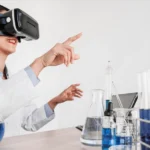


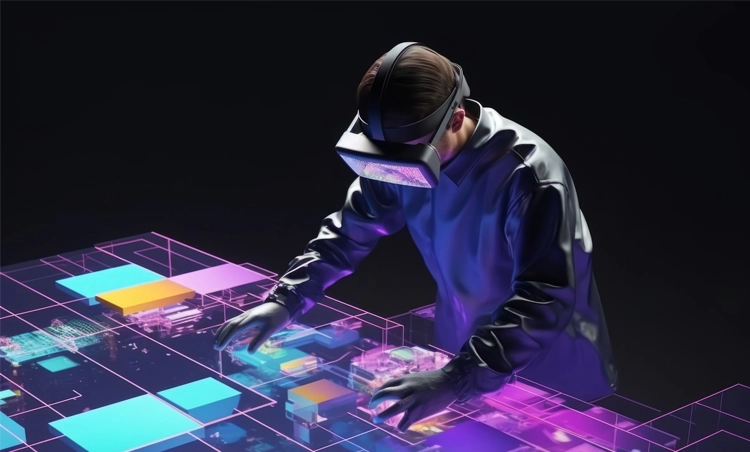
“Virtual reality offers the possibility to deliver tutorials, build interactive learning objects with actual experiences, and handle machines and instruments in ways that improve quality in K-12 and higher education.”
Vijay Kumar, Executive Director and Group CFO, Sify Technologies
About AMET University
Academy of Maritime Education and Training (AMET) is a university in India that specializes in engineering education across multiple disciplines including Mechanical Engineering, Marine Engineering, and Electronics and Communication Engineering. AMET University serves undergraduate students who study turbines as part of their core curriculum.
AMET’s commitment to preparing students for real-world engineering challenges made them an ideal partner for testing innovative approaches to technical education.
Engineering Education Challenges
Bridging the gap between classroom and real-world application
AMET faced challenges common across engineering education:
- Traditional lecture-centered instruction failed to engage digitally native learners
- Students lost focus on classwork after just five to ten minutes
- Abstract concepts like turbine mechanics were difficult to visualize through textbooks and diagrams alone
- Limited hands-on opportunities to interact with expensive, complex machinery
- No way to observe equipment at both micro and macro scales
- Inconsistent learning outcomes across different student groups
- Difficulty translating classroom learning to on-the-job application
The gap between traditional classroom instruction and the learning styles of digital-native students was impeding desired educational outcomes, with larger negative impacts on education quality.
Learning and Business Objectives
Working with AMET University, Sify outlined clear objectives:
- Enable immersive learning experiences that improve knowledge retention and generalization
- Provide hands-on learning environments where students actively construct knowledge
- Allow students to visualize abstract concepts in 3D at panoramic 360-degree views
- Create opportunities to interact with equipment and objects in virtual environments
- Implement assessments with immediate remediation feedback
- Track student learning activities through analytics
- Deliver these capabilities at an affordable cost that could scale across educational institutions
An Affordable VR Solution
Making enterprise-grade technology accessible
The traditional barrier to VR in education had always been cost. Enterprise VR systems required expensive specialized equipment that most educational institutions couldn’t afford.
Sify’s approach changed the equation by leveraging accessible mobile VR technology:
- Low-cost VR viewers compatible with standard smartphones
- Students’ existing mobile devices (BYOD strategy)
- Minimal infrastructure investment required
- The Unity3D game engine for cross-platform development
- Professional 3D modeling for realistic gas turbine visualization
This combination made VR-based learning financially viable and easily scalable across educational institutions with large smartphone user bases.
Implementation: The VR Turbine App
Sify developed a comprehensive VR Turbine application that delivered immersive learning through a simple process:
Access
Students downloaded the VR Turbine App onto their personal smartphones at no cost.
Setup
The smartphone mounted easily into an affordable mobile VR viewer.
Immersion
Students wore the headset for hands-free exploration of the virtual learning environment.
Interaction
Using head movements and simple controls, students navigated the virtual Turbine Room and engaged with learning content.
Learning
Students explored the turbine from all angles, navigated the virtual environment, attended quizzes, received feedback indicators, and engaged with interactive content.
Key capabilities
The VR Turbine App enabled students to:
- Visualize turbine components and equipment arrangement in full 3D
- Observe learning events at micro and macro scales
- Interact with objects in the 3D environment
- Complete assessments on concepts learned
- Receive immediate remediation feedback
- Have all learning activities tracked through analytics
Results: Measurable Learning Improvement
Proving the impact through scientific methodology
Sify conducted a quasi-experimental design study with AMET’s Mechanical Engineering students to investigate two critical questions:
- Do students who participate in VR-supported learning activities perform better than those without VR support?
- How does the cognitive load during VR learning differ from traditional teaching approaches?
Results demonstrated:
- Improved learning outcomes measured through pre-test and post-test methodology showing statistically significant gains
- Optimal cognitive load measured using NASA Task Index, indicating students processed information effectively without overload
- Enhanced knowledge retention compared to traditional lecture-centered approaches
- Sustained engagement throughout the learning experience with students maintaining focus beyond typical attention spans
- Active knowledge construction where students demonstrated better ability to master, retain, and generalize new concepts
Student testimonials validated the approach
AMET students provided overwhelmingly positive feedback about their VR learning experience, confirming that the technology met digital-native learners’ expectations for effective teaching methodology.
The Broader Impact
“The affordable cost and scalable strategies to implement accessible Virtual Reality for educational purposes point the way forward for reforming educational practices.”
Vijay Kumar, Executive Director and Group CFO, Sify Technologies
Transforming educational practices
The success at AMET University demonstrated that VR-based solutions could:
- Democratize access to advanced learning technologies across developing nations
- Scale affordably using existing student devices and low-cost viewers
- Deliver measurable improvement in learning outcomes for technical subjects
- Support diverse learning activities from tutorials to field trips to serious games
- Ease the learning process by providing dynamic environments that help students construct knowledge better than static, lecture-centered approaches
- Empower teachers to deliver effective instruction that achieves desirable learning outcomes
Recognition and expansion
This innovative approach to engineering education earned Sify Digital Learning recognition at the ASSOCHAM awards for Best Use of Technology in Teaching & Learning Practices.
The project proved that not all content needs VR delivery, but identifying which learning activities benefit most from virtual environments—and implementing them strategically—delivers optimal results.
Key Insights for Immersive Learning
Start with learning objectives, not technology. AMET succeeded because they identified specific visualization and interaction needs that VR could address better than traditional methods.
Remove cost barriers strategically. The mobile VR approach proved that high-impact immersive learning doesn’t require high-cost infrastructure—it requires smart technology choices.
Measure what matters. Traditional assessments won’t capture VR’s unique impact. Develop evaluation approaches that reflect the depth of experience you’re creating.
Design for scale from the start. BYOD strategies and accessible technology choices enabled rapid deployment across diverse student populations.
What’s Next: Scaling Immersive Learning
Sify continues expanding VR and immersive learning capabilities across industries and educational institutions worldwide. This award-winning approach demonstrates that high-impact learning doesn’t require prohibitive costs — it requires the right vision, the right technology, and the right partner to make it real.
About Sify Digital Learning
You envision learning that scales without compromise. We make it real.
Sify Digital Learning delivers custom content, consulting and services that transform your boldest ideas into experiences that work. With 22+ years of innovation, Sify brings enterprise vision to every solution—from AI-powered platforms to immersive XR experiences.
Trusted by Fortune 500 companies and leading educational institutions worldwide, the AMET VR Turbine project won ASSOCHAM’s award for Best Use of Technology in Teaching & Learning Practices. Learn more