


“Virtual reality gave us something classroom training never could: the ability to help managers truly experience what it feels like to be on the receiving end of bias. That level of immersion creates lasting behavioral change.”
Sify Digital Learning Leadership
When Merck committed to advancing diversity and inclusion across its 69,000-person global workforce in 2017, the pharmaceutical giant recognized that traditional classroom training alone wouldn’t create the deep behavioral change needed to address unconscious bias in hiring decisions.
This is the story of how Merck partnered with Sify Digital Learning to pioneer a VR-based learning solution that transformed abstract concepts into visceral experiences — helping hiring managers develop genuine empathy and measurably improve their decision-making.
The Challenge
Merck’s Global Diversity and Inclusion team faced a common but critical problem: how do you help people recognize and overcome biases they don’t even know they have?
The company’s existing Unconscious Bias Education (UBE) program included classroom lectures and role-playing exercises for first-line managers. While well-intentioned, these traditional methods had significant limitations:
- Classroom role-plays felt artificial and failed to create genuine emotional responses
- Managers struggled to truly empathize with candidates facing bias
- Standardization was nearly impossible — every facilitator ran sessions differently
- Measuring individual progress and behavior change remained elusive
- The sensitive nature of the topic made participants uncomfortable sharing openly
Beyond the training challenges, Merck needed to address tangible business risks. Unchecked unconscious bias leads to poor hiring decisions, legal exposure, decreased team diversity, and ultimately, lost innovation and competitive advantage.
Learning and Business Objectives
Working with Sify Digital Learning, Merck established five clear goals:
- Create safe, immersive experiences that allow managers to genuinely feel what candidates experience when facing bias
- Standardize training delivery while maintaining emotional impact across all sessions
- Provide real-time analytics to measure both immediate responses and long-term behavioral change
- Equip managers with practical strategies to recognize and mitigate five key bias categories: gender, ethnicity, age, marital status, and educational background
- Scale the solution beyond hiring to other leadership development needs
The Solution: Three-Component VR Experience
Sify designed a 15-minute VR module built on three interconnected learning components, all grounded in the proprietary Aspire framework:
Component 1: Implicit Bias Recognition
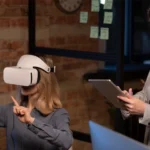
Participants donned HTC Vive headsets and stepped into the role of interviewer, screening resumes and selecting candidates. The system tracked their choices, revealing patterns they might not consciously recognize. Immediate feedback helped managers identify how bias influenced their decisions.
Component 2: Embodiment and Empathy
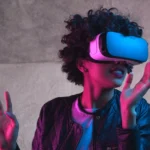
Here’s where the solution became truly innovative. Using advanced VR immersion techniques—positive association, embodied cognition, and classical conditioning—participants literally became the interviewee. They experienced bias-driven interview scenarios from the candidate’s perspective, watching interviewers dismiss their qualifications, make assumptions based on appearance, or ask inappropriate questions.
The technology created what Sify calls “illusion of bodily ownership” — the brain perceiving the virtual body as one’s own. This wasn’t role-playing; it felt real.
Component 3: Active Mitigation
Finally, participants observed interview scenarios as neutral third parties, answering questions designed to apply bias-mitigation strategies in realistic situations.
Throughout the experience, an xAPI-driven analytics platform captured granular data: which biases participants recognized, which they missed, and how they responded to various scenarios. A customized Empathy Measurement Scale (EMS) quantified something typically considered unquantifiable — the participant’s capacity for understanding others’ experiences.
Implementation Approach
Sify’s team faced significant technical and change management challenges:
Challenge 1: Creating True Immersion
Generic VR experiences wouldn’t achieve the desired outcomes. The solution required sophisticated design techniques to make participants forget their real-world identities. Sify achieved this through:
- Mirroring physical movements precisely in the virtual environment
- Replicating realistic office settings that felt familiar yet controlled
- Using diverse avatar representations that matched participants’ demographics for deeper connection
Challenge 2: Scaling Access
Initially deployed on HTC Vive systems at Merck’s training facilities, the solution created a bottleneck—only one person could train at a time. Sify adapted the experience for mobile devices with VR cardboard viewers, dramatically expanding access while maintaining effectiveness.
Challenge 3: Measuring the Unmeasurable
Traditional empathy measures proved inadequate. Sify developed a custom EMS that categorized participants across three levels—low empathy, average, and high empathy—based on their responses throughout the experience. This provided Merck with concrete data to track individual progress over time.
Results and Impact
The pilot program, launched in December 2017, delivered measurable outcomes that exceeded expectations:
Participant Response:
- 93% of participants reported enhanced learning experiences compared to traditional classroom training
- 88% strongly agreed that VR helped them better understand unconscious bias impact
- 85% felt the experience would positively influence their future hiring decisions
- Only 5% experienced motion sickness that limited their participation
Behavioral Insights:
The xAPI analytics revealed patterns in how managers identified bias:
- Average baseline score (initial resume screening): 62% accuracy in recognizing bias-free decisions
- Empathy score after embodied experience: 78% of participants scored in the average to high empathy range
- Performance score (observer role): 71% correctly identified bias mitigation strategies
Business Value:
The standardized VR approach eliminated the inconsistency inherent in facilitator-led role-plays. Every participant received identical scenarios, creating a fair baseline for measuring individual growth. Real-time data allowed Merck to identify managers who needed additional support before making critical hiring decisions.
Merck realized additional benefits beyond the training outcomes:
- Created a judgment-free learning environment where managers could safely make mistakes
- Enabled complex, realistic scenarios impossible to replicate in classrooms
- Produced actionable analytics linking training to hiring outcomes
- Demonstrated innovation in diversity and inclusion, strengthening employer brand
What’s Next
Based on the hiring module’s success, Merck expanded the partnership with Sify to develop VR experiences for two additional leadership development areas:
- Performance Review & Coaching: Helping managers recognize bias in talent calibration and development conversations
- Group Decision-Making: Addressing bias in team formation and collaborative processes
The company also initiated an eight-month longitudinal study to measure sustained behavior change and return on investment — moving beyond immediate reactions to long-term competency development.
Key Success Factors
Several elements proved critical to the project’s success:
Real Stories, Real Impact
Sify gathered actual unconscious bias incidents from Merck’s business environment, ensuring scenarios felt authentic and relevant. Managers recognized situations they’d encountered or witnessed.
Technology as Enabler
VR wasn’t chosen for novelty—it was selected because the technology uniquely enables empathy development through embodied cognition. The brain believes what it sees is real. That belief drives behavioral change in ways no lecture ever could.
Aspire Framework Application
Sify’s proprietary framework — Assess, Strategize, Productize, Integrate, Report, Extend — provided structure throughout development. The systematic approach ensured alignment between learning science principles and business objectives at every stage.
Iterative Design
Initial prototypes underwent rigorous testing. Sify refined immersion techniques, adjusted scenario complexity, and optimized the empathy measurement scale based on participant feedback.
Lessons for Other Organizations
For learning leaders considering VR for sensitive topics like unconscious bias:
Start with clear behavioral outcomes. Technology choices should follow learning objectives, not lead them. Merck succeeded because they knew exactly what behavior change they needed.
Invest in quality content. Generic scenarios undermine credibility. Real stories from your organization create authentic experiences that resonate.
Plan for scale early. VR’s power lies in individual immersion, but that creates access challenges. Design solutions that work for both premium hardware and accessible alternatives.
Measure what matters. Traditional smile sheets won’t capture VR’s unique impact. Develop assessment approaches that reflect the depth of experience you’re creating.
About Sify Digital Learning
You envision learning that scales without compromise. We make it real.
Sify Digital Learning delivers custom content, consulting and services that transform your boldest ideas into experiences that work. With 22+ years of innovation, Sify brings enterprise vision to every solution — from AI-powered platforms to immersive XR experiences.
Trusted by Fortune 500 companies worldwide, the Merck VR project won Brandon Hall Group’s Excellence in Learning Award for Best Unique or Innovative Learning and Development Program.
Ready to explore innovative learning solutions for your organization?